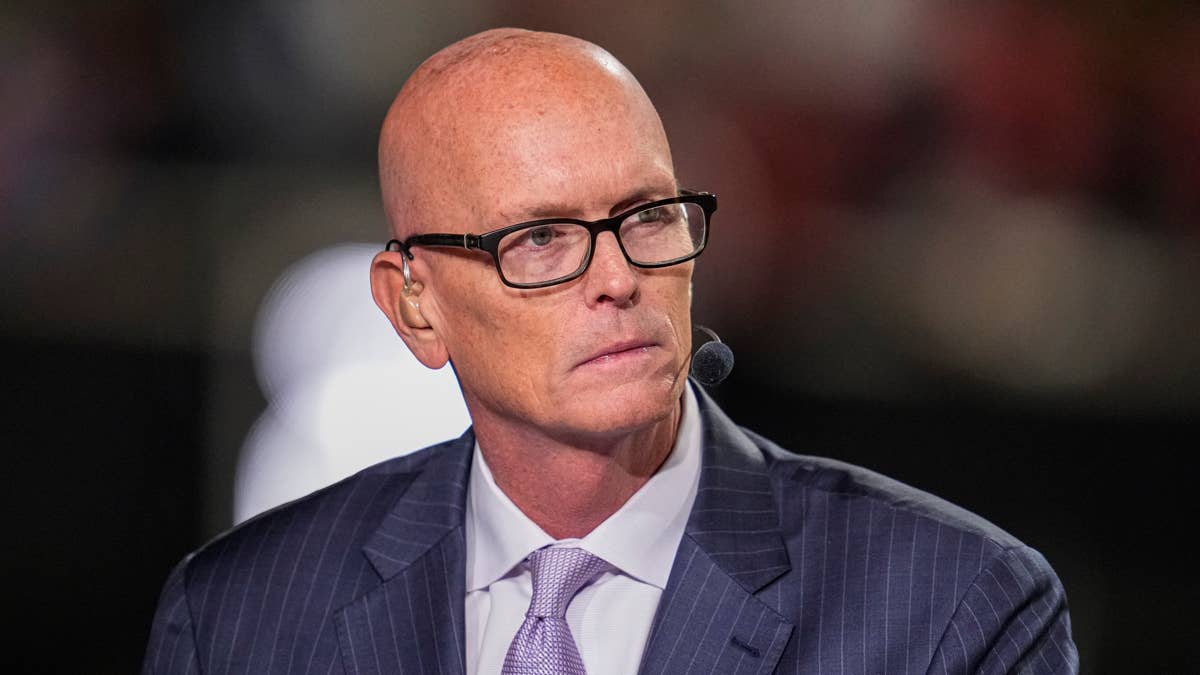
The landscape of college athletics is changing faster than a no-huddle offense, and one of its most prominent voices is calling for a timeout. ESPN's Scott Van Pelt, a University of Maryland alum and famously passionate college sports fan, has gone public with his deep concerns about the direction of the game, arguing that the current era of name, image, and likeness (NIL) deals and the transfer portal is creating a unsustainable "wild west."
A Superfan's Stern Warning
Van Pelt's critique isn't coming from a detached observer. He's a fixture at Maryland games, and his investment in the college sports ecosystem is both personal and professional. While he fully supports athletes getting paid, he believes the execution is dangerously flawed. "Unlimited free agency and zero salary cap is a great plan? What professional sport operates this way?" Van Pelt challenged in a recent online exchange, highlighting what he sees as a fundamental lack of governance.

His comments came in response to a discussion with college basketball insider Seth Davis, who argued against spending limits for schools. Van Pelt fired back, pointing out that even global soccer leagues—which often don't have salary caps—operate with mechanisms like transfer fees to maintain balance. "Cool, so transfer fees then. Right? Add them," Van Pelt wrote, later citing the example of star recruit K.J. Blackwell leaving Wisconsin for Duke without any compensation for the Badgers.
The Core Conflict: Payment Without Structure
At the heart of Van Pelt's argument is a simple premise: compensation without regulation is chaos. He advocates for a system with clear spending limits for collectives and schools, paired with a formalized transfer process that could include fees. This, he believes, would protect competitive balance and the long-term health of programs beyond the handful of ultra-wealthy boosters.
Not everyone agrees with his proposed framework. Sports lawyer Darren Heitner countered, "What professional sport refuses to recognize the athletes as employees and refuses to recognize the payments as being in consideration for playing the sport?" This underscores the ongoing legal and philosophical battle over whether athletes are students or employees—a debate that continues to rage as payments escalate. The confusion mirrors the fan discontent seen in other proposed changes, like the revolt against a 24-team College Football Playoff.
The current model, Van Pelt suggests, is a short-term gold rush that could lead to long-term ruin for many programs. It creates a world where rosters turn over completely year-to-year, undermining team identity and local fan connection. This instability stands in stark contrast to the planned, league-wide coordination seen in events like the College GameDay takeover of the NFL Draft.
More Than Just Talk: A Call for Action
Van Pelt's stance is significant because it comes from a mainstream figure whose love for the traditional pageantry of college sports is well-documented. His warning is that the very soul of the games he loves is at risk. The issue isn't whether players should be paid—that ship has sailed—but how to build a sustainable financial and competitive model around that reality.
The debate also highlights the strange new financial realities for athletes, where some may actually see a pay cut when they reach the professional ranks, flipping the traditional career earnings model on its head. Without guardrails, the competition for top talent could become purely a battle of checkbooks, potentially draining resources from other sports and eroding the academic mission.
As conferences realign and media rights deals explode, the pressure to find a stable middle ground is immense. Van Pelt's voice adds to a growing chorus of coaches, administrators, and fans who feel the current trajectory is untenable. The question remains whether the NCAA, conferences, or even Congress can provide the structure he and others are demanding before the system fractures beyond repair. For a sport grappling with its future, this is one insider's analysis that can't be ignored.