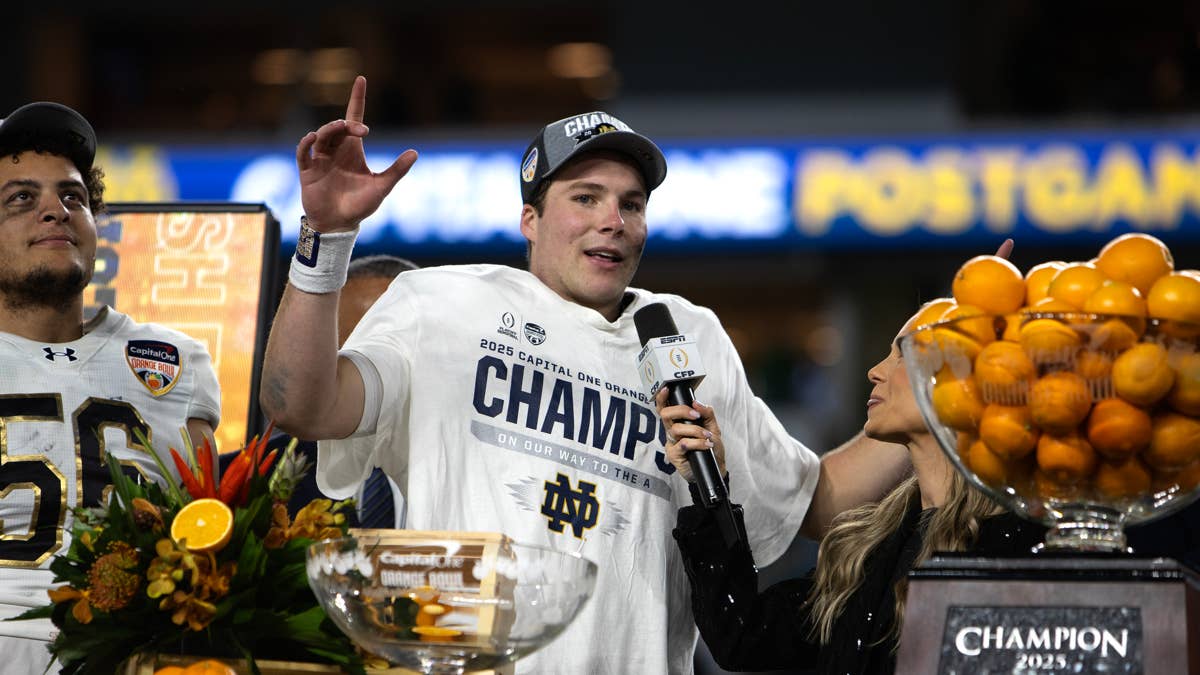
The financial landscape of American sports has officially flipped on its head. In a stunning revelation that highlights the new era of athlete compensation, Indianapolis Colts quarterback Riley Leonard has admitted he's taking home less money as an NFL rookie than he did as a college star at Notre Dame.
Leonard, who transferred to Notre Dame after starring at Duke, was one of the most sought-after players in the portal and helped lead the Fighting Irish to a national championship appearance. The financial package to bring him to South Bend was substantial—so substantial, in fact, that it now overshadows his professional paycheck.
"I'm definitely making less with the Colts," Leonard stated bluntly in a recent interview with The Athletic. The sixth-round draft pick signed a standard four-year deal worth $4.4 million with Indianapolis, but the devil is in the details. "Only like $200,000 of my contract is guaranteed," Leonard explained. "You have to make the team every year for four years straight to earn it all."
The NIL Revolution Rewrites the Rulebook
This isn't just about one player's bank account—it's a seismic shift in the sports world. The introduction of Name, Image, and Likeness (NIL) rights has created a scenario where elite college athletes can now out-earn many professional rookies. For top-tier college football programs competing for championships, the financial arms race is intensifying, with some roster costs reportedly rocketing toward unprecedented figures.
Sports analysts were quick to react to Leonard's admission. "Here's the thing: he's worth less to the Colts than he was to Notre Dame," noted commentator Peter Bukowski, highlighting the core economic reality. "They deserve to be compensated while the schools rake in millions off them."
Former NFL executive Andrew Brandt summarized the situation perfectly: "Sign of the times. Day 3 NFL Draft pick pay < High level college football NIL pay." The sentiment was echoed across social media, with one fan quipping, "college QB the best job in the world if you don't project as an nfl starter."
A New Calculus for Young Athletes
Leonard's story forces a reevaluation of the traditional path to pro sports. Attorney Darren Heitner pointed out the new appeal of campus life: "Easy to understand why some athletes are choosing to stay in college. They are earning money (sometimes more than they will at the pro level), obtaining degrees, and enjoying the on campus experience."
This phenomenon is part of a broader conversation about value and compensation in sports. As programs invest heavily in building lethal offenses and championship rosters, the financial incentives for star players to remain in school grow stronger. The era of the "can't-miss" prospect rushing to the draft for a payday is evolving.
While Leonard's situation highlights the financial downsides for some late-round picks, it also celebrates a positive change: college athletes finally profiting from their own market value. "It's really cool that college sports now allows players to profit off of the brands they create," the original article noted—a sentiment that resonates across the sports world.
The ripple effects are just beginning. As the system adjusts, stories like Leonard's will become more common, forcing leagues, teams, and players to adapt to a new economic reality where the dream of professional sports sometimes comes with an unexpected financial price tag for rookies. The game hasn't just changed on the field—it's changed at the bank, too.