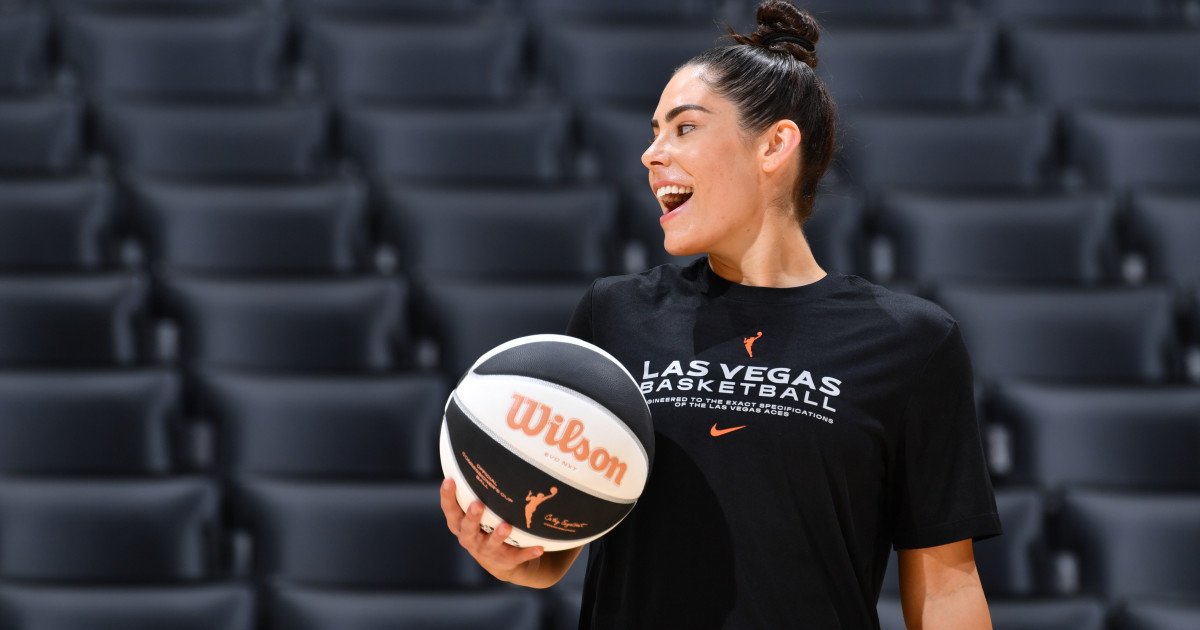
While the WNBA celebrates a landmark new collective bargaining agreement, one of its brightest stars is facing a digital storm. Las Vegas Aces guard Kelsey Plum, a key figure in the league's rising popularity, has made a controversial business leap that has fans up in arms.
A League on the Rise, A Player in the Crosshairs
The WNBA's business momentum is undeniable. The league and its players' union recently finalized a verbal agreement on a new CBA, a deal WNBPA president Nneka Ogwumike hailed as a testament to the players standing firm. "We're proud of ourselves," Ogwumike stated. "We always told you all we were going to stand on business, and that's what this looks like." The pact pushes the salary cap past the $10 million mark, elevates minimum contracts to $300,000, and allows max deals to soar over $1 million.
This historic financial progress mirrors the kind of player-driven business advocacy that is reshaping women's sports. Yet, as the league secures its future, Plum has ventured into a futuristic—and divisive—side hustle.
Plum's Pixelated Counterpart
Plum has partnered with AI communications company Talk2Me to launch what's billed as the first verified AI "digital twin" of a professional female athlete. This virtual version of Plum is designed to interact with fans autonomously. "The opportunity to have a twin that can connect with fans, with young people... The range is endless," Plum explained, framing the move as inevitable. "It's where we are in society, and I think you are either gonna get with it or get lost."
Talk2Me's leadership praised Plum's willingness to pioneer. "[Kelsey has] moved things from a business standpoint. She's moved things first from a cultural standpoint," a company representative said. "We need to find people who are willing to take the risk... And she's been willing to do it."
Fan Reaction: A Resounding 'Boooooooooo'
The risk, however, has been met with immediate and visceral rejection from a vocal segment of the sports community. On social media and forums, the announcement was met with a wave of criticism far outweighing any support.
Fan comments ranged from simple disgust to profound discomfort with the AI concept itself. "Awful," wrote one fan, while another simply posted, "Boooooooooo." Others were more pointed: "She's a clown," and "Despicable." One fan predicted, "Oh this is going to get real weird real fast," and another joked, "I'm throwing tomatoes and rotten fruit." The backlash highlights a growing cultural tension between technological adoption and the authentic human connection fans crave from their sports heroes.
This public relations challenge is a stark contrast to other athlete business moves, like when Megan Rapinoe defended a fellow athlete's controversial international partnership, which was framed as a pure business calculation.
The Uncomfortable Intersection of Sports and AI
Plum's foray into AI places her at the center of a heated debate. While athletes increasingly leverage technology for training and branding, the creation of an autonomous digital persona strikes many as a step too far into the uncanny valley. It raises questions about authenticity, parasocial relationships, and the very nature of fan interaction in a digital age.
The fierce pushback suggests that for all the talk of innovation, the core of sports fandom remains deeply human. Fans invest in stories, struggles, and triumphs—elements a programmed twin cannot genuinely replicate. As the WNBA rides a wave of well-earned positive business news, Plum's experiment serves as a reminder that not all cutting-edge ventures will be met with cheers.
Only time will tell if Plum's digital twin is a prescient move ahead of the curve or a business misstep that alienates the very base she seeks to engage. For now, the court of public opinion has rendered a swift and harsh verdict.