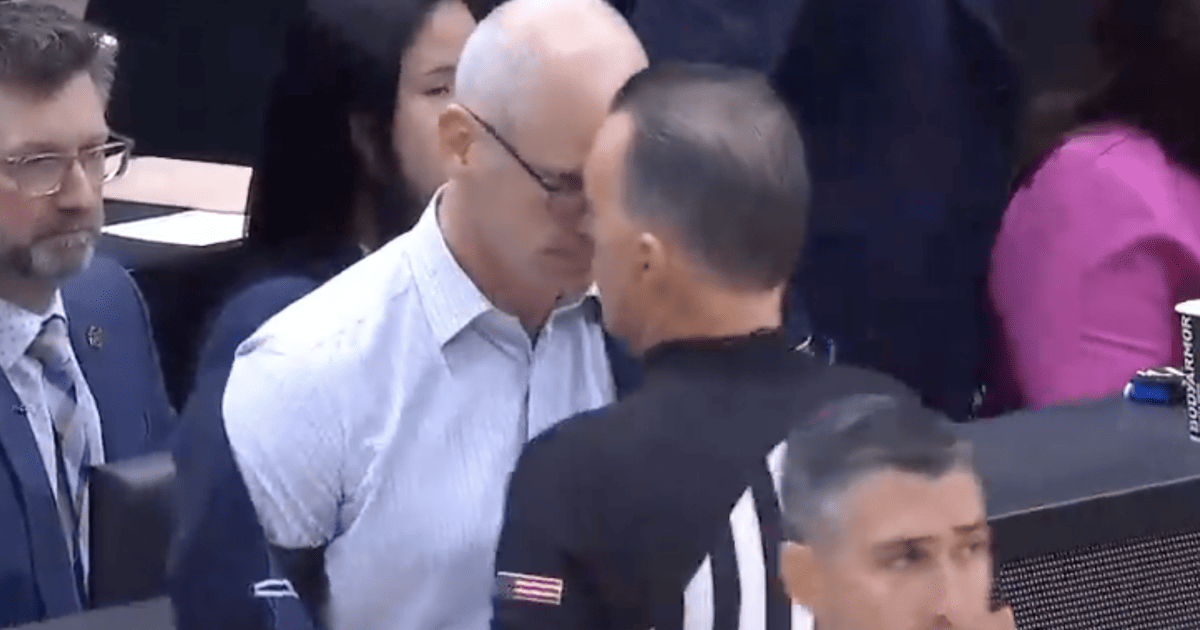
The confetti had barely settled on the court when a new controversy began brewing for UConn's championship-winning coach. In the chaotic aftermath of the Huskies' miraculous 19-point comeback against Duke, Dan Hurley's celebration took an unexpected turn—straight toward one of the game officials.
With his team having just completed one of the most stunning reversals in recent March Madness history, capped by freshman Braylon Mullins' game-winning three-pointer at the buzzer, Hurley approached referee John Higgins and made clear physical contact in what appeared to be an overzealous celebratory gesture. The moment, captured from multiple angles, shows the two-time national champion coach essentially head-to-head with the official amid the court-storming chaos.
"I was in complete disbelief," Hurley admitted during his Monday appearance on 'CBS Mornings.' "When Braylon let that shot go, I think my brain short-circuited. The whole sequence—the deficit, the fight back, that shot—it was almost too much to process in real time."
The NCAA has strict protocols regarding coach-official contact, with Rule 10-6 specifically prohibiting "any act of confrontation" with game personnel. While the incident occurred after the final buzzer, precedent suggests the governing body could still levy fines or other disciplinary measures. Similar incidents in recent tournament history have resulted in public reprimands and financial penalties for coaches who crossed the physical boundary line with officials.
Hurley's emotional sideline presence is nothing new—the coach earned an official warning earlier in the same game for his animated protests during Duke's first-half surge. But the post-game contact represents a different category of infraction, one that tournament officials may feel compelled to address despite the celebratory context.
The coach's focus, however, remains squarely on his team's historic accomplishment. "The locker room was pure electricity," Hurley described. "We've battled through so much this season—injuries, close losses, moments where other teams might have folded. But this group has developed a resilience that's special. When we were down 19, there was frustration, but never doubt."
Hurley specifically praised his freshman hero, whose deep three-pointer will live in tournament lore. "Braylon is a special kind of shooter," the coach said. "I knew it was a deep attempt, but watching the replay, I realized just how far out he was. The arc, the rotation—it was perfect."
The incident adds another layer to what was already a controversially officiated game, with both fan bases expressing frustration at various calls throughout the evening. Duke players and coaches were particularly vocal about several late-game decisions, including a controversial charge-block call that went against the Blue Devils during their second-half collapse.
Now, as UConn prepares for their Final Four showdown with Illinois, the program faces potential distraction from an unexpected source. While Hurley's passion has been instrumental in building the Huskies into a modern dynasty, that same fire might have briefly burned too hot at the moment of his greatest triumph this season.
NCAA officials are expected to review the incident this week, with a decision likely before Saturday's national semifinal. For now, Hurley and his team continue their preparation, hoping their coach's post-game embrace won't result in anything more than a footnote to one of the tournament's most memorable comebacks.