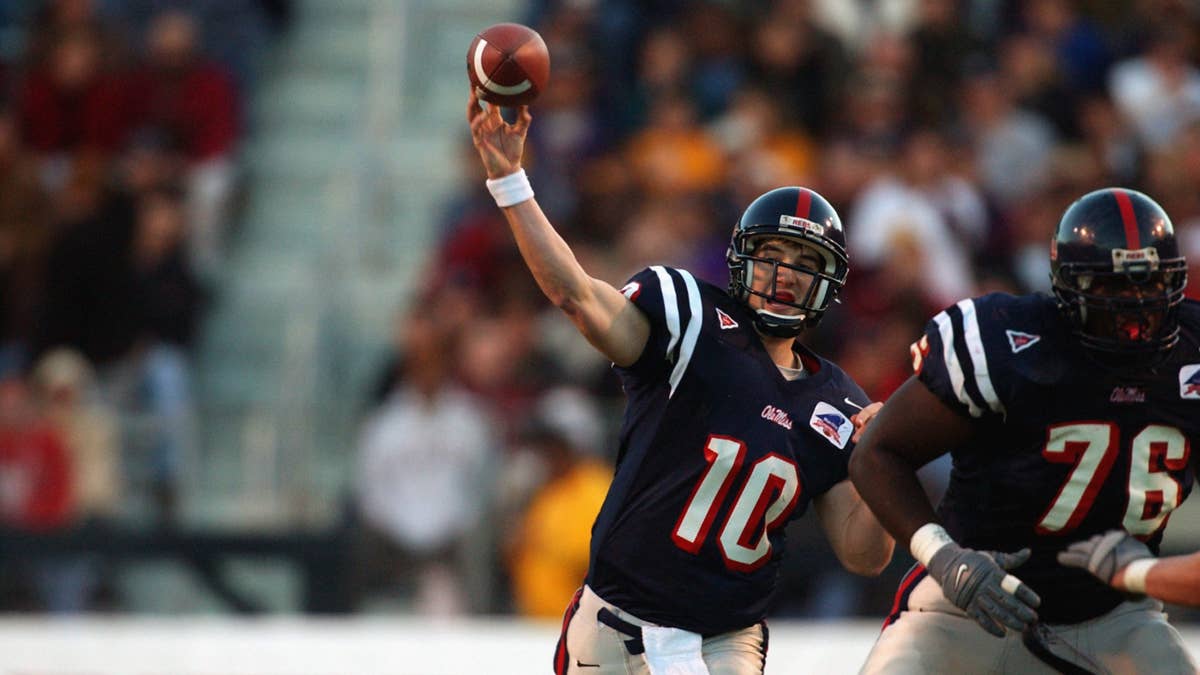
Before he became a two-time Super Bowl champion and a Hall of Fame candidate, Eli Manning was a blue-chip quarterback prospect with a decision that came down to the wire. In a recent interview on Bussin' With The Boys, Manning admitted he was ready to commit to the Texas Longhorns—until a last-second change of heart sent him to Ole Miss instead.
“I was probably going to Texas,” Manning said. “Mack Brown was the head coach, and they were kind of rocking and rolling there. Ricky Williams was gonna be leaving; he was in his senior year. Was gonna go to Texas.”
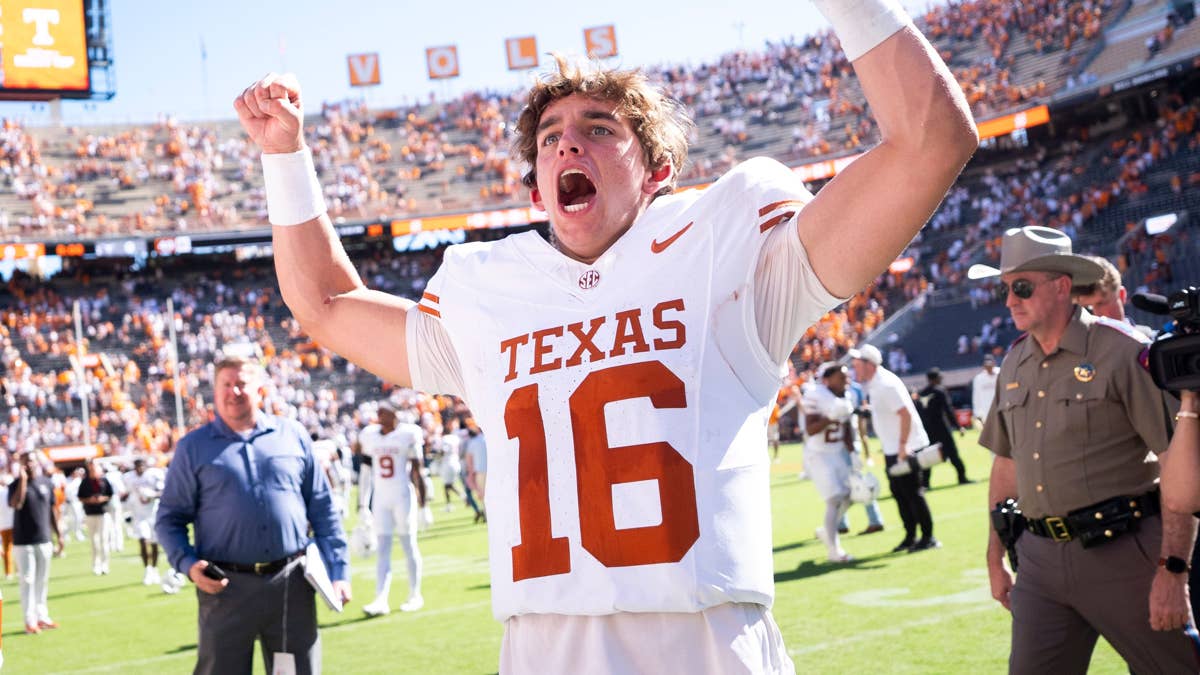
The sudden shift came after then-Ole Miss head coach Tommy Tuberville left for Auburn, leaving the Rebels' program in flux. Manning was intrigued by the stability and success Mack Brown had built in Austin, but the arrival of a familiar face turned the tide.
“That’s when David Cutcliffe came in, who was Peyton’s offensive coordinator at Tennessee,” Manning explained. “And so, knew Coach Cut a bunch, went to football camps at Tennessee, liked him, liked his offense, so he kind of brought me back in. And it’s like, you know, was on a mission to sign me, and that’s what got me to change from Texas and go back to Ole Miss.”
Cutcliffe’s connection to Manning’s older brother Peyton—whom he coached at Tennessee—gave Eli a sense of trust and familiarity. The new coach’s relentless recruitment effort paid off, and Manning ultimately chose to stay in Oxford.
The decision proved monumental. In 2003, Manning led the Rebels to a Cotton Bowl victory over Oklahoma State and their highest AP ranking since 1969, before being selected No. 1 overall in the NFL draft. His legacy at Ole Miss remains a cornerstone of the program’s history.
Of course, Texas didn’t exactly suffer. From 2001 to 2009, the Longhorns never won fewer than 10 games in a season, capturing a national title with Vince Young in 2005. The hypotheticals are tantalizing: What if Manning had gone to Texas instead? Could he have delivered a championship in Austin?
The story adds another layer to Manning’s legacy and raises questions about how college football's landscape might have shifted with one different decision. It also underscores the importance of coaching stability in recruiting—a theme that resonates in today’s era of transfer portals and NIL deals.
For now, Manning’s last-second flip remains one of the great what-ifs in college football history, but both programs emerged stronger for it.