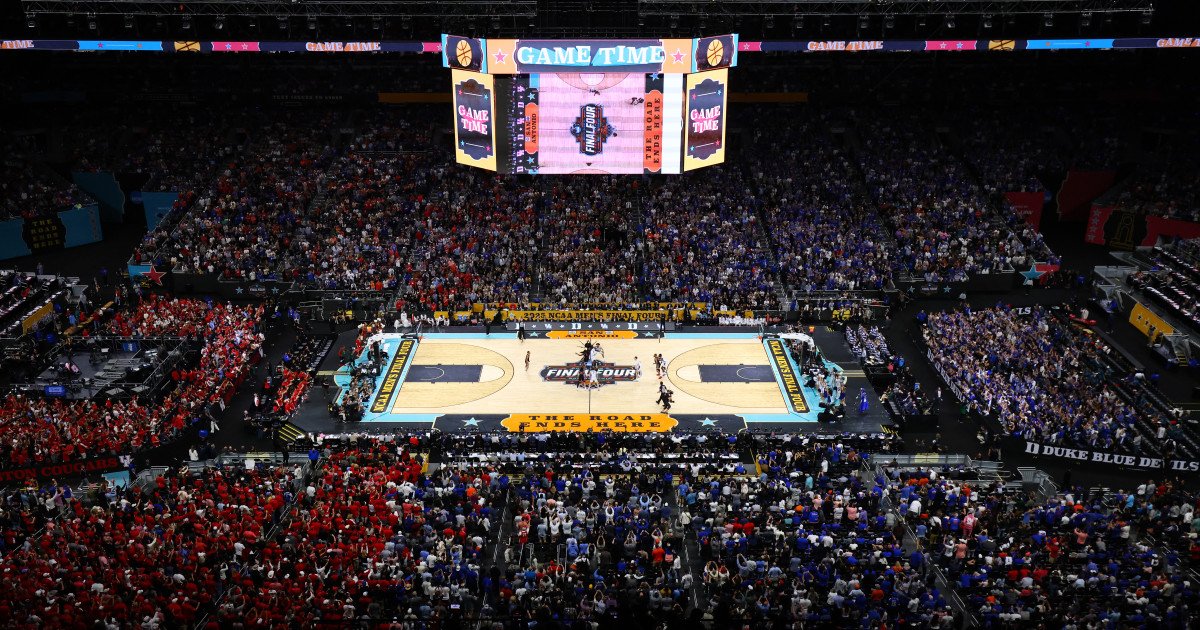
March Madness has claimed its first true giant. The dream of an all-No. 1 seed Final Four is officially dead after the defending national champion Florida Gators, the top seed in the South Region, were sent packing by the ninth-seeded Iowa Hawkeyes in a Sunday night stunner. This seismic shift has forced everyone—fans, analysts, and computers alike—to redraw their tournament blueprints.
The Hawkeyes' victory wasn't just an upset; it was a statement. They now advance to a tantalizing all-Big Ten Sweet 16 showdown against No. 4 seed Nebraska, with a trip to the Elite Eight hanging in the balance. But the bigger question rippling through the sports world is this: with the tournament's landscape violently reshaped, who are the new favorites to reach the sport's final weekend?

The Machine's New Math
On Monday morning, ESPN's Basketball Power Index (BPI), the network's proprietary projection model, released its updated Final Four forecast in the wake of the Florida fallout. The computer's new picks offer a blend of chalk and consequence.
According to the latest BPI simulation, the Final Four will consist of:
- No. 1 seed Duke (Midwest Region)
- No. 2 seed Houston (South Region)
- No. 1 seed Arizona (West Region)
- No. 1 seed Michigan (East Region)
The model clearly still believes in the power of the top line, selecting three No. 1 seeds. However, Florida's absence opened the door for No. 2 Houston to emerge from the chaotic South, a region now ripe for the taking. This recalibration shows how a single result can send algorithmic shockwaves through the entire bracket. For more on how the BPI has shifted throughout the tournament, check out our analysis on ESPN's evolving March Madness forecasts.
How Does the BPI Work?
For those wondering about the brain behind the prediction, ESPN describes the BPI as "a measure of team strength that is meant to be the best predictor of performance going forward." It's not just about wins and losses; it's a complex, projection-based system that evaluates how many points above or below average a team is.
The model simulates the remainder of the season a staggering 10,000 times, accounting for a myriad of factors on every virtual possession. These include opponent strength, pace of play, game location, travel distance, rest, and even altitude. The goal is to cut through the noise and identify the teams truly built for survival. You can see the BPI in action for individual games in our breakdown of Sunday's March Madness predictions.
The Human Element vs. The Algorithm
While computers crunch numbers, the Florida loss will be dissected for human error and coaching decisions. The Gators' early exit is sure to ignite debate about strategy and preparation, much like the scrutiny faced after other high-profile tournament collapses. For a look at how coaching gambles can define a season, read about the costly decisions that ended another Florida team's run.
Meanwhile, the BPI's latest output plays it relatively safe, largely sticking with the teams that have dominated all season. It sees Duke's talent, Arizona's firepower, and Michigan's consistency as the most reliable bets. Houston's inclusion as the lone No. 2 seed speaks to the Cougars' formidable reputation and the perceived opening Florida left behind.
As the Sweet 16 approaches, all eyes will be on these projected favorites. Can they handle the mounting pressure, or will the madness continue? The computers have placed their bets, but as Iowa just proved, the beauty of March lies in its beautiful, unpredictable chaos.