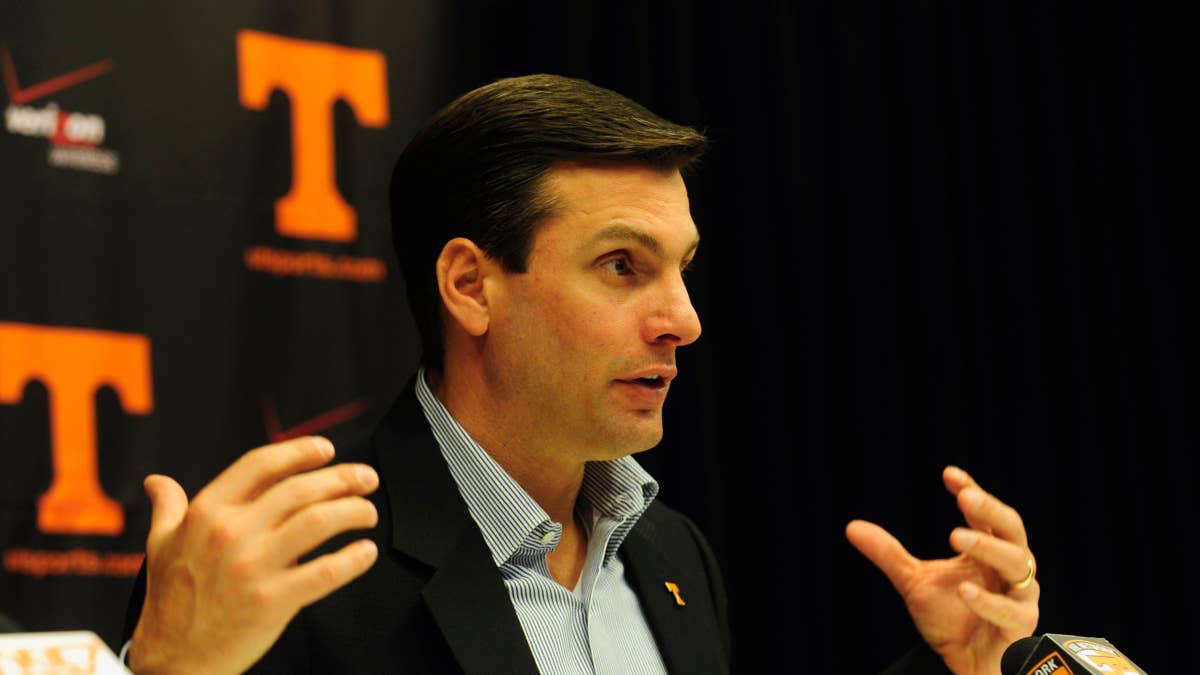
Nearly a decade after his last head-coaching gig, Derek Dooley is trading playbooks for policy. The former Tennessee Volunteers and Louisiana Tech Bulldogs coach has entered the political arena, launching a Republican bid for the U.S. Senate in Georgia. But unlike a fourth-down conversion, this path is anything but a sure thing.
Dooley announced his candidacy last August with the goal of unseating Democratic incumbent Jon Ossoff. However, he must first survive a crowded Republican primary on May 19, where he faces two sitting congressmen—Buddy Carter and Mike Collins—along with former Senate candidate Jonathan McColumn and businessman John F. Coyne III.
The early numbers aren't kind to Dooley. Polls from RealClearPolitics, Rasmussen Reports, the Atlanta Journal-Constitution, and the University of Georgia all show Collins leading the primary by double digits. Endorsements have also been lopsided: while Dooley does have the backing of Georgia Governor Brian Kemp, Collins has locked in support from 18 state legislators, CPAC, Turning Point USA, and numerous other heavyweight conservative organizations.
To even make the November ballot, Dooley will need a comeback more dramatic than any fourth-quarter rally he ever orchestrated. The odds are steep, but his name—and his father's legacy—still carry weight in the state.
A Coaching Career with Highs and Lows
Dooley's football roots run deep. His father, the legendary Vince Dooley, coached Georgia to a national championship in 1980 and spent 25 years as the Bulldogs' head man. Derek got his start as a graduate assistant at Georgia in 1996, when his father was athletic director, then worked his way up through the assistant ranks.
His big break came under Nick Saban at LSU in 2003, where he served as tight ends coach and assistant head coach, helping the Tigers win a national title. He followed Saban to the Miami Dolphins in 2005 but returned to the college game in 2007 to become head coach at Louisiana Tech.
After a solid 8-5 season and an Independence Bowl win in 2008, Dooley went just 17-20 overall with the Bulldogs. Still, Tennessee rolled the dice and hired him in 2010. His tenure in Knoxville was rocky: he went 15-21 and was fired after a blowout loss to Vanderbilt in 2012. He never held another head-coaching job.
Dooley spent the next decade as an assistant in the NFL and college ranks, most recently serving as a senior offensive analyst for Saban at Alabama from 2022 to 2023. That experience, along with his family's deep ties to Georgia football, gives him a unique platform—but whether it translates into votes remains to be seen.
As the college football landscape shifts, with $50 million rosters looming and debates over playoff expansion heating up, Dooley's transition from the sideline to the Senate floor adds another layer to the ongoing conversation about the intersection of sports and politics.