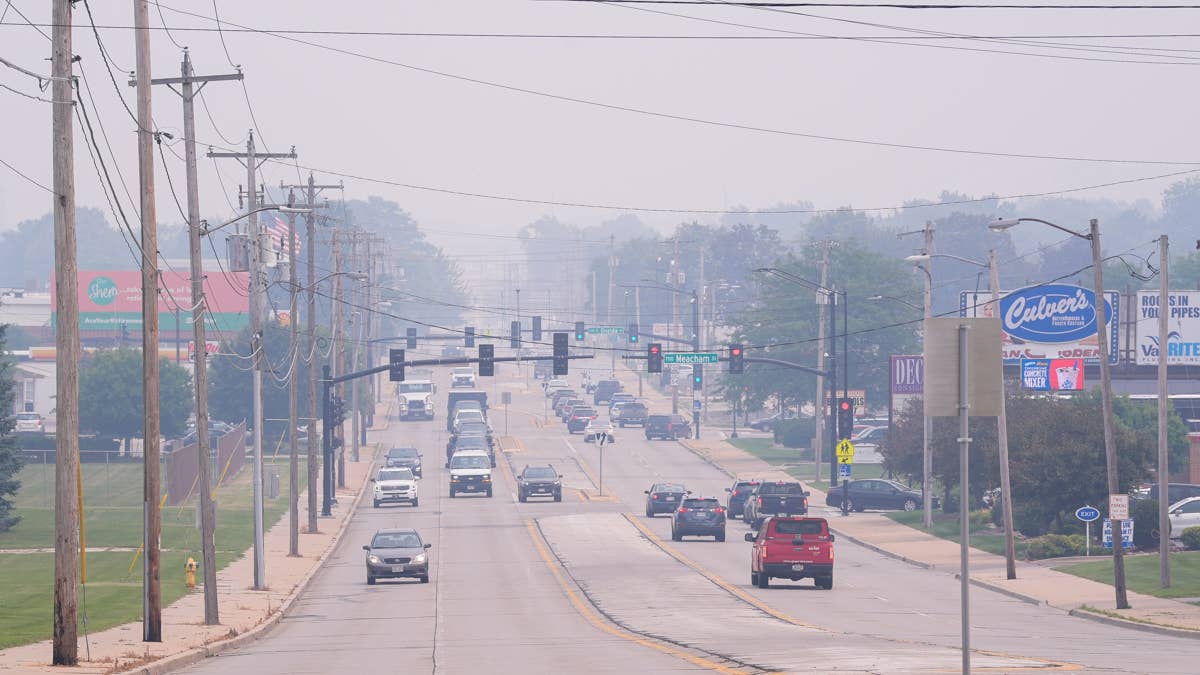
The haze rolling in from north of the border isn't fog—it's wildfire smoke, and it's triggering health warnings across a huge swath of the United States. The National Weather Service has issued an official air quality alert for 17 states as smoke from Canadian wildfires continues to drift south, creating potentially hazardous breathing conditions.
On Wednesday, the agency urged residents in affected areas to take precautions. “Smoke from Canadian wildfires will adversely impact air quality,” the alert stated. “The Agency expects the Air Quality Index to be in the ‘unhealthy for sensitive groups’ range.”

That means people with lung disease, asthma, heart conditions, children, and older adults should stay indoors and keep activity levels low. Even the general public is advised to avoid all physical activities outdoors. The alert also recommends keeping windows closed overnight to prevent smoke from seeping indoors, and reducing or eliminating activities that contribute to air pollution, such as outdoor burning or using wood-burning devices.
This isn't the first time wildfire smoke has caused widespread air quality issues. Earlier this year, New York City faced similar conditions, with skies turning orange and residents scrambling for masks. The current warning covers a much larger geographic area, stretching from the Midwest to the East Coast and down into the Southeast.
The 17 states on alert include: Connecticut, Delaware, Illinois, Indiana, Kentucky, Massachusetts, Maryland, Michigan, Minnesota, North Carolina, New Jersey, New York, Ohio, Pennsylvania, Rhode Island, Virginia, and Wisconsin. That's a massive region, home to tens of millions of people.
While the immediate focus is on health, the smoke could also impact outdoor sports events, practices, and training sessions across the region. Schools and leagues may need to postpone games or move activities indoors. For athletes with respiratory issues, the conditions pose a serious risk.
The situation echoes recent rip current warnings that forced beach closures in multiple states, reminding us that nature can quickly upend outdoor plans. And as wildfire seasons grow longer and more intense, these air quality alerts may become a recurring challenge for communities far from the flames.
For now, the advice is simple: stay safe, limit time outside, and keep those windows shut. The smoke may be drifting south, but the health risks hit close to home.