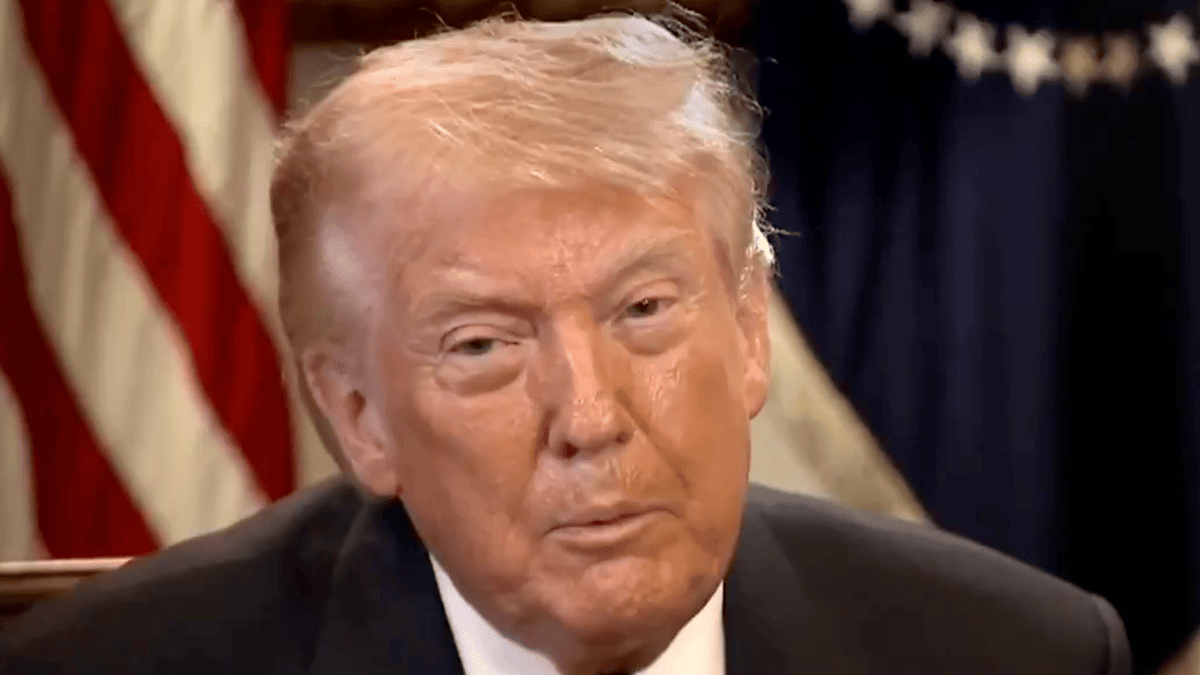
President Donald Trump is the latest to voice frustration over the NFL's evolving broadcast strategy, which is increasingly leaning on streaming services to air games. In a recent interview with Full Measure News, the former president didn't hold back, saying the league is prioritizing profits over its most loyal fans.
“They’re making a lot of money. They could make a little bit less,” Trump said. “You have people that live for Sunday… and then all of a sudden, they’re gonna have to pay $1,000 a game. It’s crazy. So, I’m not happy about it.”
Trump's comments come as the NFL prepares for a 2026 season that will see more games than ever before streamed exclusively on platforms like Netflix, Amazon Prime, Peacock, and YouTube TV. While traditional broadcasters like NBC, FOX, ESPN, and CBS still hold the bulk of the schedule, the shift to streaming has triggered a wave of fan backlash.
Under the new schedule, Netflix will air the Week 1 matchup between the San Francisco 49ers and Los Angeles Rams. Amazon Prime is set to carry multiple Thanksgiving Week games, while Netflix will also handle several Christmas Week contests. Even playoff games will appear on Peacock, further fragmenting access.
Fans have been quick to echo Trump's frustration. Social media is flooded with complaints about the need to subscribe to multiple services just to follow a single team. “This is actually becoming a problem. People pay for sports channels and packages and then some games are blacked out in the local market,” one fan wrote. Another added: “We all agree, stop making me own 15 apps to watch football. Annoying.”
The growing chorus of discontent has even sparked calls for government intervention. Some have urged federal regulators to investigate the NFL's scheduling practices, arguing that the league is turning the game into a money grab. Trump's remarks suggest he would support such an inquiry, aligning himself with everyday fans who feel priced out of the experience.
While the NFL has defended its streaming deals as a way to reach younger audiences and generate more revenue, the move has also raised questions about equity. Critics point to the subtle but significant broadcast boost for the 2026 schedule, which may not be enough to offset the added complexity for viewers.
Even beyond football, the trend toward streaming is drawing scrutiny. The FCC chair recently backpedaled on potential changes to sports TV, a sign that the landscape remains in flux. For now, fans are left navigating an increasingly expensive and fragmented viewing experience.
Trump's criticism also touches on a broader cultural point: the sanctity of Sunday football. For generations, fans have gathered around the same TV set, watching games on free or cable channels. That tradition is now under threat, and the president's comments reflect a sentiment shared by millions.
As the NFL continues to expand its streaming footprint, the question remains: how much are fans willing to pay before the league hears their complaints? For Trump, the answer is clear — and he's not alone in feeling that way.