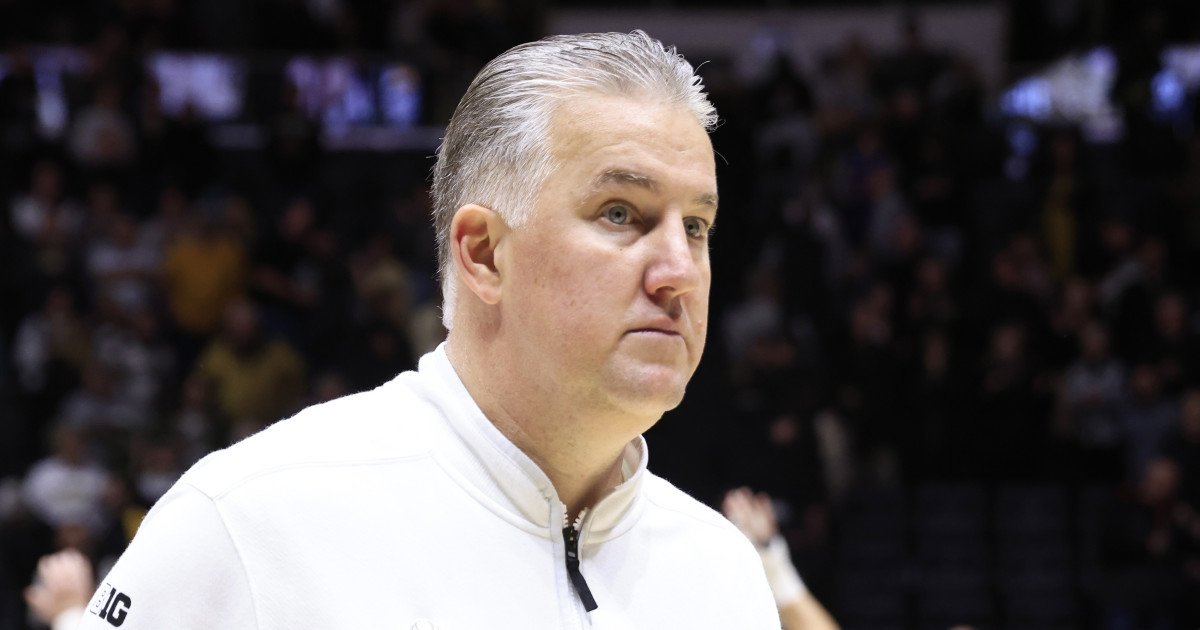
The debate over college basketball scheduling and tournament resumes just got a fresh dose of fiery commentary, and it's coming from an unlikely source in the aftermath of March Madness. Purdue head coach Matt Painter, fresh off guiding his Boilermakers to the Round of 32, took direct aim at Miami (Ohio) coach Travis Steele for comments Steele made during his team's controversial tournament bid.
A Direct Rebuke From a Powerhouse
Steele had argued that his undefeated RedHawks struggled to secure a strong schedule because power conference teams refused to play them, a point he emphasized during Miami's push for an at-large bid. Painter, speaking after Purdue's victory over Queens, dismantled that argument with the precision of a veteran coach who has heard it all before.
"We play 5 mid-majors this year," Painter stated, outlining his non-conference philosophy. "If he was in our position, he'd do the same thing we're doing. Every high-major plays mid-majors." Painter didn't just make a general claim; he provided receipts, listing formidable opponents like Akron, Kent State, and Oakland—all consistent top-tier teams in their respective mid-major conferences.
The Hypocrisy Warning
The heart of Painter's critique was a stark warning about the future. He suggested that if Steele ever lands a job at a high-major program, his current complaints would ring hollow. "When you're a mid-major guy and you say those things and now you get a high-major job, you got to be careful," Painter cautioned. "You're talking with a forked tongue there." This pointed remark frames the entire scheduling debate as one often dictated by perspective and circumstance, not principle.
The context for this exchange is crucial. Miami (Ohio) completed a stunning 31-0 regular season but faced intense scrutiny over the strength of their schedule. Despite the perfect record, many argued that a .500 team from a power conference would have a better tournament resume—a classic "bubble trouble" debate that divided experts. Their dream season ultimately ended in heartbreak, first with a shocking loss in the MAC Tournament quarterfinals, and then a 22-point drubbing by Tennessee in the NCAA Round of 64 after barely surviving the First Four.
Painter's comments add a new layer to the post-mortem of Miami's season. While some, like Charles Barkley, defended the RedHawks' right to a bid, Painter is challenging the narrative that they were victims of an unfair system. He positions Purdue and similar programs not as avoidant giants, but as willing participants who actively seek competitive games against the best the mid-major world has to offer.
Bigger Than One Game
This spat touches on perennial tensions in college sports. Mid-major programs often fight for recognition and quality games, while power conference teams balance challenging schedules with the need for manageable wins. Painter's detailed rebuttal suggests Steele's claims may have hit a nerve among high-major coaches who feel their scheduling efforts are unfairly maligned.
It also serves as a reminder that coaching critiques don't always stay on the court. Just as broadcaster comments can ignite fan fury, disagreements between coaches over philosophy and perception can spill into public view, creating compelling subplots long after the final buzzer. For Painter, this was a moment to defend his program's—and his peers'—integrity in the complex chess game of non-conference scheduling.
As the dust settles on another tournament, Painter's "forked tongue" charge ensures the conversation about access, scheduling, and credibility will continue to simmer until the balls are rolled out again next fall.