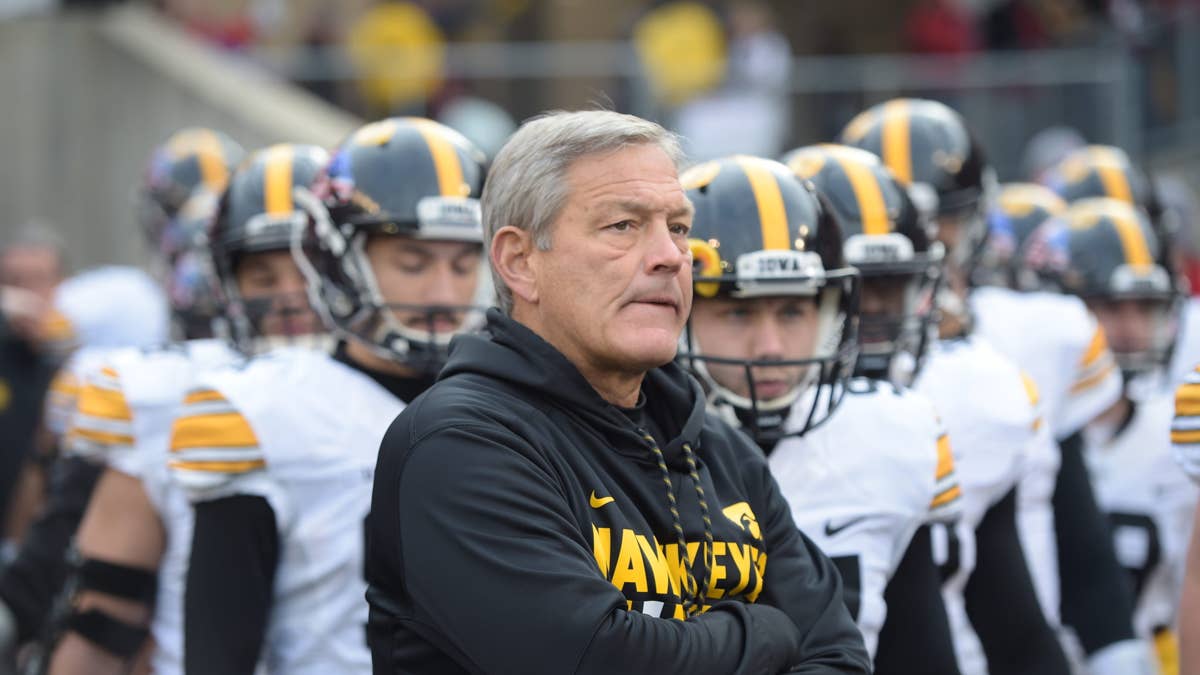
The NCAA has dropped the hammer on the Iowa Hawkeyes football program, announcing Tuesday that head coach Kirk Ferentz and assistant Jon Budmayr committed tampering violations. The ruling confirms the coaches made improper contact with a student-athlete enrolled at another school who had not yet entered the Transfer Portal, a clear breach of current recruiting rules.
In a detailed decision, a Division I Committee on Infractions panel stated the violations occurred when Ferentz and Budmayr had "impermissible contacts" with the athlete. Budmayr also communicated with the athlete's parent prior to portal entry. Ferentz acknowledged he violated head coach responsibility rules through his awareness and personal involvement in the misconduct.
Penalties Accepted
The University of Iowa proactively self-imposed a series of punishments, which the NCAA has accepted. This cooperative approach likely mitigated more severe sanctions. The combined penalties are significant and will impact the program's immediate future.
The sanctions include:
- One year of probation for the football program.
- A $25,000 fine imposed by the university.
- A two-week ban on all football recruiting communication during the 2026 calendar year.
- Substantial reductions in recruiting person days, including periods where Ferentz and Budmayr are barred from off-campus recruiting in 2025.
- The vacation of all records involving the ineligible student-athlete.
- A one-game suspension for both Ferentz and Budmayr during the upcoming 2024 season.
A Shifting Landscape
This case lands in the midst of a turbulent era for NCAA enforcement. With the transfer portal and name, image, and likeness (NIL) rights reshaping college athletics, policing tampering has become a monumental challenge. The NCAA's authority has been weakened by recent court defeats, leading many to wonder if penalties like these carry enough sting to deter future violations.
This incident at Iowa is far from an isolated case. Tampering accusations have become a frequent headline across college sports, from the gridiron to the hardwood. Just recently, the NCAA made headlines for slamming the door on the Big Ten's request to pause tampering probes, signaling its intent to press forward despite the chaotic climate. Meanwhile, in college basketball, coaches like UConn's Dan Hurley have publicly blasted rival programs for widespread tampering, highlighting the pervasive nature of the issue.
The relatively standardized penalties—probation, fines, and short suspensions—raise questions about the future of NCAA enforcement. Can these measures effectively police a rapidly evolving ecosystem where athlete movement is increasingly fluid? The outcome of this Iowa case suggests the governing body is sticking to its traditional playbook, even as the game changes around it.
For Kirk Ferentz, one of the longest-tenured coaches in FBS, this violation stains an otherwise lengthy career at Iowa. The one-game suspension will force him to watch from the sidelines, a rare and undoubtedly unwelcome experience. For the Hawkeyes, the recruiting restrictions come at a critical time as programs jockey for position in the new era of college football.
As the sport continues to transform, this ruling serves as a benchmark. It shows the NCAA is still willing to act on tampering, but the lasting impact of such penalties in today's environment remains to be seen. It might be years before we fully understand how much the enforcement rulebook has been rewritten.