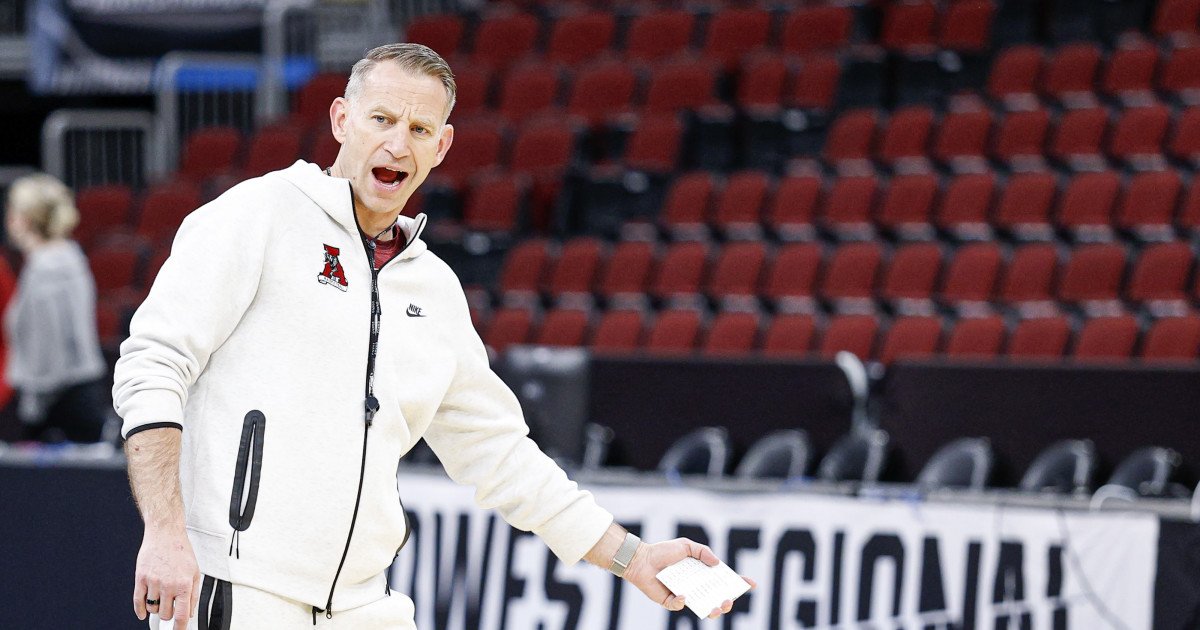
The heat is on in Tuscaloosa, and it's not just the Alabama sun. Crimson Tide head coach Nate Oats finds himself in a blistering spotlight of criticism following his team's NCAA Tournament exit, not for the loss itself, but for what fans are calling a stunning lack of accountability in its aftermath.
Alabama's March Madness run came to a crashing halt in the Sweet 16, overpowered by a physically dominant Michigan squad. After holding a slim halftime lead, the Tide were bulldozed on the glass in the second half, getting outrebounded by a staggering 25-12 margin. The Wolverines' frontcourt of Yaxel Lendeborg, Morez Johnson Jr., and Aday Mara feasted, exposing a clear size disadvantage for Oats's team.
A Postgame Presser That Backfired
Instead of crediting Michigan or dissecting his own team's shortcomings, Oats took a different tack with reporters. He pointed directly to the absence of center Charles Bediako, who was ruled ineligible to play, as the primary reason for the rebounding debacle. "We knew we were undersized," Oats admitted. "He would've definitely helped the situation with the rebounding. … We wouldn't have gotten out-rebounded by 13 tonight had we been able to continue to play him."
Bediako's situation is complex. The former Alabama player, who had been in the NBA's G League, returned to the team in January under a temporary restraining order and played five games. However, the Alabama Supreme Court later denied his request to play while his eligibility case was reviewed, making him unavailable for the tournament. Oats's decision to highlight this absence, rather than the performance of the players who were on the floor, immediately lit a fuse across the college basketball world.
Fan Fury Erupts Online
The reaction on social media was swift and merciless. Fans and commentators blasted Oats for what they perceived as shameless excuse-making and a failure to own the loss. "Absolutely no accountability here," wrote one fan. "How about don't sign G-League guys." Another added, "I don't care how good of a coach he is, I'm glad this guy's not running Arkansas' basketball program. Shameless." The sentiment was overwhelmingly that a leader, especially one of a premier program like Alabama, should look inward after a defeat.
This controversy adds another layer to a tumultuous period for Alabama athletics, following other off-court headlines like Aden Holloway's pre-tournament arrest. It also stands in stark contrast to the accountability shown in other sports dramas, such as when Giants RB Cam Skattebo ignited a firestorm for his comments on CTE, which many saw as dismissing a serious issue.
Oats's comments have sparked a broader debate about coaching ethics in the modern era. In an age where player availability and transfer portals create constant roster flux, is pointing to an unavailable player a valid explanation or a cop-out? For many, Friday night's press conference was a clear example of the latter. "Dear God in heaven, hearing Nate Oats talking about Bediako on the NCAA Sweet 16 podium tonight after a loss in this event is disgusting," one observer posted. "Just a complete embarrassment as a college coach."
The fallout raises questions about the message this sends to the Alabama players who battled on the court. Does attributing the loss to one missing man diminish their effort? Furthermore, it casts a shadow over what was otherwise a strong season for the Tide, who had convincingly beaten Hofstra and Texas Tech to reach the second weekend. Some analysts had even pegged them as a dark horse, with figures like Sydney Thomas famously predicting Alabama to win it all in her bracket.
While coaches often defend their teams, the line between defense and deflection appears to have been crossed for much of the public. In the high-stakes world of college sports, where fortunes can change with a single game, how a leader handles defeat often defines them as much as how they handle victory. For Nate Oats, this particular loss may be remembered less for the scoreboard and more for the explanation that followed—an explanation that has, for now, cost him a significant amount of respect in the eyes of the college basketball community.