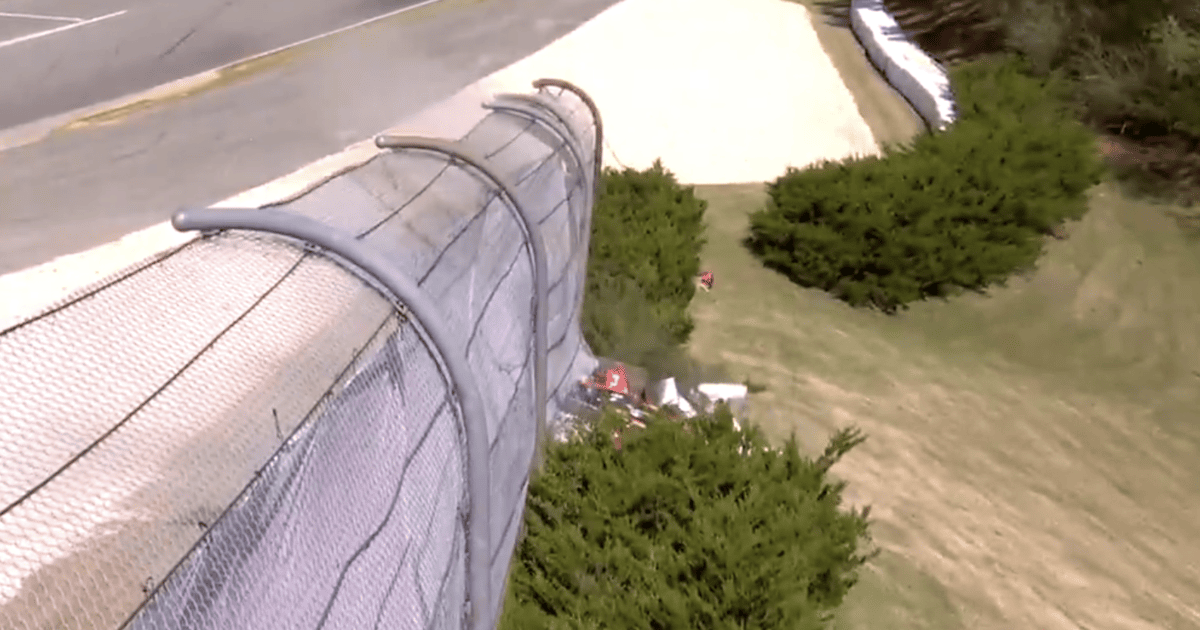
The serene atmosphere at Barber Motorsports Park was shattered on Saturday, literally and figuratively, when Team Penske's Scott McLaughlin survived a heart-stopping crash that left the safety barrier in tatters and the IndyCar world holding its breath. During a practice session for Sunday's race, McLaughlin's car snapped loose, launching into a terrifying trajectory that ended with the vehicle breaching the track's protective fence.
A Moment of Pure Adrenaline and Relief
As McLaughlin navigated the approach to Turn 1, his car clipped the grass, triggering a violent loss of control. The machine became airborne before slamming into and through the safety fencing in an impact that silenced the paddock. The AMR Safety Team sprinted to the scene, their urgency met with an incredible sight: McLaughlin climbing from the wreckage under his own power, miraculously without a scratch.

The immediate aftermath shifted focus from lap times to safety assessments. The damaged barrier required extensive repairs, forcing IndyCar officials to cancel the remainder of Saturday's practice. While crews worked, concern for the driver was paramount, a familiar tension in motorsport where safety advances are constantly tested. This incident echoes the vigilance seen after other high-profile accidents, like when the golf world held its breath following Tiger Woods' recent car crash, underscoring how quickly routine moments can turn critical.
"It Looked a Lot Worse Than It Felt"
Displaying the trademark resilience of a racer, McLaughlin addressed the media shortly after the harrowing event. "The crash looked a lot worse than it felt," he stated, downplaying the visual severity of the wreck. His primary concern wasn't for himself, but for his team and his race car's condition. "I'm gutted for my Odyssey Battery guys, but I had a look at the car. Honestly, I feel like we can get this thing fixed and I can go ship it again, so I just want to go out and go for pole."
His determination to return to the track highlights the fierce competitive spirit in IndyCar, a series known for its blistering speeds and daring maneuvers. This drive to compete is a thread that connects stars across disciplines, much like the passion Dale Earnhardt Jr. has expressed for wanting to tackle an IndyCar lap himself.
Fan reaction on social media was a mix of shock and relief. "That looked terrifying glad he's alright," wrote one observer, while another noted, "The safety of these cars never ceases to amaze. Not in one piece but largely still intact. Incredible that Scott is okay – but a credit to IndyCar." Some, however, raised questions about the barrier itself, with one commenter speculating, "I feel like that fence perhaps isn't up to the safety standards that it should be."
The Show Goes On
Despite the dramatic interruption, the weekend's schedule remains intact. IndyCar confirmed that Sunday's race is set to proceed as planned, a testament to the efficiency of the safety crews and the resilience of the sport's infrastructure. McLaughlin is expected to be back behind the wheel, his car repaired, his focus squarely on racing.
Incidents like these serve as stark reminders of the inherent risks in motorsports and the continuous evolution of safety technology. Every crash provides critical data, pushing engineers to improve designs not just for the drivers, but for everyone involved. This relentless pursuit of safety is a universal goal, similar to the urgent warnings issued after tragic ATV accidents or the community mourning following a teen's fatal golf cart crash.
As the sun sets on a chaotic day at Barber, the story isn't one of destruction, but of survival and preparation. Scott McLaughlin's scary ride is over, and the race for victory is just about to begin.