The opening round of March Madness delivered its signature drama, but this time with a bitter aftertaste of controversy. Kentucky's heart-stopping overtime victory over Santa Clara has been completely overshadowed by a firestorm of accusations aimed directly at the officiating crew, with many claiming the game was deliberately manipulated to favor the Wildcats.
A Timeout That Never Was
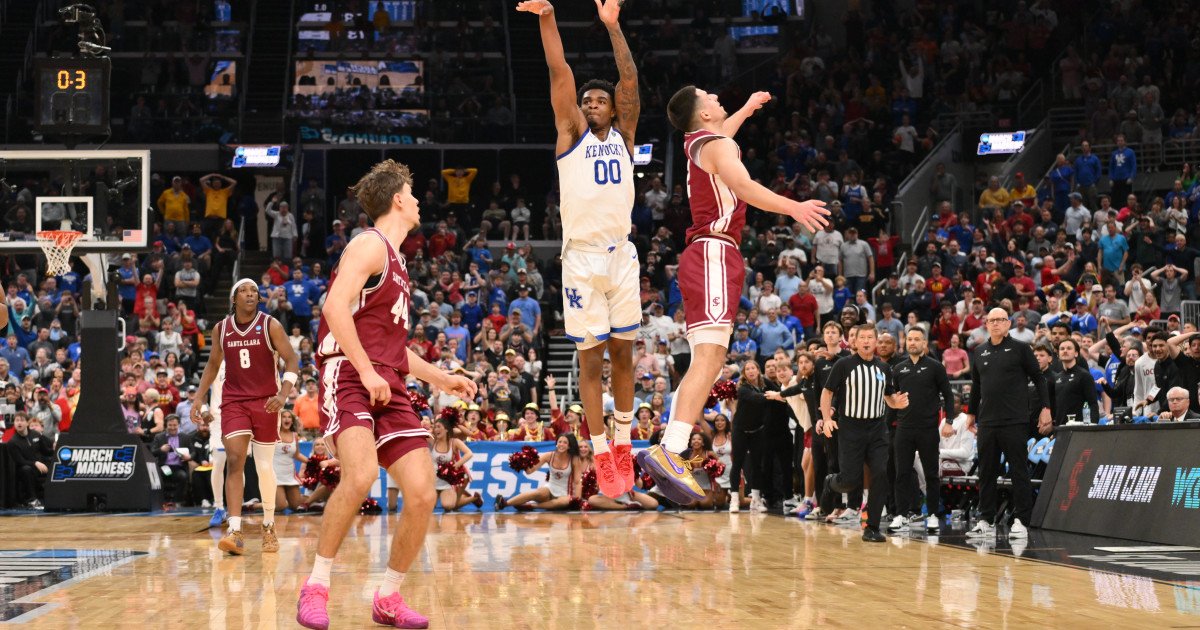
With just seconds remaining in regulation and his team clinging to a three-point lead, Santa Clara coach Herb Sendek frantically signaled for a timeout. The strategic move would have allowed his Broncos to set their defense and potentially ice the game. Instead, the referees' whistles remained silent. In the chaotic moments that followed, Kentucky's Otega Oweh raced upcourt and launched a miraculous three-pointer that swished through the net as time expired, forcing overtime and completely shifting the game's momentum.
The missed call wasn't just a simple oversight in the eyes of thousands watching; it was potential evidence of something far more sinister. Social media erupted immediately, transforming from a platform celebrating buzzer-beaters to a courtroom for trying the officials. "He gets that timeout, Santa Clara moves on," declared one furious fan, echoing a sentiment that spread like wildfire across the internet.
The Court of Public Opinion Delivers a Verdict
Analysts and spectators alike dissected the final sequence frame by frame, with many concluding the no-call was indefensible. ESPN's Dan Orlovsky highlighted the immediacy of Sendek's request, questioning how any official could miss it. The debate quickly escalated beyond human error, with terms like "rigged" and "assignment" trending alongside the game's highlights. One viral post stated bluntly, "This was one of the nastiest rigged games I've witnessed in a while down the stretch. Couldn't be more obvious refs had an assignment to advance Kentucky."
This incident throws fuel on the long-smoldering fire of fan distrust in sports officiating, a topic we've seen flare up in other leagues like the NFL's ongoing contract disputes with its referees. The timing is particularly sensitive, given the NCAA's own efforts to police integrity, including the recent deployment of betting surveillance technology on tournament officials.
While the noise crescendoed online, Kentucky quietly took care of business in the extra period, leveraging the emotional lift from Oweh's heroics to secure their spot in the Round of 32. Oweh finished with a monstrous 35-point performance, a showing that under normal circumstances would be the sole story. Yet, his brilliance is now a footnote in a larger narrative about fairness.
Survive, Advance, and Face the Scrutiny
The Wildcats now prepare for their next opponent, but they'll do so under a cloud of suspicion they did nothing to create. The victory, while officially recorded, feels tainted for everyone outside of Big Blue Nation. For Santa Clara, it's a brutal exit defined by a "what if" that will linger long after the tournament ends.
This controversy strikes at the very heart of March Madness, where dreams are made and broken on single possessions. It raises uncomfortable questions about transparency and accountability in high-stakes environments. While Kentucky fans will rightly celebrate Otega Oweh's legendary clutch moment, the broader sports world is left to wonder if the game's defining play should have ever happened. The referees' silence on the court has been met with a deafening roar of criticism off it, ensuring this game will be remembered not for who won, but for how they won.