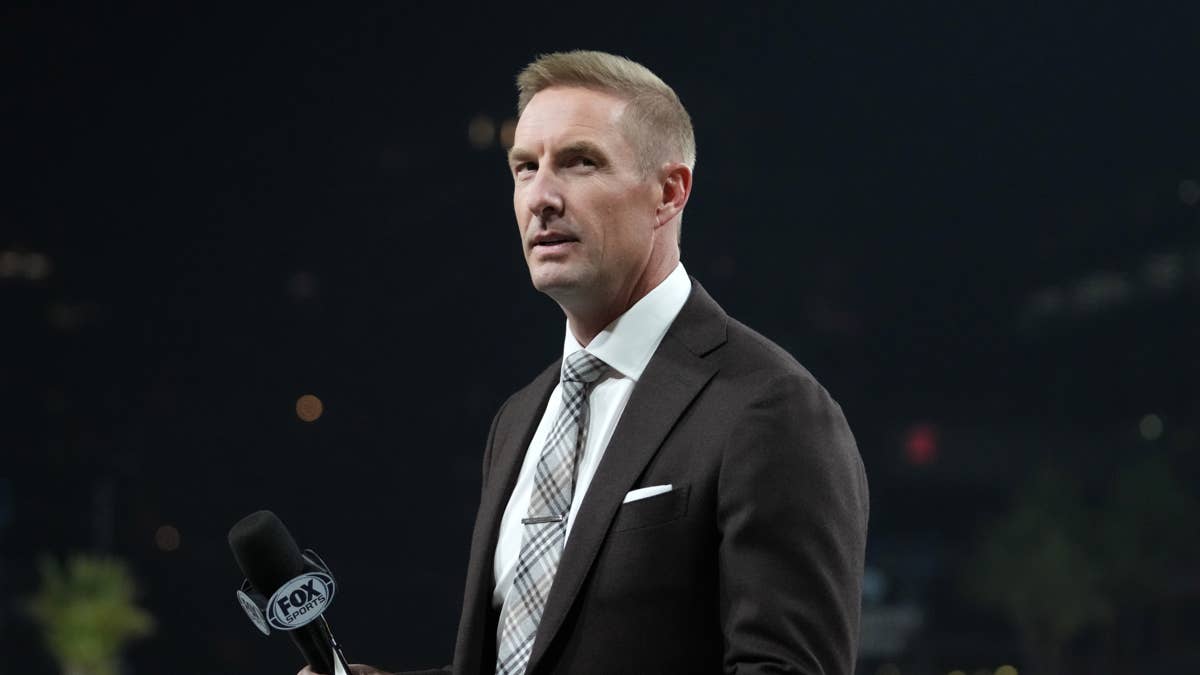
College football is at a crossroads, and few voices carry more weight than FOX Sports' Joel Klatt. In a recent profile by The Athletic's Andrew Marchand, Klatt didn't hold back on what he sees as the sport's most pressing issue—and it's not NIL, the transfer portal, or even conference realignment. It's the calendar.
"The one that the coaches talk about most is the calendar," Klatt said. "I firmly believe that a lot of things would get fixed, if we focused on fixing the calendar. The way that I would phrase it is that we need to do what everyone else does."
Klatt's vision is simple: separate the three critical phases of the season—competition, roster building, and preparation—instead of letting them bleed into one another. Right now, he argues, they're overlapping, and that overlap is creating chaos for coaches, players, and administrators alike.
"We need to compete, then we need to roster build, and then we need to prepare. And those 3 chunks need to be separate versus overlapped. Right now, they're overlapping, and it presents a huge problem," Klatt explained.
That overlap has real consequences. Just last year, the Lane Kiffin saga at Ole Miss highlighted how the current structure can lead to confusion and frustration. The transfer portal, which was meant to give players flexibility, has instead become a source of constant uncertainty for programs trying to plan their rosters. The eligibility chaos that has drawn sharp criticism from SEC coaches is a direct byproduct of this messy timeline.
But Klatt didn't stop at the calendar. He also laid out a second major fix: getting the sport's governance out of the courtroom. "Second, we need to get the governance of our sport out of the courtroom, because that's what's killing us. It's not that we don't have rules. It's that we are not able to enforce rules," he said.
Klatt pointed to the absurdity of judges in different states issuing conflicting rulings on player eligibility—including cases where players who've signed with NFL teams and participated in camps are still being granted college eligibility. "We don't have that because players and schools just take these entities to court immediately. Judges in different states give different rulings based on eligibility for players who have signed and participated in an NFL camp, which is crazy," he added.
His solution? A collectively bargained agreement between players and the sport's governing bodies. "I believe that we need a collectively bargained agreement with the players so that we can both protect them and protect the enterprise," Klatt said. Such an agreement would also help clean up the murky world of player representation, where unregistered agents often lead families into deals they don't fully understand.
Klatt's ideas come at a time when college football is struggling to balance its amateur roots with the realities of a professionalized landscape. The recent push for player compensation and rights has even drawn support from Colin Kaepernick, who has backed the college game's evolution. But as the sport grapples with these changes, the calendar and governance issues remain front and center.
While Klatt's proposals are bold, they're also practical. Separating the season into distinct phases would give everyone—coaches, players, and administrators—a clearer roadmap. And a collective bargaining agreement would provide the stability that's been missing as the sport lurches from one legal battle to the next.
As college football continues to evolve, Klatt's voice is one of the most influential in the conversation. Whether his ideas gain traction remains to be seen, but they're certainly worth serious consideration. After all, as the sport faces challenges like extreme heat in early-season openers and the ongoing fallout from realignment, finding a way to bring order to the chaos has never been more critical.