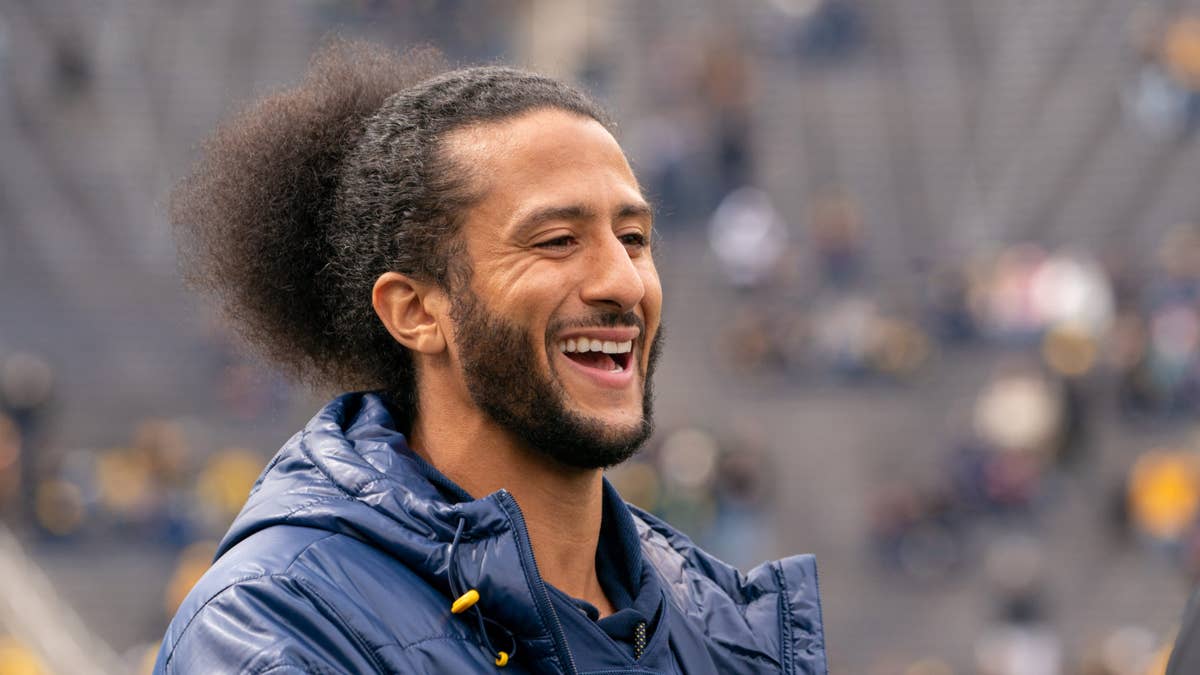
Colin Kaepernick isn't walking away quietly. The former NFL quarterback, who hasn't taken a snap since 2016, is making it clear he's done with the league — at least as a spectator. In a recent interview, Kaepernick announced he will no longer watch professional football games, a boycott born from what he calls the NFL's ongoing 'blackballing' of him and other players who joined his protest.
Speaking with NBC News, Kaepernick explained his decision: "I'm not gonna support an organization that one, is actively blackballing me, but two, has targeted my brothers who have been protesting as part of this as well." Instead, he's shifted his fandom to the college game, saying, "I watch college football."
The 38-year-old's stance is hardly new. In 2016, he began kneeling during the national anthem to protest racial injustice and police brutality. That season would be his last in the NFL. Despite his continued fitness — he still trains daily at 4 a.m. — no team has signed him since.
Kaepernick is set to release his memoir, The Perilous Fight, on Sept. 15. In it, he reflects on the personal cost of his activism. "I don't want my community to watch me and have the takeaway be that if you fight for Black folks, it's over for you," he wrote. The book is both a chronicle of his journey and a message of resilience.
He remains unapologetic about the protest itself. "Oftentimes, we hear a lot of the side of the pushback, but I think what's disconnected from a lot of that is actually the response directly in communities that we were seeing, and the momentum and the excitement around the effort of no, we're actually going to change this," he told NBC News.
Kaepernick argues that critics have focused on the method rather than the message. "The critique of the method is a way to distract from the actual message," he said. "The conversation that was being had is taking a knee is more problematic than Black people being killed. Just simply put, 'Hey, we need to talk about taking a knee. This is urgent. We need to resolve this.' But another Black person gets killed, and it's like, 'Oh well, that's kind of normal.'"
His boycott aligns with a broader wave of fan discontent. Some NFL supporters are already planning their own concessions boycott for the 2026 season, a sign that frustration with the league is simmering beyond just Kaepernick's circle.
Kaepernick's activism has earned him recognition beyond the gridiron. He was recently honored with the Muhammad Ali Center's 2026 Humanitarian Award, a nod to his continued impact off the field.
For now, Kaepernick's Sundays will look different. No NFL games, no league-sponsored hype. Just college football and a message that won't fade.