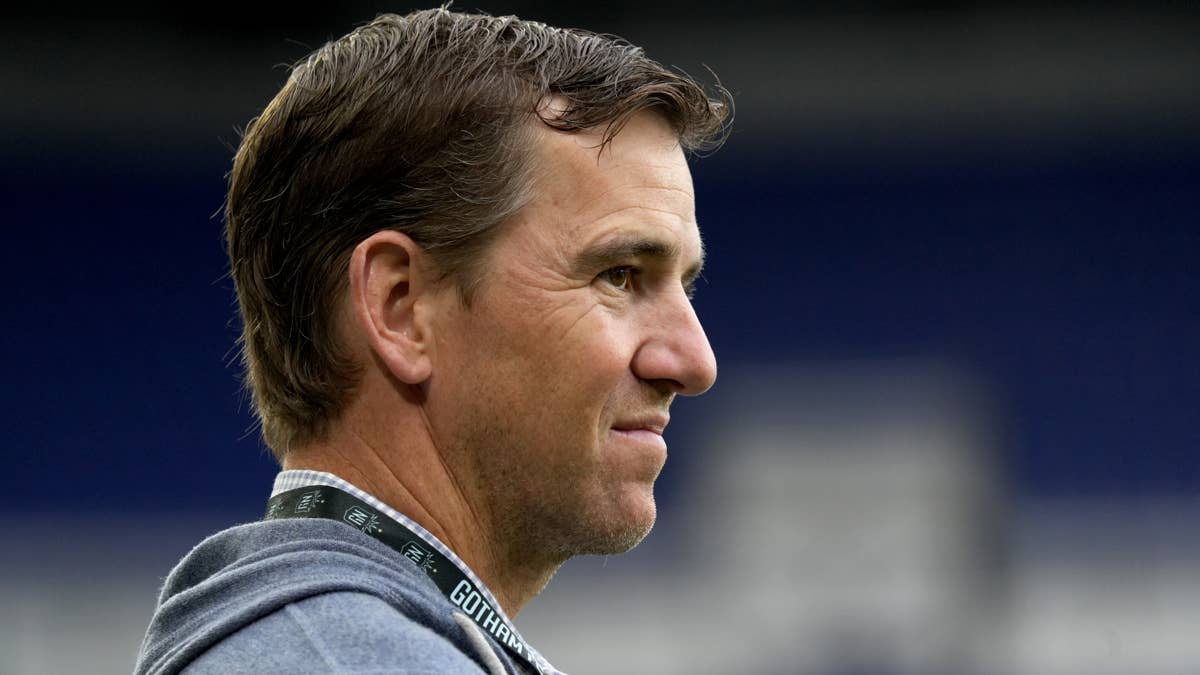
Twenty years after one of the NFL's most infamous draft-day standoffs, Eli Manning is finally dishing the details on why he refused to put on a Chargers uniform. And spoiler alert: It all comes down to a Marriott hotel dinner that went sideways fast.
In a candid sit-down with Will Compton and Taylor Lewan on the Bussin' With The Boys podcast, the two-time Super Bowl MVP peeled back the curtain on the 2004 draft trade that sent him to the Giants and Philip Rivers to San Diego. The moment that sealed Manning's decision? A pre-draft meal that felt less like a job interview and more like a reality TV showdown.
“I just didn’t feel like they were the most committed team to winning at the time,” Manning explained. “Marty Schottenheimer was the head coach, who was awesome. Had great respect for him. But they came to work me out in New Orleans, went to dinner and there was just friction between the head coach, general manager [A.J. Smith], the owners [Spanos family]. They are all yelling — kind of like fighting.”
Manning recalled the scene at a Marriott restaurant where Schottenheimer was visibly irritated about the venue itself. “We’re in New Orleans and we’re eating at a Marriott?” the coach reportedly fumed. The bickering between Schottenheimer, Smith, and the Spanos family gave the young quarterback a clear signal: This franchise was not on the same page.
“It just didn’t seem there was a lot of agreement on things and they were committed to building a great winning franchise at that moment,” Manning added.
The decision to force a trade before the draft made Manning a villain in San Diego for years, but history has softened the blow. Manning went on to win two Super Bowls with the Giants, while the Chargers (now in Los Angeles) remain ringless. Still, both teams got 16 years of franchise quarterback play — a result most GMs would happily sign up for today.
Manning also addressed the long-held belief that his father, Archie Manning, orchestrated the entire move. “My parents really weren’t supportive,” Eli said. “My dad didn’t like the idea. He came to my defense and supported me after everything was going down. Afterwards, he took the brunt of a lot of the criticism.”
Archie, a former NFL quarterback who spent most of his career with the Saints, was accused of pulling strings to get his son out of a small-market team. “People were saying, ‘You played in New Orleans. All those years you didn’t win. So you are trying to dictate where your son is going,’” Manning recalled. “He just kind of bit his tongue and said, ‘This is what Eli wants to do.’ He kind of did some media to save me from taking all the hits.”
For a deeper look at how draft-day decisions can ripple through a career, check out Manning's last-second flip from Texas to Ole Miss, another pivotal moment that shaped his path.
In the end, the 2004 draft remains a fascinating what-if for both franchises. But for Manning, the choice was never about the city or the fans — it was about the vibe at a hotel dinner table.