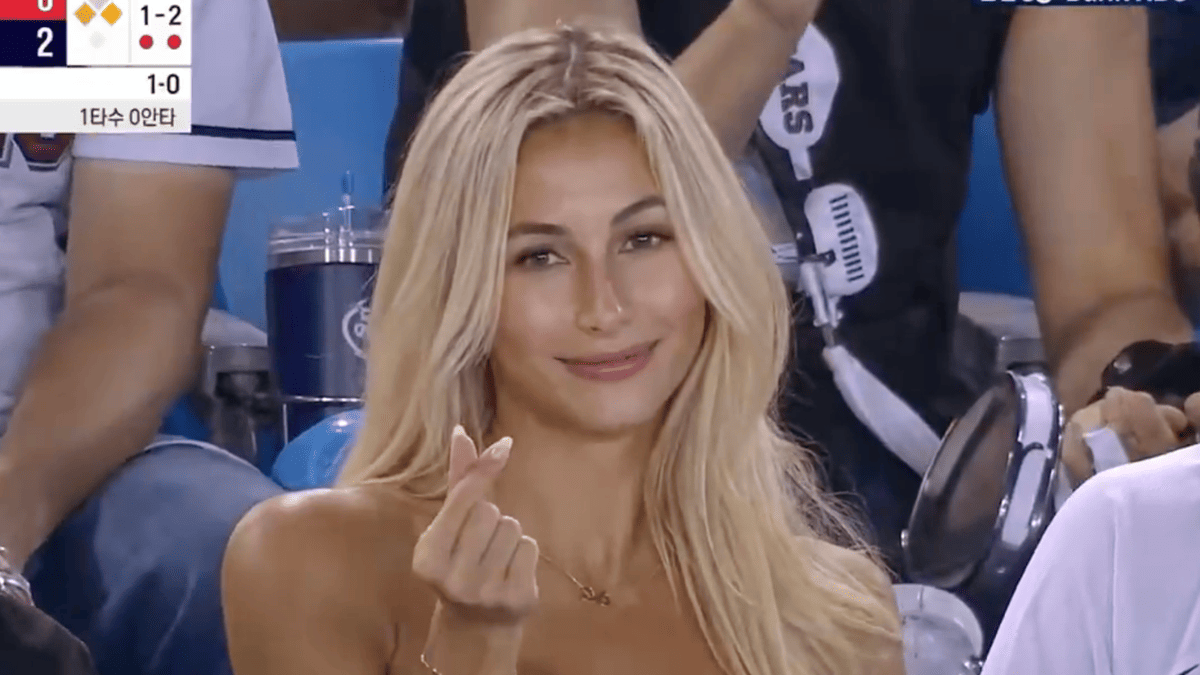
There's a new kind of viral video making the rounds on social media, and it's not what it seems. You've probably seen them: clips of stunning women at sporting events, catching the camera's attention in a way that feels a little too perfect. That's because they are. These videos are generated by artificial intelligence, and they're fooling a lot of people—including some big names in sports.
Just this week, Mr. October got fooled by AI when Reggie Jackson shared a fake soccer video featuring an attractive woman. It's a reminder that even the savviest fans can get duped in the age of deepfakes.

Now, women catching the camera's eye at games is nothing new. Back in 2013, Katherine Webb became a household name during the BCS National Championship Game when broadcaster Brent Musburger swooned over her on air. She landed a Sports Illustrated Swimsuit spread and became a media fixture. Webb, now in her 30s, has even hinted at a return to modeling. “If an agency were to call me and be like, ‘Hey, we’ve booked you for this awesome fashion show in New York,’ I would not hesitate to join,” she said. “I live for the runway. I love it so much.”
But the difference between Webb and these new viral clips is simple: Webb was real. The AI videos are not. They're created with specific prompts designed to generate a perfect-looking woman in a stadium setting, often with ESPN graphics or other branding to make them seem authentic. The purpose? To trick people and rack up views. “This is so cool,” one user commented, sharing a clip that was clearly fake.
The trend has gotten so pervasive that you can't scroll through sports feeds without seeing one. The algorithms feed you more the more you engage, creating a loop of deception. And it's not just random accounts—some of these videos are being shared by people who genuinely believe they're real.
So how do you protect yourself? Be skeptical. If a video seems too good to be true—too perfect, too coincidental, or just too much like a fantasy—it probably is. Look for oddities in lighting, unnatural movements, or strange artifacts around the edges. And remember: if you see an attractive woman at a game who looks like she stepped out of a glamour magazine, there's a good chance she didn't.
This kind of content also raises broader questions about authenticity in sports media. As AI gets better, the line between real and fake blurs. For fans, the key is to stay sharp and question everything. After all, even legends like Reggie Jackson can be fooled.
So next time you see a viral clip of a model at a game, take a second look. It might not be the real thing—and that's the whole point.