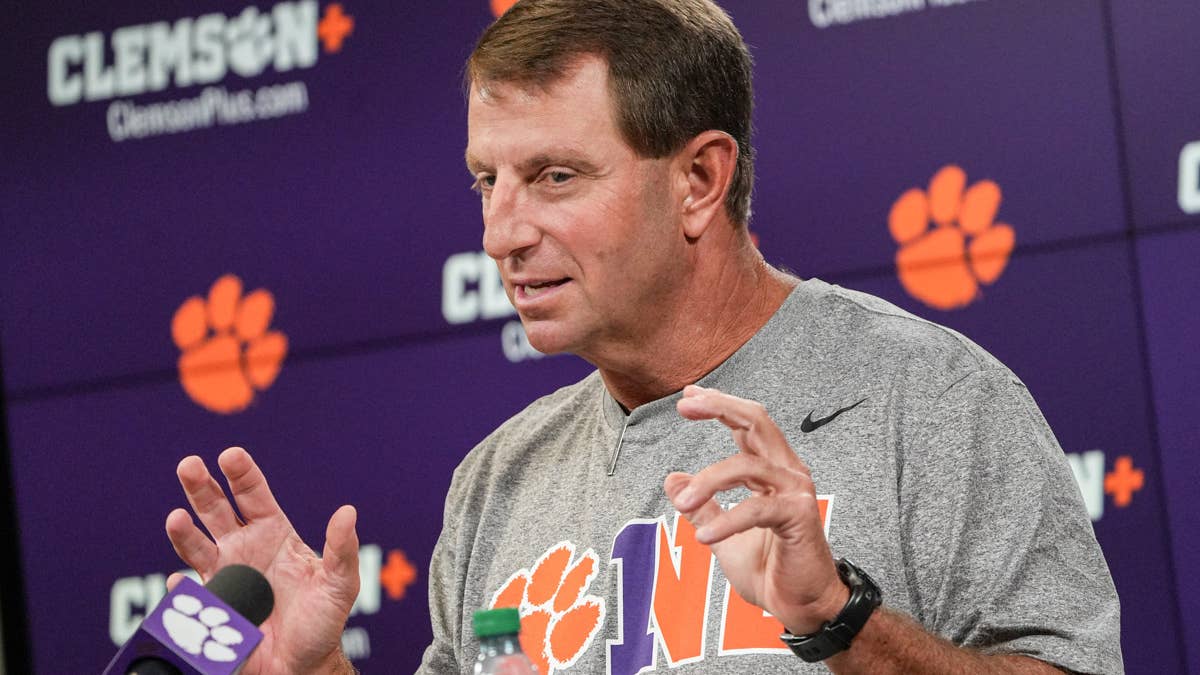
Dabo Swinney isn't staying quiet anymore. The Clemson head coach, fresh off a record-setting NFL draft haul, is accusing rival programs of sneaky tactics to poach his players. In a candid chat with Greg McElroy on Always College Football, Swinney didn't hold back, calling the current tampering landscape in college football "insane."
Swinney pointed to two of his recent NFL draftees—Peter Woods and Antonio Williams, taken 29th and 71st overall, respectively—as prime examples of players who were allegedly targeted by other schools. Woods and Williams were part of a school-record nine Tigers selected in the 2026 draft, a feat Clemson also achieved in 2016. But Swinney insists that success didn't come without a fight from outsiders.
Culture Over Cash: Swinney's Defense
During the interview, Swinney proudly touted Clemson's culture as the reason players stay. "We lead the nation in graduation and retention," he said. "We just had 16 guys go to the NFL... All 16 of those guys, Clemson, their whole career. Fifteen of them are graduates. That's culture." He emphasized that his players aren't staying for free, but because of the value built within the program.
"You think our guys are here for free? You don't think people try to get Peter Woods, and Antonio Williams, and T.J. Parker, and Sammy Brown, and Ashton Hampton, and T.J. Moore?" Swinney asked rhetorically. "Sure, they do. There's tampering. It's insane what's going on in college football. But our kids stay here because we've created value in the place, and there's value in the people who you're doing life with every day."
This isn't the first time Swinney has pointed fingers. Earlier this year, he publicly accused Ole Miss of trying to "buy out" linebacker commit Luke Ferrelli by texting the sophomore and asking his price to transfer to Oxford. The accusation underscores what many believe is the new reality: tampering has always existed, but the NIL era has ripped the veil off the lengths programs will go to land top talent.
While Swinney's frustration is clear, some critics argue that Clemson itself has benefited from the same system. After all, the Tigers have been a powerhouse in recruiting and player development for years. But Swinney's message is consistent: his program wins by building relationships, not by opening checkbooks. He even referenced the heat he's taken despite the draft success, suggesting that external pressures are mounting.
The Bigger Picture: NIL and Roster Costs
Swinney's comments come amid a broader debate about the financial arms race in college football. With rumors of $50 million rosters looming, coaches like Swinney and Utah's Kyle Whittingham are warning that the sport is heading for unsustainable costs. Whittingham recently dropped a dire warning about $50M rosters by 2027, echoing Swinney's concerns about the integrity of the game.
For now, Swinney is doubling down on his approach. He believes that while rivals may try to lure his players with NIL deals, Clemson's track record of graduation and NFL success speaks for itself. "These kids love this place," he said, making it clear that no amount of tampering will shake his faith in the program he's built over 18 years.
As college football continues to evolve, Swinney's accusations highlight a growing tension between tradition and the new financial reality. Whether his words spark change or just more debate, one thing is certain: the tampering train isn't slowing down.