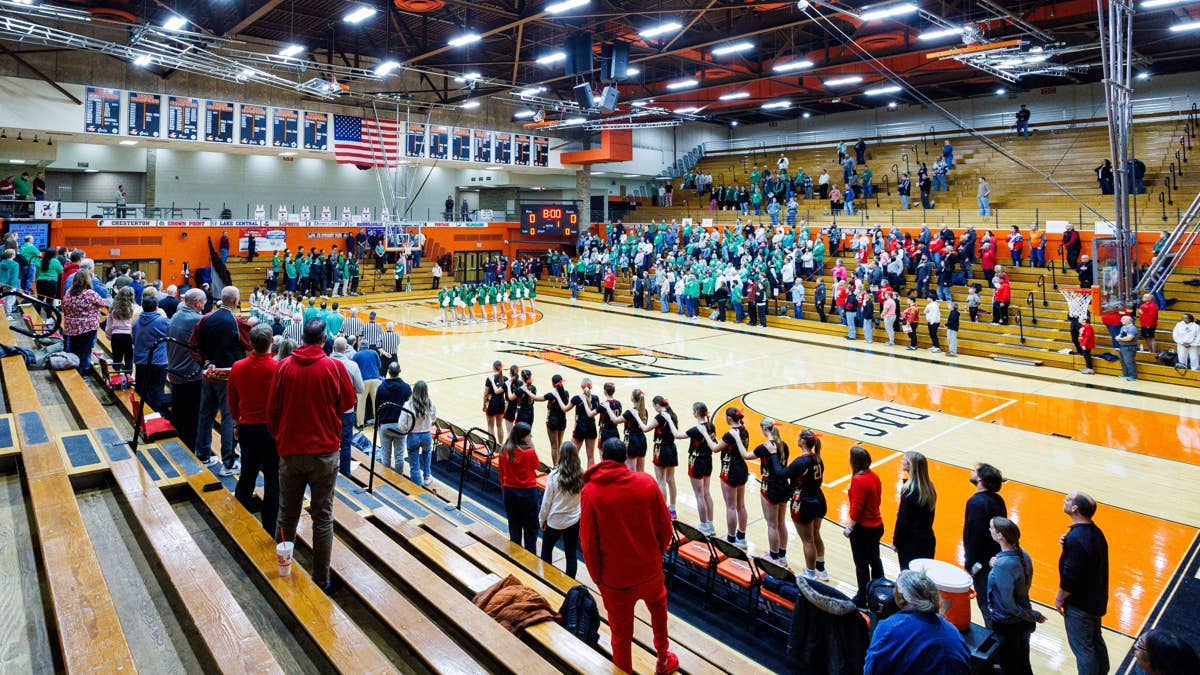
Indiana high school basketball just took a major step backward—at least according to critics who say the state is stubbornly clinging to the past. The Indiana High School Athletic Association board of directors voted against implementing a 35-second shot clock for varsity boys and girls games, a decision that has sparked outrage among coaches, former players, and fans who want to see the sport evolve.
The vote was lopsided: only one board member supported the proposal, despite a survey showing that 68 percent of Indiana coaches favored adding a shot clock for the 2028-29 season. The move has left many wondering why the state—known for its deep basketball roots—is so resistant to change.
Former Purdue Star Sounds Off
Rapheal Davis, who played at Purdue after starring at La Lumiere High School in LaPorte County, didn't hold back on social media. He argued that the lack of a shot clock is stunting the growth of Indiana's young players.
“Indiana High School basketball chooses to stay behind the game,” Davis wrote. “This is likely a reason why half of the only Nike program in the state is from outside Indiana. Remember one of their scouts saying, ‘These kids just aren’t good enough anymore.’”
His comments echo a broader frustration: while other states have embraced the shot clock to speed up play and better prepare athletes for the college level, Indiana is content to let teams hold the ball for minutes at a time.
Commissioner Defends Tradition
IHSAA commissioner Paul Neidig defended the board's decision during an interview on WISH-TV, pointing to tradition and data as key factors.
“Tradition certainly carries a lot here in Indiana,” Neidig said. “Maybe more than other states.”
He argued that the problem isn't as widespread as critics claim. According to the IHSAA, only about two possessions per game last longer than 35 seconds, making a shot clock seem unnecessary. But Neidig also acknowledged that some coaches might want to use a slow-down strategy to win games, and the board didn't want to take that tool away.
“We believe we have some of the best coaches in the country,” Neidig continued. “They have a high level of skills; their student-athletes are skilled. And if they need to win a game by possession control and give their kids an opportunity to work the ball to get to the best shot, do we really want to be in the business of taking that tool away from the great coaches that we have?”
A Divide Between Coaches and Administrators
The vote revealed a clear split: while coaches overwhelmingly supported the shot clock, only 24.4 percent of Indiana high school administrators backed the measure. That gap suggests that those making the decisions are far removed from the day-to-day realities of the game.
Critics argue that keeping the game slow hurts player development, especially for those hoping to play in college or beyond. Without a shot clock, teams can stall, and players don't get as many reps in fast-paced, high-pressure situations. That could put Indiana athletes at a disadvantage when they face competition from states that have already adopted the shot clock.
In an era where college basketball and the NBA are all about speed and spacing, Indiana's decision feels like a throwback—and not in a good way. While tradition has its place, many believe the state is sacrificing the future of its players on the altar of nostalgia.
Meanwhile, other sports news continues to dominate headlines. For example, Anonymous Big Ten Coach Blasts Penn State's QB Development After Allar Pick shows how even at the college level, development is a hot-button issue. And in a lighter note, Bananas Go Rogue: Surprise Pop-Up Game Hits Texas High School Tonight proves that high school sports can still surprise us.
For now, Indiana high school basketball fans will have to wait—and hope that the next vote brings a different result. Because as the game evolves, staying behind the times might just leave the Hoosier State in the dust.