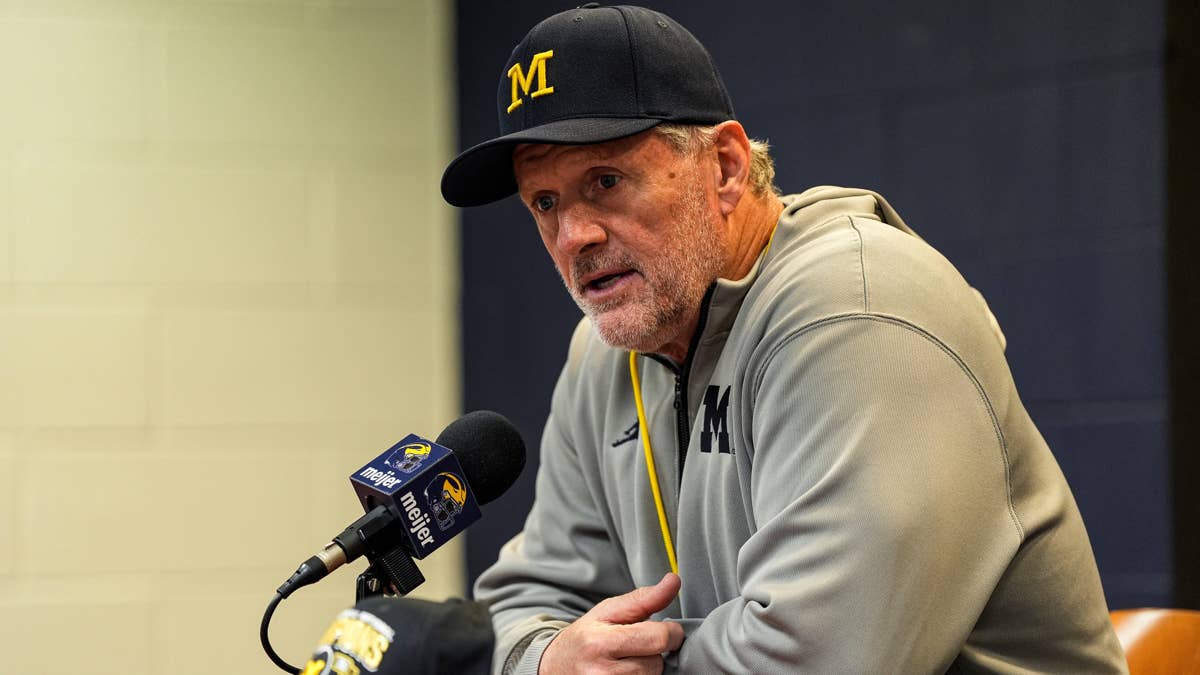
Utah Utes head coach Kyle Whittingham isn't sugarcoating the state of college football. In a candid assessment that has sent shockwaves through the sport, Whittingham warned that the financial arms race fueled by Name, Image, and Likeness (NIL) deals is spiraling out of control. He predicts that by the 2027 recruiting cycle, several powerhouse programs will be fielding rosters worth a staggering $50 million or more.
Speaking to On3, Whittingham laid out the new pecking order for success in today's game. "What it takes to win in college football in this day and age, in this order: great resources in the NIL area and space, outstanding players – which ties right into how much NIL you have – and then, coaching staff that's competent," he said. "Again, it's in that order of importance."

The veteran coach didn't mince words about the consequences for programs that can't keep pace. "You've either got to keep up and embrace that or embrace irrelevance because it's not changing, at least, right away," Whittingham added. "It's got to be completely overhauled in the not-too-distant future. You're already starting to see that with some of the things that are coming down the road."
Whittingham's warning echoes similar sentiments from other coaching legends. Recently, Nick Saban slammed college football's financial 'unfairness,' demanding a salary cap, underscoring a growing consensus among top minds that the system is broken. While Whittingham acknowledges that NIL has brought needed compensation to athletes, he insists it must be reined in.
"The biggest thing that needs to … have some parameters and guardrails put on it is the NIL, which essentially is a salary cap," Whittingham explained. "That's the direction we've got to head."
Fans on social media are sounding alarms of their own. One commenter pleaded: "They need to implement a 30 million cap. Players should only be allowed to transfer once unless their coach is fired. They better hurry up and do some of this because if it gets to the Supreme Court, the Supreme Court will end all of it." Another fan was skeptical of enforcement, noting, "And once they set a cap, I'm sure teams won't go over that cap to gain an advantage. Almost like when you couldn't pay players and teams did. The NIL and paying players leveled the field against the SEC. You can't cap it unless the NCAA strictly enforces the rules." A third fan predicted a grim outcome: "It'll just be 12-15 schools massively overpaying for players."
The debate comes at a time when college athletics is already grappling with other controversies. Finebaum warns the college gambling crisis is just getting started, adding another layer of complexity to the sport's future. Whittingham's comments have fueled fears that without swift action, college football could become a playground for a select few wealthy programs, leaving the rest to fight for scraps.
As the NCAA and conferences scramble to find a solution, the clock is ticking. Whittingham's $50 million projection may be a wake-up call, but whether the powers that be will act before it's too late remains the biggest question in college sports.