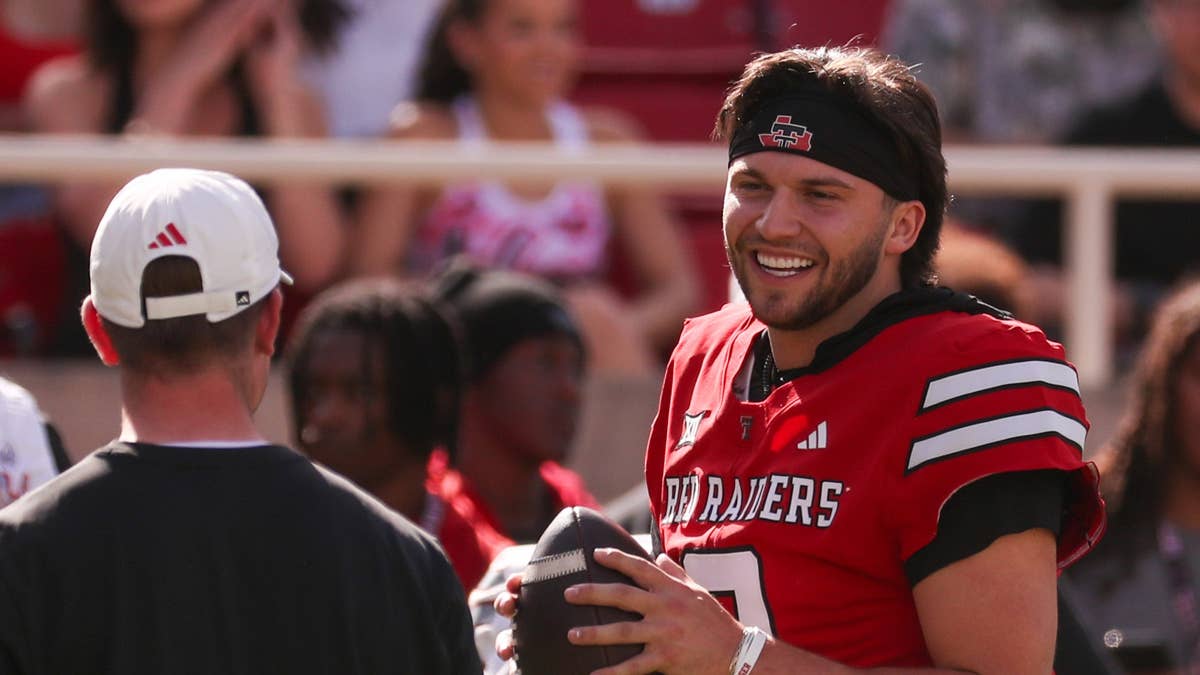
The college football world is up in arms after a Texas judge granted an injunction to Texas Tech quarterback Brendan Sorsby, allowing him to suit up for the 2026 season despite admitting to betting on games. Now, several teams on the Red Raiders' schedule are threatening to take drastic action — refusing to play them at all.
According to multiple reports, including details from Yahoo Sports' Ross Dellenger, Big 12 athletic directors have held serious discussions about a potential boycott of Texas Tech. The move comes after Sorsby, who was initially ruled ineligible by the NCAA for violating betting policies, was cleared to play by a court order.
“We’ve had some serious conversation about it,” Kansas State athletic director Gene Taylor told Yahoo Sports. “There is still a lot to be discussed. We aren’t scheduled to play them this year, but it’s something we have to look at from a college football perspective. This is greater than the Big 12.”
Taylor didn't mince words when expressing his frustration. “It’s (expletive) bull(expletive). I know the kid has a problem. Well, get well and focus on your problem. It is absolutely devastating for him to be able to play when every other sport, no matter the level, deems an athlete ineligible or they are punished severely for betting on their team.”
The controversy has reignited debate about how college football handles gambling violations, with critics arguing the ruling sets a dangerous precedent. The Big 12 teams on Texas Tech's 2026 slate include Houston, Colorado, Arizona State, Cincinnati, Arizona, West Virginia, Oklahoma State, Baylor, and TCU — all of whom could be affected if the boycott gains traction.
The NCAA has also weighed in, releasing a strongly worded statement on Monday. “The NCAA strongly disagrees with the court’s ruling in Sorsby’s case and is deeply concerned about the damaging, far-reaching and broadly destabilizing ramifications of this outcome — which undermines and corrupts the integrity of sports,” the organization said. “The NCAA is committed to supporting student-athlete mental health but must continue to aggressively defend against actions that defraud college athletics and threaten competitive integrity, such as betting on one’s own sport.”
The ruling has left many wondering whether college football still has any enforceable rules. For now, Sorsby remains eligible, and Texas Tech enters the season as a contender in the Big 12 — assuming their quarterback is on the field. But with boycott threats looming and tensions rising, the 2026 season is shaping up to be one of the most contentious in recent memory.
As the debate rages on, the broader implications for college sports are hard to ignore. If teams follow through on their threats, it could spark a wave of similar actions across the country, fundamentally altering how the sport addresses misconduct. The coming weeks will be critical as the Big 12 and NCAA scramble to find a resolution before the season kicks off.