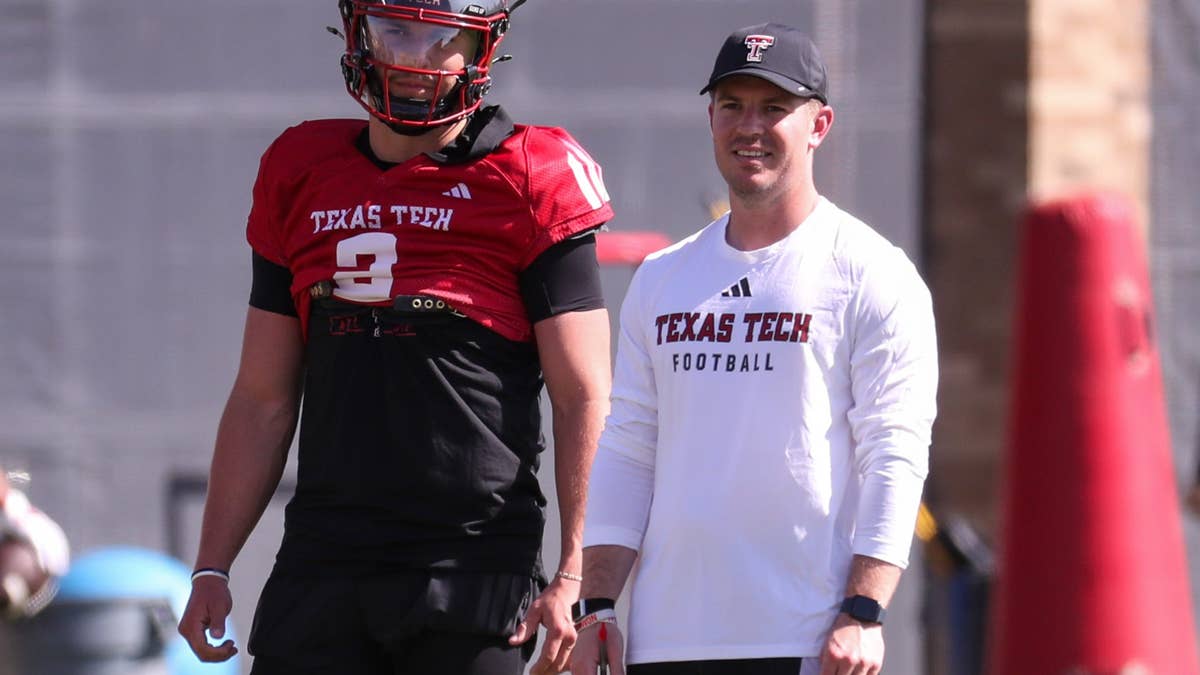
The line between the rulebook and the courtroom has officially vanished in college football. A Texas judge's decision to let quarterback Brendan Sorsby suit up for Texas Tech this season—despite a massive sports betting scandal—has sparked outrage and a blunt assessment from ESPN's Scott Van Pelt: "There really aren't any rules."
Sorsby, the Red Raiders' signal-caller who threw for 2,800 yards and 27 touchdowns last year, was staring down a permanent loss of eligibility after placing more than $30,000 in bets over six months. That included wagers on 40 games involving Indiana—his former team—while he was still a backup for the Hoosiers. Under existing NCAA policy, betting on any college or pro sport is prohibited, and betting on games involving your own school triggers a lifetime ban. Or at least, that was the policy before Monday.
Lubbock County Judge Ken Curry granted a temporary injunction that blocks the NCAA from preventing Sorsby from practicing, playing, or participating in the 2026 season. The judge ruled that without the injunction, Sorsby would suffer "a probable, imminent, and irreparable injury" by being barred from the field. The quarterback will miss the first two games of the season, as his legal team suggested, but after that, he's free to lead the Red Raiders in their quest for a second straight College Football Playoff appearance.
The NCAA was quick to fire back, releasing a statement that called the ruling a threat to the very soul of competition. "The NCAA strongly disagrees with the court's ruling in Sorsby's case and is deeply concerned about the damaging, far-reaching and broadly destabilizing ramifications of this outcome—which undermines and corrupts the integrity of sports," the organization said. It added that while it supports student-athlete mental health, it must "aggressively defend against actions that defraud college athletics and threaten competitive integrity, such as betting on one's own sport."
But the most searing critique came from Scott Van Pelt, who took to social media to sum up the state of college football in a single, devastating sentence. "There really aren't any rules. You just go to court. If it fails, go to court again until a judge says you're all set. Want a 7th year? Sure. Broke rules? Ahhhh, it's fine. There AREN'T any rules."
Van Pelt's comment cuts to the heart of a growing frustration among fans and analysts alike. The same week that the NIL arms race is reshaping rosters and players are transferring freely, the Sorsby case suggests that even the most clear-cut eligibility violations can be overturned by a friendly judge. Critics argue that the NCAA's authority has been hollowed out by a series of legal challenges, leaving a patchwork of court orders that vary by jurisdiction.
Sorsby's case is especially controversial because of the nature of his bets. According to court filings, he wagered on games involving his own team while he was at Indiana, which is the kind of conduct that the NCAA has historically treated as the ultimate betrayal of competitive integrity. Yet Judge Curry's injunction effectively sets aside that rule for one player, at least for now.
The decision has also reignited debates about the chaotic scheduling and governance that have come to define the sport in the post-NIL, post-transfer portal era. If a player can bet on his own team and still play, what's left of the rulebook? Van Pelt's answer is blunt: nothing.
For Texas Tech, the ruling is a massive win. Sorsby led the program to its first-ever College Football Playoff appearance in 2025, and with him under center again, the Red Raiders are legitimate contenders. But for the NCAA and anyone who believes in a level playing field, the message is clear: in today's college football, the only rule is that there are no rules.