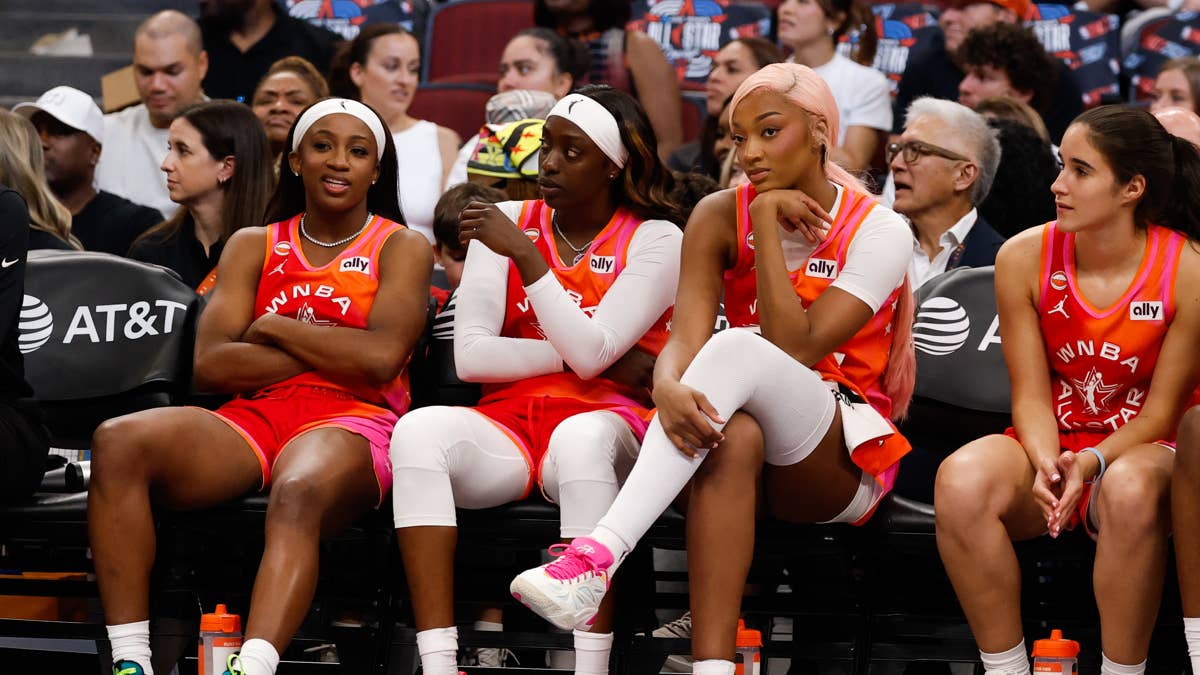
The WNBA All-Star Game in Chicago turned heads for more than just the on-court highlights. While other major leagues have proudly worn USA 250 patches to celebrate America's 250th birthday, the WNBA's uniforms were conspicuously bare. Now, the league is addressing the decision head-on.
In a statement released after the game, the WNBA explained that they chose a different approach to honor the nation's milestone. "As America celebrates its 250th anniversary, the WNBA was proud to honor the service and sacrifice of our nation's veterans and military families," the statement read. "Veterans and military families have long been part of the WNBA community—as players, fans, and league, team, and arena staff. Through All-Star Weekend in Chicago, the league recognized their contributions and helped create meaningful experiences in celebration of this historic milestone."

Instead of patches on jerseys, the league placed USA 250 signage throughout the arena and hosted events for military families. But that explanation hasn't fully satisfied critics, especially given that the MLB All-Star Game in Philadelphia earlier this month featured the patches prominently. The NFL, NBA, NHL, MLS, NASCAR, UFC, and WWE have all participated in the USA 250 celebrations, with patches appearing at the Super Bowl, NBA Finals, and MLB All-Star Game.
According to the Women's National Basketball Players Association (WNBPA), players had reached out to the league after hearing reports that patches might be included. The WNBPA told OutKick and Fox News Digital that player leadership contacted the WNBA, but the league said no final decision had been made. Ultimately, the patches never materialized. "The league did not seek union input nor was the matter put before player leadership for action," the WNBPA said.
The absence of patches has sparked broader conversations about the league's relationship with patriotic symbols. Earlier this year, a WNBA star called for a boycott of USA 250 patches over the history of slavery, highlighting the complex feelings some players have about celebrating a nation with a troubled racial past. That context may have influenced the league's cautious approach, though the WNBA did not cite it in their official statement.
The controversy also echoes other recent uniform debates across sports. For instance, the Laker Girls unveiled new uniforms with a Daiso patch for the 2026-27 season, showing how patches can be both a branding opportunity and a statement. Meanwhile, the Bills' new 'Nickel City' uniforms drew roars of laughter from NFL fans, proving that uniform choices are never without scrutiny.
The WNBA's decision not to include the patches may have been an attempt to avoid controversy, but it has instead created a new one. As the league continues to grow in popularity, every choice—from uniform design to social justice stances—is magnified. The USA 250 patch saga is just the latest example of how sports and patriotism intersect, often with no easy answers.
For now, the WNBA is standing by its approach, emphasizing the experiences they created for military families over the absence of a patch. Whether that will satisfy fans and players remains to be seen, but one thing is clear: the conversation around how leagues choose to celebrate national milestones is far from over.