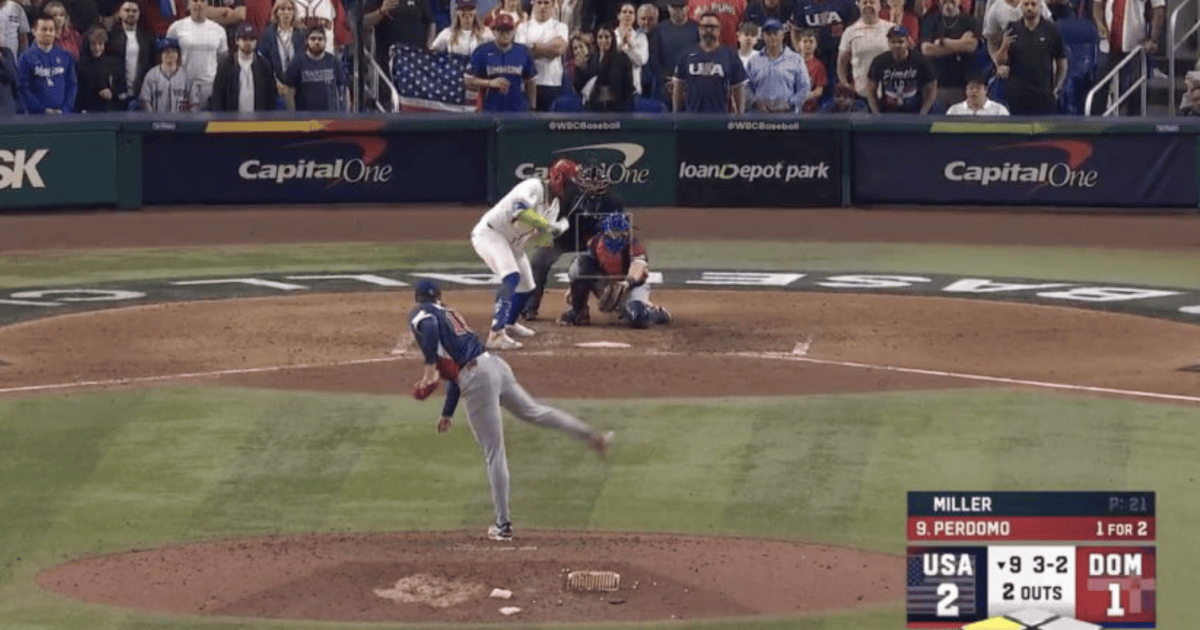
The United States is headed to the World Baseball Classic final, but the path there has been paved with controversy. A nail-biting 2-1 semifinal victory over the Dominican Republic on Sunday night was instantly overshadowed by a game-ending call that has the baseball world in an uproar and fans demanding a technological revolution.
With two outs in the bottom of the ninth and the tying run just 90 feet away, Team USA closer Mason Miller fired a pitch to the Dominican Republic's Geraldo Perdomo. The umpire's arm shot up for strike three, sealing the win. Replays, however, told a different story—the pitch appeared to dive well below the strike zone, a ball that should have extended the at-bat with superstar Fernando Tatís Jr. waiting on deck.

The reaction was immediate and visceral. FOX's broadcast booth was stunned. "That slider right there was below the zone," analyst John Smoltz declared. Play-by-play voice Joe Davis echoed the sentiment of millions watching, suggesting Perdomo and his team were left wondering, "'You sure we don't have ABS yet?'"
That question—"You sure we don't have ABS yet?"—is now the rallying cry across social media and sports talk. ABS, the Automated Ball-Strike challenge system slated for MLB in 2026, was not in use for the WBC's premier matchup. In its absence, a moment of high drama became a flashpoint for frustration. "Best advertisement for ABS of all time," wrote one fan, a sentiment repeated thousands of times online.
"I'm American, but it's a travesty for the World Baseball Classic Semifinal to end on a blown call," another fan argued, capturing the bipartisan nature of the disappointment. The outcry isn't just about one pitch; it's about the stakes. This was an elimination game in an international tournament that has captured the globe's attention, not a random Tuesday in June. The call cut short a potential storybook finish and left a bitter taste in what was otherwise a brilliantly pitched duel. The game's strategic shifts, including DeRosa's lineup shakeup for Team USA, were nearly forgotten in the aftermath.
The controversy has sparked a serious debate: does the World Baseball Classic, which aims to showcase the highest level of the sport, have a responsibility to employ its highest available technology? Hall of Famer Derek Jeter seemed to think so, stating, "Well you can pretty much guarantee they're going to have the ABS challenge in place at the next WBC. You hate to see a game end that way."
This incident is part of a broader, ongoing conversation in sports about the role of officiating and technology. Just as the NFL faces fan outcry over offseason rules following transactional chaos, baseball is grappling with how to perfect its most fundamental judgment call. The human element has long been part of the game's fabric, but the cost of error on the world stage feels magnified.
While the Dominican Republic's dream of a WBC title is over, the discussion about the sport's future is just heating up. The call has become a powerful case study for ABS proponents. As the sport looks to grow globally, with discussions even about potential MLB expansion to the Dominican Republic, ensuring fair and transparent outcomes in its premier international event seems paramount.
Team USA moves on to the final, but their hard-fought victory will forever have an asterisk in the minds of many. The lasting legacy of this semifinal may not be who won, but how it ended—and whether it finally forces the hand of organizers to bring the game's rules into the 21st century before the next pitch is thrown.