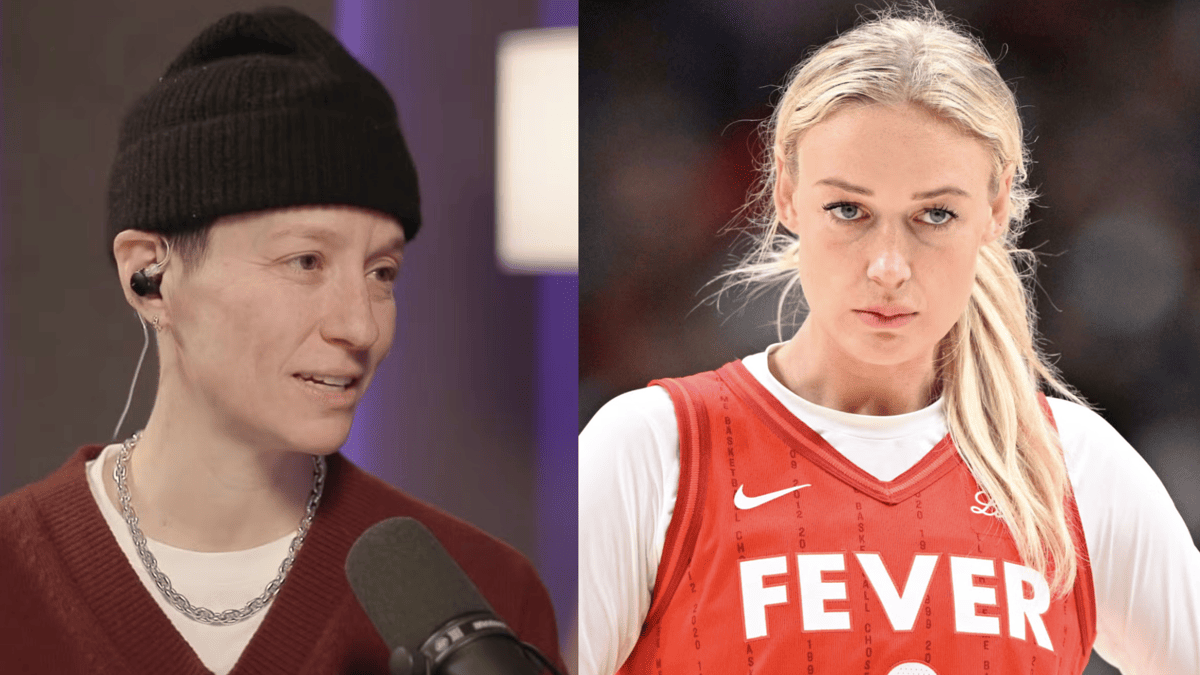
Two of the most vocal figures in women's sports are on opposite sides of a heated debate. Indiana Fever guard Sophie Cunningham and retired soccer star Megan Rapinoe have made their positions crystal clear on the issue of transgender athletes competing in women's sports.
Cunningham, who shares the court with Caitlin Clark, recently opened up about her stance in an interview with ESPN's Hallie Grossman. She emphasized that she holds no animosity toward transgender individuals but believes fairness in competition must be preserved. “I got a lot of negative feedback about me hating trans. And I’m like, ‘I never once said that,’” Cunningham explained. “I think that I am here to extend love. But I also think with that love is truth, being honest. And I want to protect young girls in a locker room, or young girls in sport who shouldn’t have to go against biological men.”

The former Missouri standout also described her political views as centrist. “I’m very much in the middle [politically]. I agree with things on both sides, disagree with things on both sides. And that’s all I’ve ever said about my political beliefs. But people love to assume,” she added. This isn't the first time Cunningham has had to clarify her true character amid public scrutiny.
Rapinoe, meanwhile, has been a staunch advocate for transgender inclusion in sports. She has argued that efforts to exclude trans athletes could ultimately threaten the existence of women's sports altogether. “Preventing girls from playing sports is the whole point,” she has stated. The two-time World Cup winner also contends that such exclusionary measures disproportionately affect minority athletes. “Girls of color are the first to be targeted and questioned about their bodies,” Rapinoe noted.
Rapinoe further suggests that the focus on transgender athletes is a distraction from larger societal issues. “Attacks on trans girls are feints to throw us off balance and distract from the real issues impacting all Americans, like the costs of groceries and gas, healthcare, and housing,” she said. Her outspoken advocacy has even led to her being flagged as a brand risk for her unwavering support of trans rights.
The divide between Cunningham and Rapinoe underscores a broader tension within women's sports. While both athletes are known for speaking their minds, their conflicting views on this issue highlight how personal beliefs can shape the conversation around fairness and inclusion. Cunningham has often been described as the opposite of most WNBA players in her approach to such topics, preferring a more balanced perspective.
As the debate over transgender athletes continues to evolve, the voices of prominent figures like Cunningham and Rapinoe will undoubtedly influence public opinion and policy. For now, their disagreement serves as a reminder that even among allies in women's sports, there are deeply held differences on how best to protect and advance the game.