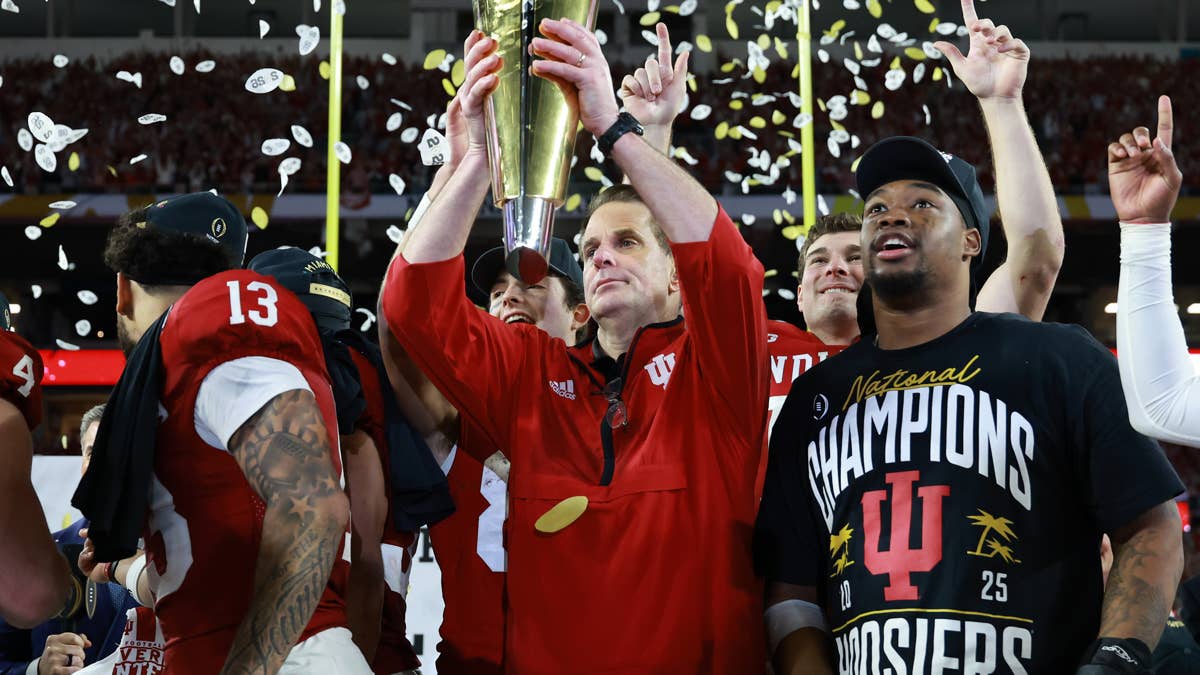
For years, college football fans have griped about one thing more than anything else when it comes to the national championship: the start time. The game typically kicks off after 8 p.m. ET on a Monday in late January, wrapping up well past 11 p.m. — a brutal slog for anyone with a 9-to-5 or a morning class. But now, the U.S. Senate is stepping in to change that.
A provision tucked into a broader bill would require the College Football Playoff national title game to be played no later than Jan. 8, "to the extent practicable," according to a report from Yahoo! Sports' Ross Dellenger. The measure also protects the traditional window for the Army-Navy game, ensuring that storied rivalry stays intact.

The idea is simple: move the championship earlier, avoid the late-January deep freeze, and let fans actually enjoy the game without sacrificing a full night's sleep. But as with any government intervention in sports, reactions are mixed.
Fans cheer, but skepticism abounds
Social media lit up after the news broke, with many fans embracing the change. "Yes, please! The calendar and start time needs to change," one fan wrote. Another called it "the best idea in the whole bill," though they quickly added, "it's never going to happen."
Others questioned why the federal government is getting involved in scheduling a football game. "Can someone explain to me why it’s the federal government’s job (or within their power) to force a football game to be played by a certain day?" one fan asked. Another pointed out a potential silver lining: "We could actually see which teams are the best at sustaining performance over 16 weeks. I don’t think 20+ day layoffs between rounds helps the quality of the games."
The proposal comes amid growing frustration with the current playoff format, which often features long breaks between rounds. That downtime has been a sticking point for players and coaches alike, and it's one reason why some college sports figures have called the system a mess.
A shift in the landscape
Moving the title game earlier would require a significant overhaul of the college football calendar. Currently, the season stretches from late August to mid-January, with the playoff semifinals and final squeezed into a tight window. An earlier date would force conferences and the CFP to compress the schedule, potentially impacting regular-season games and conference championships.
Still, the idea has merit. A Saturday night or Sunday afternoon start would be far more viewer-friendly than a Monday night in January. And with the SEC expected to dominate the 2026 race, the demand for a watchable title game is only growing.
Of course, the Senate bill is far from law, and even if it passes, the CFP could push back. But the fact that lawmakers are weighing in shows just how much the current setup frustrates fans. As one fan put it, "Something needs to change, that’s clear."
For now, the ball is in the CFP's court. Will they listen to the fans — and the Senate — and move the game to a more reasonable time? Or will they stick with the late-night tradition that has become a punchline? Only time will tell, but the pressure is mounting.
In the meantime, fans can only hope that next year's title game doesn't force them to choose between watching the final whistle and getting a good night's sleep. And if the Senate gets its way, that choice might not be so difficult after all.