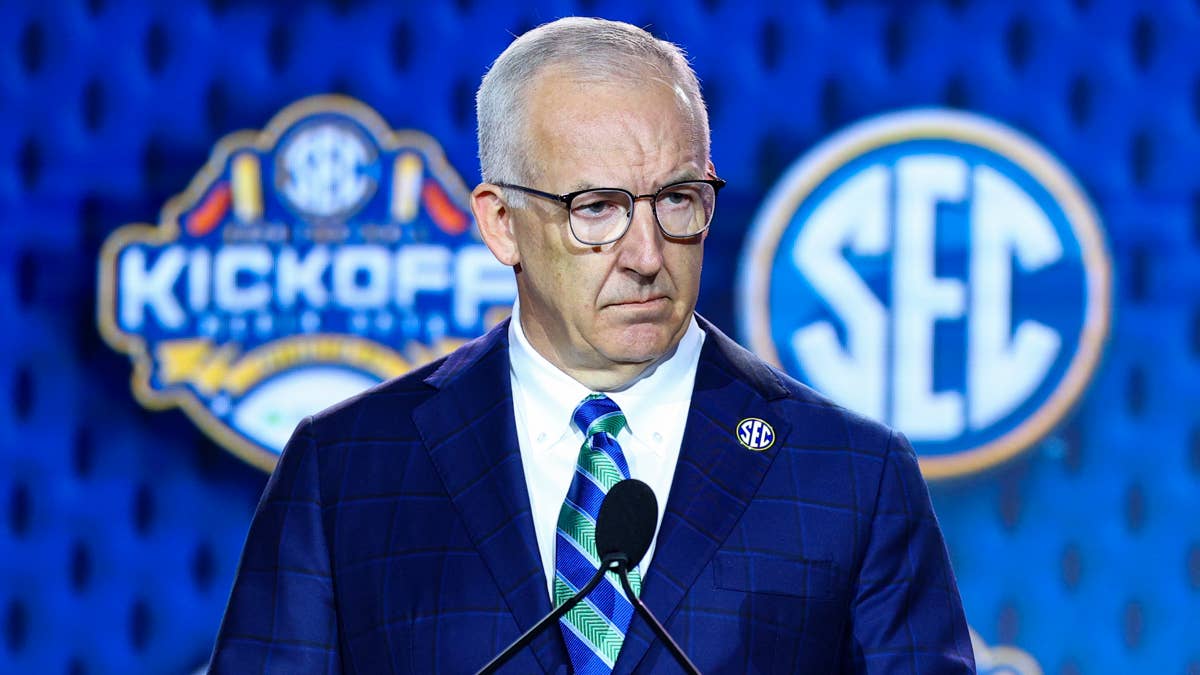
The tectonic plates of college sports just shifted again. During Monday's SEC Media Day, commissioner Greg Sankey dropped a bombshell that sent shockwaves through the industry: the idea of the Southeastern Conference breaking away from the rest of the college athletics world is no longer just a rumor—it's a very real possibility.
When pressed about the so-called 'Plan B' that would see the SEC create its own rules, enforce its own policies, and essentially compete only against itself, Sankey didn't mince words. 'You phrased the question, “How real?” So I’ll take that as, like, real or not. So they’re real,' he said. The statement was a rare moment of candor from a commissioner known for measured diplomacy.
The backdrop to this seismic admission is a growing sense of frustration within the SEC's leadership. Sankey pointed to the drawn-out implementation of the five-year eligibility model and the years-long struggle to expand the College Football Playoff as key sources of angst. 'We went through a College Football Playoff discussion for years and introduced a 12-team playoff where it just sat because colleagues couldn’t move,' he explained. 'And they had reasons, but those reasons really didn’t resonate.'
This isn't just posturing, according to Sankey. 'I do not believe that is a leverage point—I think that’s just honest communication,' he said. The commissioner acknowledged that some within the conference have been pushing for a radically different structure, one that would operate outside the current NCAA framework. The frustration, he noted, has been 'simmering' for years.
The SEC's potential breakaway would hinge on the failure of the Protect College Sports Act, a federal bill that aims to standardize NIL, transfer rules, and other governance issues. If that legislation stalls, the SEC's self-governance model could become a reality. Sankey emphasized that the conference values its place in a national organization, but only if that organization functions 'in a healthy manner.'
The implications are staggering. A breakaway SEC would essentially create a super-league of the sport's most powerful programs, free from NCAA oversight. Critics argue this would deepen the already stark divide between the haves and have-nots in college sports. But for Sankey, the goal is a more efficient, less bureaucratic system.
Adding to the tension, the SEC has been the dominant force in college football for years, with 13 national championships under its belt. Sankey acknowledged the pride that comes with that success, but warned that the current trajectory is unsustainable. 'I do think a national expectation that we participate in a national organization, but that national organization must function in a healthy manner,' he said. 'Otherwise, that simmering will continue.'
The commissioner's comments come at a time when college sports are more fractured than ever. NIL deals, transfer portal chaos, and postseason uncertainty have created a landscape where the NCAA's authority is increasingly questioned. Some observers see the SEC's breakaway talk as a natural evolution, while others fear it could spell the end of college athletics as we know it.
For now, Sankey's message is clear: the SEC is serious about exploring all options, including going it alone. Whether that's a negotiating tactic or a genuine path forward remains to be seen, but one thing is certain—the conversation has officially left the meeting room.