The NFL's offseason drama isn't confined to free agency and the draft. A heated public feud between two of the league's most prominent insiders spilled back into the spotlight Thursday, proving that sometimes the biggest battles happen off the field.
The Spark: A Disputed 40-Time
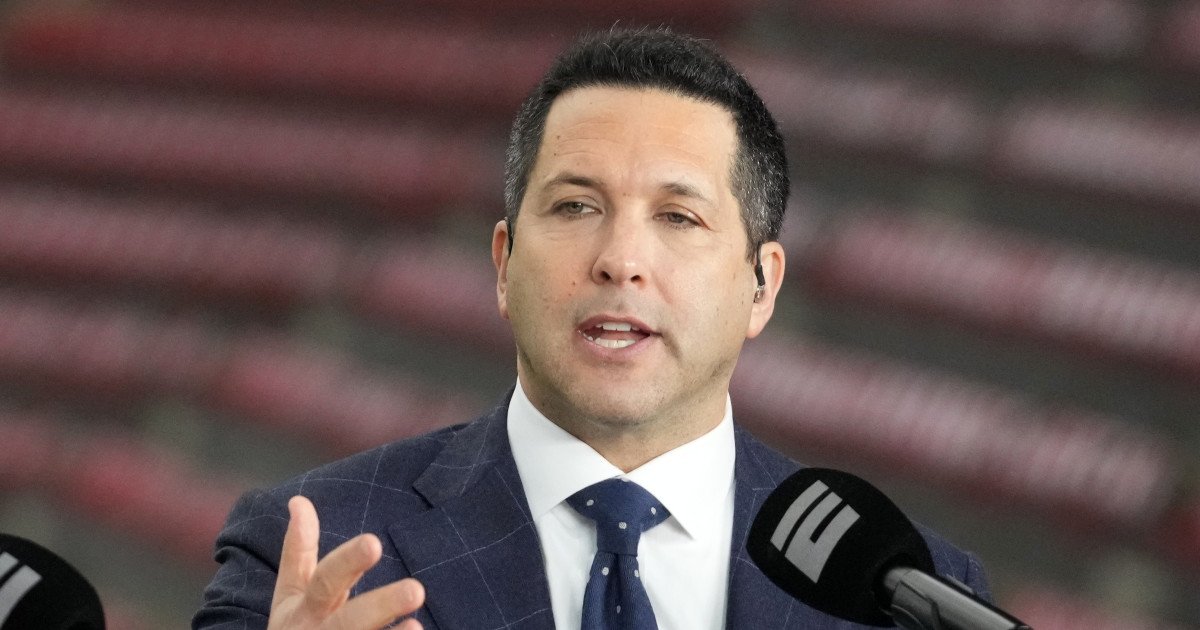
It all started with a stopwatch. After Ohio State wide receiver Carnell Tate posted an official 4.53-second 40-yard dash at the NFL Scouting Combine, ESPN's Adam Schefter reported a different story. Citing sources from multiple NFL teams, Schefter stated that several executives and general managers had hand-timed Tate in the range of 4.45 to 4.47 seconds, significantly faster than the laser-timed official result.
"Although the combine registers official times, teams always conduct their own timing, and those measurements with some teams were lower than his clocked 4.52," Schefter wrote on social media platform X. This standard piece of combine context, however, was about to ignite a firestorm.
Florio Fires the First Shot
Enter Mike Florio of ProFootballTalk. Florio didn't just question the report—he questioned Schefter's motives. In a pointed article, Florio suggested Schefter was acting as a messenger for Tate's powerful agent, Drew Rosenhaus, rather than reporting independently gathered news.
"The broader point... is that some are seeing through Schefter's 'report' as an effort to do a favor for Tate's agent," Florio wrote. He bluntly speculated on how the information was obtained: "Did Schefter canvass multiple teams for their numbers, or did he simply copy and paste a text from Rosenhaus? Given the way the insider sausage gets made, the far safer bet is the latter."
Schefter's Counter-Punch: Receipts Provided
Schefter didn't take the accusation lying down. The ESPN insider went on the offensive, taking to X to publicly display direct messages he claimed were from team sources, providing the faster 40-time data. He didn't stop there, appearing on The Pat McAfee Show to further defend his reporting and verify his sources.
For a moment, it seemed the evidence might settle the score. Schefter had seemingly proven he had independent confirmation. But in this clash of media titans, the goalposts were about to move.
The Beef Simmers On
On Thursday, Florio doubled down, asserting that the authenticity of Schefter's sources was never his primary issue. The real problem, according to Florio, was the perceived favor-trading ecosystem between top reporters and powerful agents.
"So whether the information... was fed to Schefter by Rosenhaus or whether Rosenhaus planted the seed for Schefter's own research... Schefter's decision to focus on a potential flaw in the official, laser-timed 40 from Tate and to not make that point for anyone else who ran it can be explained in very simple terms," Florio wrote. "Schefter was doing a favor for someone who does plenty of favors for him."
This reframing shifted the debate from factual accuracy to journalistic ethics and the opaque relationships that fuel the NFL's rumor mill. Florio defended his decision to call out a colleague, framing it as scrutiny of a systemic issue rather than a personal attack.
More Than Just Media Gossip
Why does this insider spat matter to fans? It pulls back the curtain on how information flows during the critical pre-draft process. Player stock rises and falls on combine metrics, and reports from trusted insiders like Schefter can directly impact draft position and, ultimately, millions of dollars in rookie contracts.
The accusations highlight the tension inherent in the insider's role: maintaining crucial access to agents and team officials while providing objective reporting. It's a tightrope walk, and this very public dispute shows what happens when balance is questioned.
As the draft approaches, this feud serves as a reminder that the stories shaping team war rooms aren't always about athletic prowess. Sometimes, they're about the messengers themselves, and the complex web of relationships that defines the business behind the game.