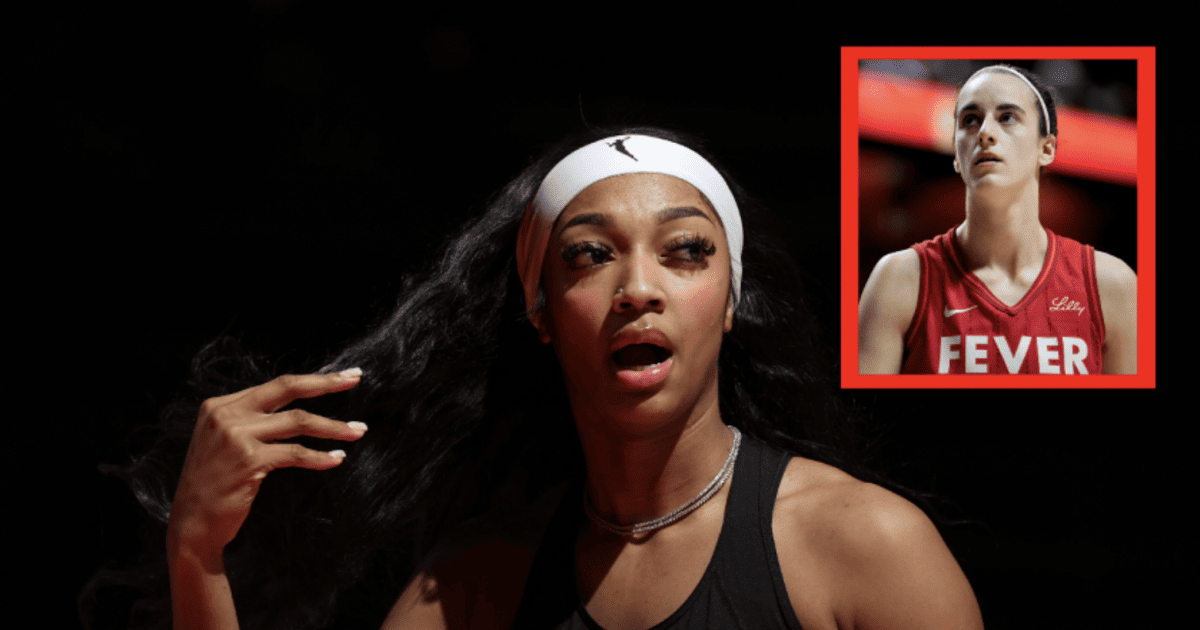
The WNBA's most talked-about rivalry is about to get a hefty financial subplot. While Angel Reese has long championed her own pivotal role in the sport's explosion, the 2026 season will deliver a stark numerical reality: Caitlin Clark's paycheck is poised to leave hers in the dust.
A Rivalry Forged in Legacy and Paychecks
Reese has never been shy about her place in basketball history. "I know I’ll go down in history," she declared in 2025. "I’ll look back in 20 years and be like: ‘Yeah, the reason why we’re watching women’s basketball isn’t just because of one person. It’s because of me, too.’" This confident assertion frames her entire career—a mission to ensure her impact is recognized alongside, not behind, anyone else's.

For their first two professional seasons, the financial playing field was relatively level. Clark earned $78,066 in 2025, while Reese's salary hovered in the mid-$70,000 range. But the league's new collective bargaining agreement is set to rewrite the rules, and the numbers tell a new story.
The 2026 Salary Breakdown: A Growing Divide
Thanks to the new CBA, Clark's earnings are set for a meteoric rise. Her salary will catapult from $78,066 to a staggering $527,155 for the 2026 campaign. As an All-WNBA selection, she's also on track for a potential max contract in 2027 that could approach $1.3 million.
Reese, meanwhile, will see a significant but comparatively smaller jump. Her pay is set to rise into the $349,571 range for 2026, with a path to reach near $400,000 by 2027. While this represents life-changing money and a victory for the league's new financial landscape, the nearly $180,000 gap with Clark is a figure that won't go unnoticed.
This dramatic shift is a direct result of the new WNBA deal, which rewards top-tier performance and market impact with unprecedented earning potential. Clark's eligibility for the steep raise is tied to her on-court honors, setting a new benchmark for superstar compensation.
Reese's Likely Reaction: Fuel for the Fire
Given Reese's history of self-advocacy, this financial disparity is unlikely to sit well. Her competitive nature was on full display just last year when a reporter attempted to revisit her comments about shared credit for the sport's growth. Before the question could even be finished, Reese interjected with a firm, "Next question." The moment underscored her sensitivity to the comparisons and her desire to control her own narrative.
This salary revelation adds a complex new layer to their dynamic. While moments of public sportsmanship show mutual respect, the underlying competition for legacy—and now, compensation—remains intense. Reese, who rightly holds herself in high regard, now faces a tangible metric where her rival is pulling ahead.
The gap extends beyond the bank account. Clark's status has also sparked debates about her role on the national stage, with some fans expressing fury over her Team USA position. Yet, these controversies often circle back to one undeniable fact: her marketability and performance are currently moving the needle in unique ways, as reflected in the league's new financial architecture.
As the 2026 season approaches, all eyes will be on how this financial storyline influences the on-court drama. Will it motivate Reese to new heights? Will it add extra spice to their head-to-head matchups? One thing is certain: in the new era of the WNBA, rivalries are measured in more than just points and rebounds—they're counted in contracts, too.