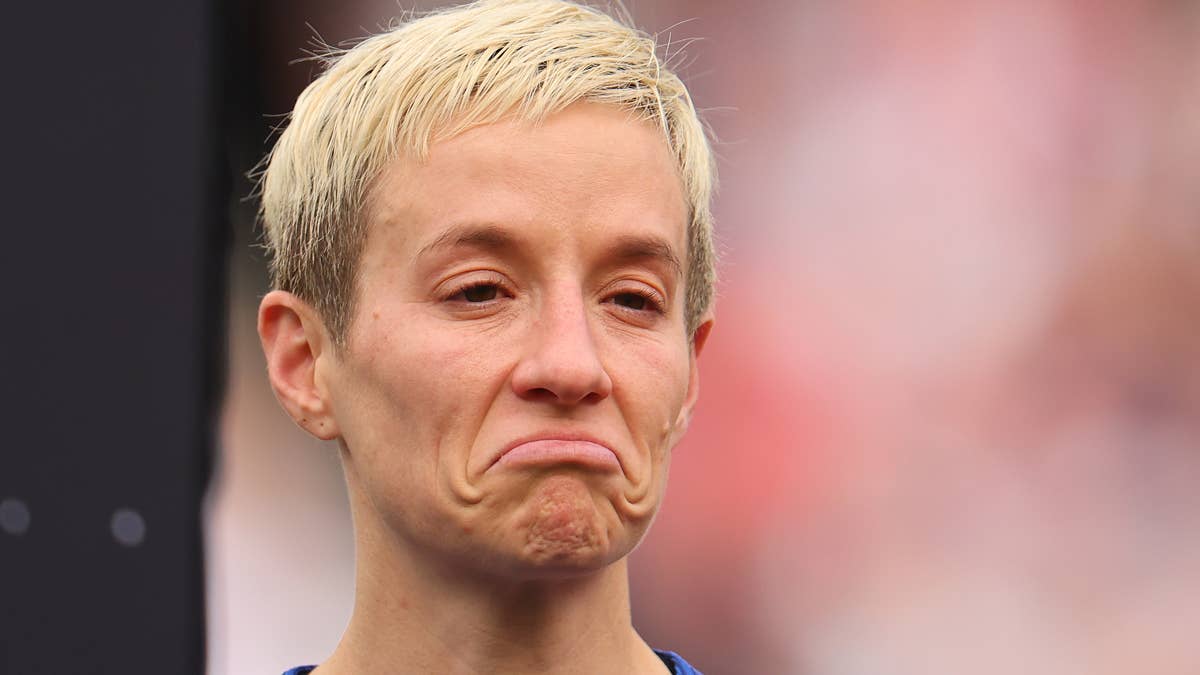
Megan Rapinoe has never been one to shy away from a controversial stance, and her latest advice is no exception. The former U.S. women's soccer star is urging female athletes to take a page out of Angel Reese's playbook: skip the media interviews that don't serve them, even if it means swallowing a fine.
Reese, now a forward for the Atlanta Dream after two seasons in Chicago, has been open about her fraught relationship with the press. On an episode of Michelle Obama's podcast, the WNBA star admitted she'd rather pay a fine than face reporters who she feels have her back against the wall. "The media has not always been great for me. I'll catch a fine before I have to go to media and feel like my back is against the wall," Reese said.
Reese's selective approach to press duties has drawn both criticism and praise. On her own podcast, Unapologetically Angel, she explained that she gets excited for certain journalists, like Taylor Rooks, but otherwise prefers to safeguard her peace. "I don't think anybody will ever understand what I've been through," she shared. "I appreciate you guys for making this a safe space for me because, as you said, the media has not always been great for me."
Now, Rapinoe is amplifying that message. On the podcast A Touch More, the two-time World Cup winner framed Reese's actions as a broader call to action for all female athletes. "I think Angel is a really great example of her taking her power back," Rapinoe said. "Angel was set up as a villain before she was even in the WNBA, and now she's making it clear that she's gonna protect her peace. The media landscape is changing rapidly in women's sports, and of course, the W, as always, is out front."
Rapinoe emphasized that Reese isn't refusing all media—just the kind that feels adversarial or disrespectful. "Angel isn't saying that she's never gonna do media, but she is saying that she won't just stand up and take anything that's thrown at her," she added. The retired star is calling for a shift in the power dynamic between athletes and journalists, insisting that the quality of journalism must rise to meet the level of the athletes themselves.
"I think it's really about a new level of respect across the board. There needs to be a quality of journalism that is at the level of these athletes," Rapinoe argued. She pointed out that athletes are often forced to combat narratives spun by reporters, and that's an unfair burden. "It might mean I get a fine, but at some point, we have to adjust the expectations that journalists can just go up there and throw any kind of narrative, and we're the ones who are going to either field that or dispel that or try and combat it."
This isn't the first time the media's treatment of female athletes has come under fire. ESPN's Holly Rowe recently fired back at what she called bullying of Angel Reese, accusing the press of crossing a line. Similarly, sports commentator Max Kellerman blasted the media for what he described as "disgusting" coverage of Dianna Russini and Mike Vrabel. The conversation around athlete-media relations is clearly heating up, and Rapinoe is adding fuel to the fire.
Of course, not everyone in the media will welcome Rapinoe's advice. But as more athletes like Reese and Rapinoe speak out, the expectation that reporters must earn athletes' trust—rather than the other way around—is gaining traction. For female athletes navigating a landscape that often pits them against the press, the message is clear: protect your peace, even if it costs you a fine.