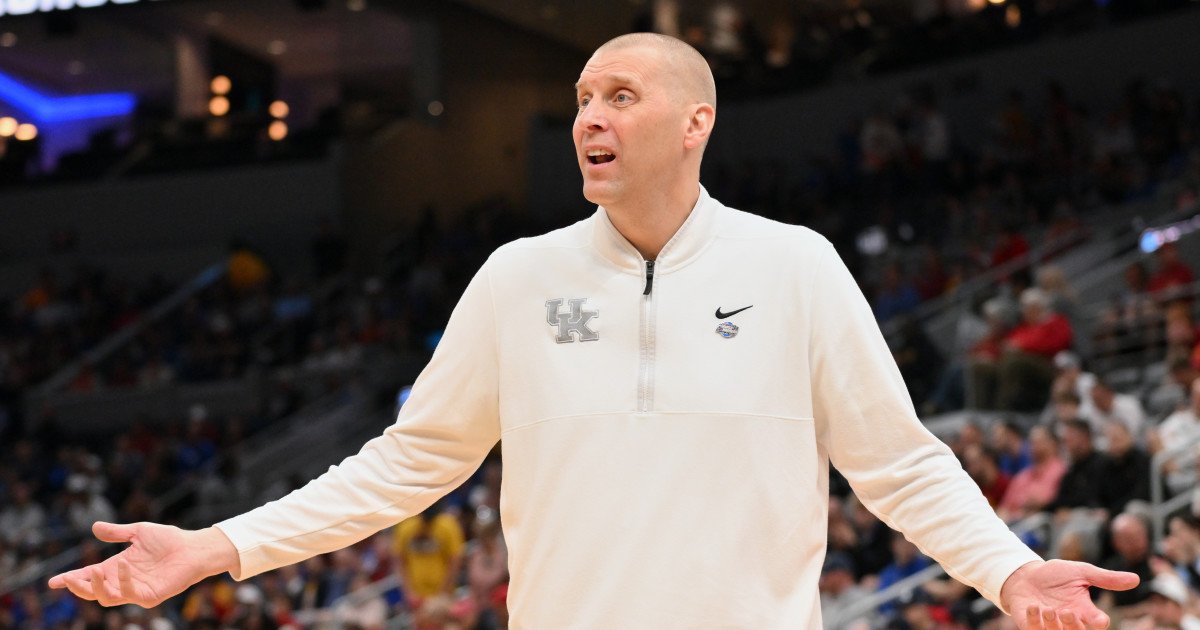
The dream is over in Lexington, and the blame game has begun in earnest. Mark Pope's Kentucky Wildcats were sent packing from the NCAA Tournament in decisive fashion, falling 82-63 to the No. 2 seed Iowa State Cyclones. The lopsided defeat has shifted the conversation from what went wrong on the court to what went wrong in constructing the team, with Pope's offseason decisions facing a harsh and unforgiving spotlight.
A Season of Promise Ends With a Whimper
Entering the tournament as a No. 7 seed, expectations for a deep Kentucky run were tempered but present. Instead, fans witnessed a performance that laid bare the team's fundamental flaws. The loss capped a campaign that fell well short of the storied program's lofty standards, leaving Big Blue Nation searching for answers and pointing fingers directly at the coaching staff's blueprint.
In his postgame remarks, Pope pointed to a specific, critical weakness. "We knew going in we were thin at point guard due to some late roster changes last spring," Pope admitted. "That was an area of concern for us, and unfortunately, those worries materialized." This admission, however, is being framed not as bad luck, but as a self-inflicted wound resulting from questionable planning.
Injuries or Ill-Conceived Strategy?
The Wildcats' season was indeed marred by significant injuries. Starting point guard Jaland Lowe was lost for the year in January, and forward Jayden Quaintance was sidelined with knee issues at the start of 2026. While some have pointed to these absences as the primary cause for Kentucky's struggles, prominent analysts are pushing back hard against that narrative.
They argue that relying on players with significant injury histories or building a roster without adequate contingency plans is a failure of roster management, not an act of fate. This debate about planning versus misfortune is raging across the college basketball landscape this March, much like the discussions surrounding NIL's impact on tournament predictability.
Experts Call Out Roster Choices
The criticism gained a powerful voice from longtime college basketball authority Sam Vecenie. He dismantled the injury excuse with a pointed critique of Pope's strategy. "It's difficult to listen to the 'if their best players stayed healthy' argument for Kentucky," Vecenie stated. "Their top transfer was recovering from a major ACL injury late last season, and they still invested heavily to acquire him. That's a deliberate roster decision, not misfortune."
This perspective suggests Pope knowingly assumed massive risk, betting on the health of players coming off serious injuries. When those bets failed, the entire structure of the team crumbled. It’s a stark contrast to the secure, dominant path of teams like UConn, whose fans are more concerned with late-night game slots than early exits.
A Fanbase Left Fuming
The result is a furious Kentucky fanbase that expects annual championship contention. For them, a second-round blowout is unacceptable, and the reasons—whether injuries or planning—are irrelevant if the outcome is the same. The passion in Lexington mirrors the intensity seen elsewhere in the tournament, from Brenda Frese's fiery coaching to the boisterous debates over fan behavior.
Pope now faces a critical offseason where his roster management will be scrutinized more than any play call. The pressure to immediately rebound is immense at a program where patience is in short supply. His task is to prove that this year's shortcomings were an anomaly, not a symptom of a flawed team-building philosophy. He’ll need to engineer a turnaround as dramatic as the one forecast models predict for the Final Four.
The message from critics is clear: in the modern era of college basketball, constructing a resilient roster is as important as coaching it. For Mark Pope and Kentucky, the 2026 tournament exit wasn't just a loss—it was an indictment of a plan that backfired, leaving a proud program to pick up the pieces and wonder what might have been with a more robust foundation.