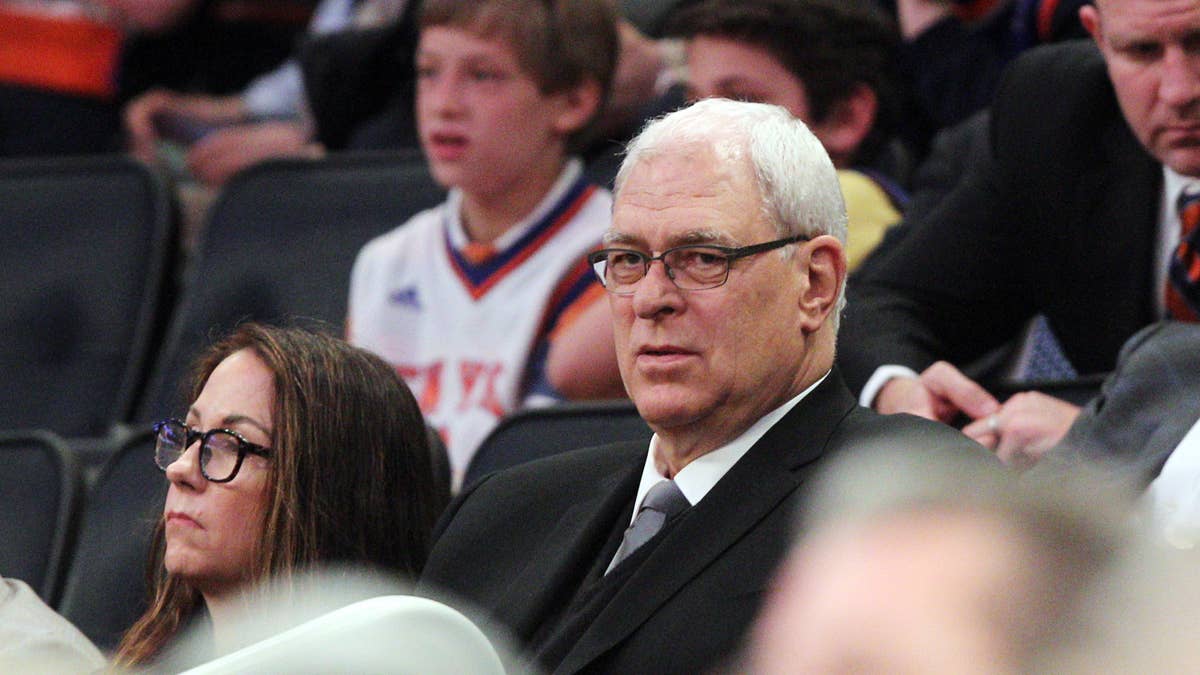
Hall of Fame coach Phil Jackson has never been one to shy away from shaking up the status quo, and now he's taking aim at the modern NBA's biggest headache. For years, the man who guided Michael Jordan and Kobe Bryant to multiple championships has been quietly pushing for a radical rule change—and he's finally going public with it.
Jackson wants the NBA to widen the court. Not by a few inches, but enough to fundamentally alter how teams attack from the corners. His logic is simple: make the corner three a true 23.9-foot shot, and you instantly devalue the league's most efficient—and most boring—offensive weapon.
“15 years I’ve been asking the NBA rules committee to widen the court apron,” Jackson revealed in a recent interview. “Corner shot becomes 23.9.” It's a subtle tweak with massive implications. Right now, the corner three is only 22 feet from the rim, making it a high-percentage, low-risk gamble that has fueled the analytics-driven revolution Jackson loathes.
The game, as Jackson sees it, has become a predictable slog of layups and threes, with everything in between treated like a mistake. He's not alone. Golden State Warriors coach Steve Kerr has floated an even more drastic idea: eliminating the three-point line entirely. “I would even consider getting rid of the three-point line,” Kerr told the New Yorker. “The analytics revolution has created a weird situation where we all know exactly where the highest efficiency shots are: layups and corner threes.”
Kerr argues that the current system has turned basketball into a spreadsheet exercise, where creativity is punished and every possession follows the same script. “If you shoot a twenty-two-footer now from the top of the key, that’s considered a really bad shot,” he said. “I just wonder—if we got rid of the three-point line, if it would diversify the way everybody would play and create a lot of different creative solutions to basketball.”
Jackson's proposal is less extreme but perhaps more practical. Widening the court would push corner shooters farther from the basket, reducing their advantage and forcing teams to find other ways to score. It would also open up space in the paint, rewarding post play and mid-range creativity—elements that have all but vanished from today's game.
The debate isn't just about aesthetics. Critics argue the NBA has become a three-point shooting contest, with defenses helpless against the math. Fans have grown tired of watching teams jack up 40-plus threes a night, and even the league's brightest stars have complained about the lack of variety. Nick Wright recently sounded the alarm for the Rockets, warning that a one-dimensional approach could doom even the most talented teams in the playoffs.
Jackson's call for change echoes a broader frustration with how analytics have homogenized the sport. From tanking to player movement, off-court issues have dominated headlines, but the on-court product is also under fire. The legendary coach believes a simple rule tweak could restore the balance between offense and defense, and between creativity and efficiency.
Of course, any rule change faces an uphill battle. The NBA's competition committee has historically been slow to act, and the league's current stars have built their games around the three-point line. But Jackson's voice carries weight, and with Kerr and other influential figures joining the chorus, the conversation is only getting louder.
Whether the NBA listens remains to be seen. But one thing is clear: the game's greatest minds agree that something has to give. Just as golf fans are demanding Augusta National adjust its rules, basketball purists are hoping the league will take a hard look at its own product. Jackson's vision of a wider court might not be a cure-all, but it's a bold first step toward a more dynamic, unpredictable NBA.