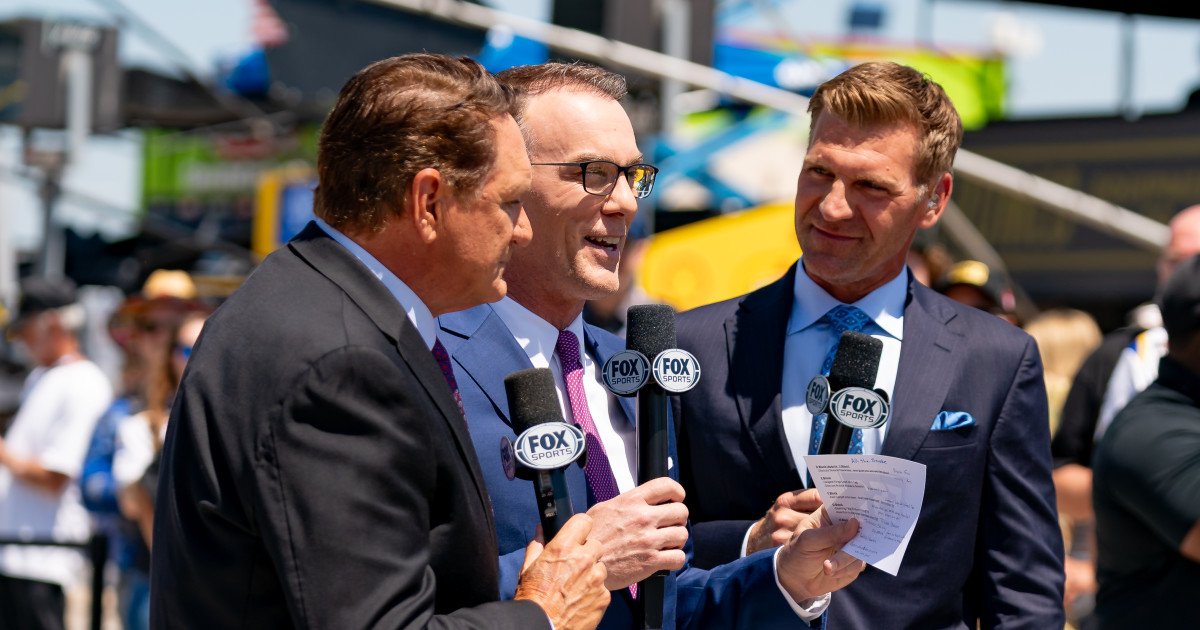
In the high-octane world of NASCAR, certain acronyms carry the weight of history. During Saturday's practice for the Goodyear 400 at Darlington Raceway, veteran broadcaster Mike Joy delivered a masterclass in racing context that had fans smiling and nodding in agreement.
As the NASCAR on FOX crew examined Ricky Stenhouse Jr.'s No. 47 Chevrolet, the conversation took a turn toward terminology. With the acronym DEI often making headlines in broader cultural discussions for Diversity, Equity, and Inclusion, Joy offered a clarifying—and deeply nostalgic—perspective for the racing faithful.
"We live in a sport where DEI has nothing to do with diversity and equity. DEI is Dale Earnhardt Inc.," Joy stated plainly, referencing the legendary team founded by the seven-time champion. The comment served as a gentle reminder that within the garage and grandstands, some abbreviations are sacred.
Fans React with Humor and Shared History
The moment quickly resonated across social media, where NASCAR fans shared their own experiences with the dual meaning of DEI. One fan admitted, "Honestly when DEI was first a political topic I was so confused because all the racing fan in me could think was Dale Earnhardt Inc." Another echoed the sentiment, writing, "That's what my first thought was when I first heard them use DEI."
The humor continued as fans connected the acronym to team history. "When people were 1st complaining about DEI i thought they were talking about how Teresa ran the company into the ground," one user joked, referencing the post-Dale era of the organization. The collective reaction highlighted how deeply the sport's own lexicon is woven into its community's identity.
Joy's seasoned commentary often provides these connective threads between NASCAR's past and present. It's a role he's embraced for decades, though he's not immune to the occasional on-air slip, as seen when Mike Joy owned up to a recent Bowman blunder. His authenticity, however, remains unquestioned.
More Than Just Letters: A Legacy Remembered
Dale Earnhardt Inc. was a powerhouse in the late 1990s and early 2000s, fielding cars for drivers like Dale Earnhardt Jr., Steve Park, and Michael Waltrip. Its legacy is a cornerstone of modern NASCAR history. Joy's off-the-cuff remark did more than define an acronym; it triggered a wave of shared memories about the team's iconic black No. 3 and red No. 8 cars, its championships, and its impact on the sport.
This kind of moment is why fans tune in to practice sessions—not just for speed charts, but for the color and context provided by voices like Joy's. It also comes at a time when the sport is thoughtfully examining its own relationship with broader social initiatives, making the distinction between the two "DEIs" particularly poignant.
The incident underscores how NASCAR's narrative is often shaped by its broadcasters. From the passionate analysis of legends like the late Ken Squier to the technical expertise of crew chiefs-turned-commentators like Larry McReynolds, these voices are the soundtrack of the sport. They guide new fans and affirm the knowledge of longtime followers.
As the series moves forward, balancing its rich traditions with evolution, moments like this serve as an anchor. While the Goodyear 400 at Darlington promised its own drama on Sunday afternoon, the weekend's first win was a small victory for racing heritage, delivered not from the driver's seat, but from the broadcast booth.