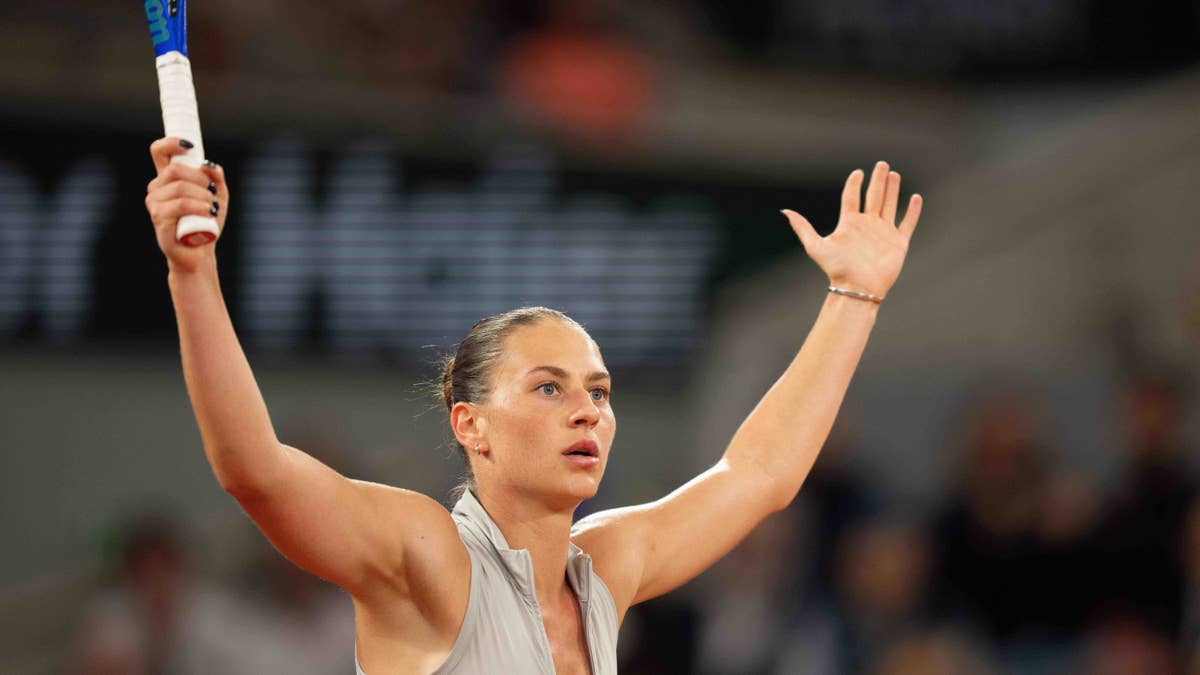
The semifinal clash at Roland Garros between Mirra Andreeva and Marta Kostyuk was expected to be a tense battle, but the match itself turned into a one-sided affair. Andreeva dominated from the start, cruising to a 6-1, 6-3 victory to book her spot in Saturday's final. Yet the real drama unfolded after the final point.
As Andreeva approached the net for the customary handshake, Kostyuk walked past her without so much as a nod. The snub didn't go unnoticed by the tennis world, and social media erupted with accusations of a classless gesture.
“Kostyuk no handshake gimmick has got to stop,” one fan wrote on X. “Very unsportsmanlike and shows that she has a huge ego.” Another called it “low class clown” behavior, while a third simply said, “No handshake like a sore loser.”
But Kostyuk's decision wasn't born out of pettiness over the loss. It stems from a deeply personal stance rooted in the ongoing war in Ukraine. Born in Ukraine, Kostyuk has been consistent in her refusal to shake hands with Russian players, a policy she has maintained throughout the conflict.
“The only person I shake hands with is Daria Kasatkina because she didn’t just change her passport, but also openly said she doesn’t support the war and all that,” Kostyuk explained after a previous match. “That’s why me and other girls decided to shake her hand, simply out of respect. … I don’t necessarily recall [others] speaking out against the war. I don’t know what their intentions were and they haven’t spoken about it. It’s just a flag next to your name, but I don’t see it as a complete picture.”
Andreeva, for her part, has shown nothing but grace toward Kostyuk. After beating her in the Madrid Open final earlier this year, the 19-year-old Russian praised her opponent's achievements. “I’d like to congratulate Marta and the team for this amazing win today and for how your clay season is going as well,” Andreeva said. “You won two tournaments in a row. You’re playing very well. Congrats for the win today as well.”
The handshake controversy is just the latest chapter in a broader conversation about sportsmanship and political expression in tennis. While some fans sympathize with Kostyuk's position, others argue that the court should remain a neutral space. The incident also echoes recent debates in other sports, such as the national anthem gesture controversy involving the Spurs and the outrage over Victor Wembanyama's anthem stance.
Andreeva, meanwhile, remains focused on her historic run. After the match, she said, “I just told myself that no matter what happens, I’m just gonna fight, give my best. If she ends up winning, she’s gonna have to really work for it. With this mindset, I ended up winning.”
As for Kostyuk, her stance is unlikely to change while the war continues. But for many fans, the lack of a handshake—even under those circumstances—still feels like a slap in the face to the spirit of the game.