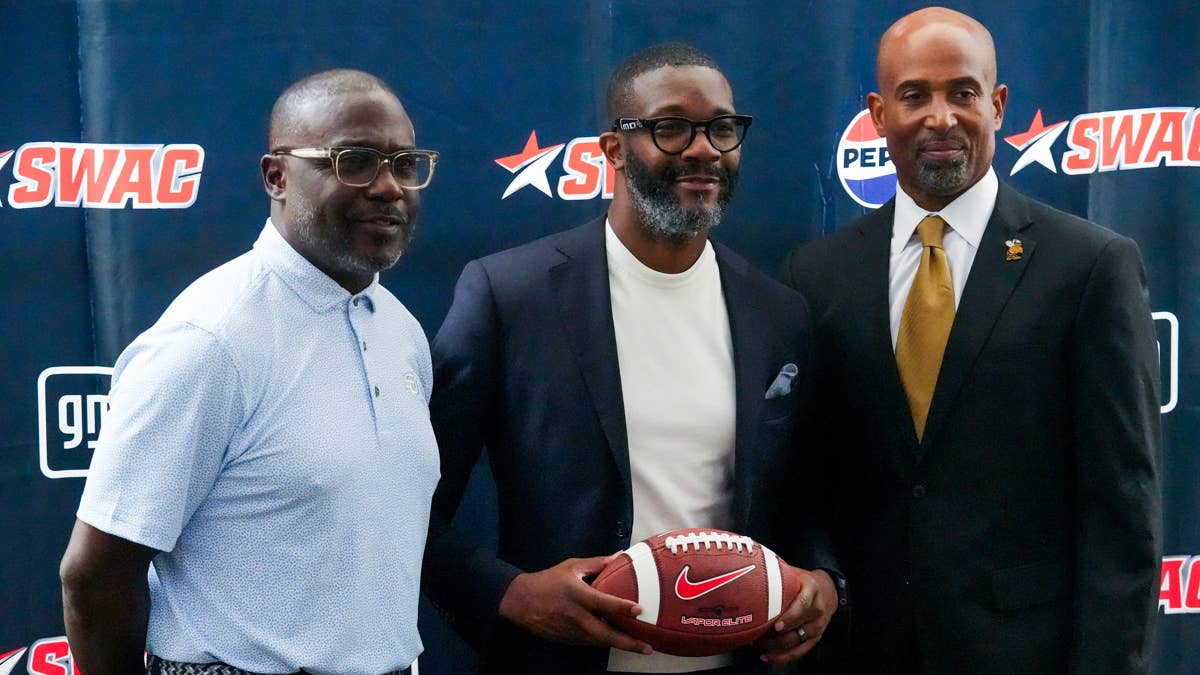
The game has changed. And Marshall Faulk, the Hall of Fame running back now leading Southern University's football program, isn't afraid to say it.
Speaking at SWAC Football Media Day, Faulk dropped a truth bomb about the shifting landscape for HBCU athletes. His message? The NFL is no longer the automatic next stop for the best talent from Historically Black Colleges and Universities.

“I believe that the next level is no longer the NFL,” Faulk told reporters, via HBCU Gameday. “We get poached by the FBS. They want our players. … They have an opportunity to maybe go somewhere and make good money while they’re in college. The game has changed. The landscape of college football has changed.”
Faulk, who spent last season as an assistant under Deion Sanders at Colorado, is stepping into his first head coaching gig with the Jaguars. And he's already seeing how the NIL era has flipped the script. Instead of dreaming about the pros, many top HBCU players are now eyeing the transfer portal — and landing spots at Power Five programs with deep NIL pockets.
That shift has forced coaches like Faulk to rethink their approach. “I believe that we as coaches, we have to look at it for what it is and start preparing these kids and coaching them and making sure they have the capacity to move on to the next level,” he said.
For Faulk, the definition of success isn't just about wins and losses. It's about development and retention. “I can’t say what it is. You’d have to ask my AD, you’d have to ask the president, the chancellor, what they’re looking for and what success is for them. Because my expectation is to win every game that we line up to play,” Faulk said. “That’s what I want to do. I’m trying to win every damn game we line up to play.”
He added: “I’m gonna say this— early successes were we able to recruit? Yes. The players that we retained, did they get better? Did they get better through the offseason program? Yes. Those are some of the things that I like. Do we look like a team? Do we smell like a team? Are we moving like a team? Yes, that’s early success.”
The new NIL reality has also sparked conversations about how college rosters are funded, with critics arguing that the transfer portal has created a free-agent frenzy that hurts smaller programs. Faulk's comments echo that concern, but he's focused on adapting rather than complaining.
With a Hall of Fame pedigree and a clear-eyed view of the modern game, Faulk knows his biggest challenge isn't just winning games — it's keeping his best players from being lured away by bigger programs with bigger budgets. Whether he can turn Southern into a destination that rivals those FBS powers remains to be seen. But one thing is certain: Faulk isn't backing down.