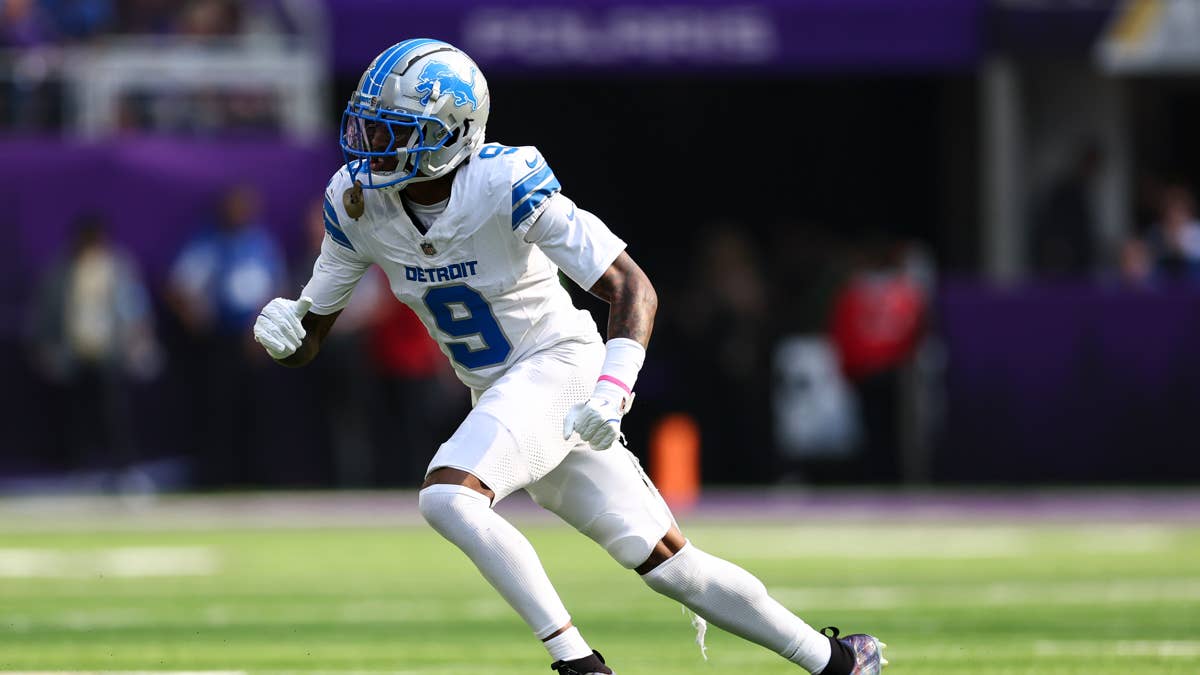
Detroit Lions wide receiver Jameson Williams is taking a stand—and he's bringing the NCAA, Big Ten, and SEC to court. The former Ohio State and Alabama star filed a lawsuit Monday in Los Angeles County, alleging that these collegiate powerhouses made bank off his name, image, and likeness (NIL) while leaving him with zero compensation.
According to the suit, Williams claims the defendants violated multiple laws, including the Cartwright Act, Unfair Practices Act, Sherman Antitrust Act, and Lanham Act. The gist? They used his likeness—think TV highlights and social media posts—to generate revenue, all without cutting him a check.
“To date, Williams has received no fair compensation from Defendants for the full commercial value of his name, image, and likeness,” the lawsuit states. “Defendants continuously financially benefit from Jameson Williams’ name, image and likeness rights, while also doing so without providing him with just compensation.”
Williams played for Ohio State in 2019 and 2020, right before the Supreme Court’s landmark 2021 ruling that allowed college athletes to profit from their NIL. He then transferred to Alabama, where he exploded for 1,595 yards and 15 touchdowns. But his timing was brutal—he missed the NIL gold rush entirely. An ACL tear in the National Championship Game further complicated his earnings potential, though the Lions still snagged him with the No. 12 pick in the 2022 NFL Draft.
Now, after a breakout 2024 season where he hauled in a career-high 65 catches for 1,117 yards, Williams is fighting back. The lawsuit argues that the NCAA, Big Ten, and SEC continue to cash in on his fame through highlights and social media, while he gets nothing.
“Plaintiff received less—zero—than he otherwise would have received for the use of his name, image, and likeness in a competitive marketplace, and was thus damaged, and seeks to recover those damages,” the filing claims.
This case could send shockwaves through college sports, potentially forcing a reckoning over how the NCAA and conferences handle NIL rights for athletes who played before the rules changed. Some fans have already voiced strong opinions about the current state of college football, with many revolting against proposed 24-team playoff expansion—a sign that the NIL landscape is just one piece of a larger puzzle.
Williams isn't alone in his frustration. Other former athletes have watched the NIL era explode, with some stars cashing huge deals, while those who paved the way get left behind. This lawsuit could set a precedent, forcing the NCAA to pay up for past use of athletes' likenesses.
As the legal battle unfolds, all eyes will be on how the Big Ten and SEC—two of the most powerful conferences in college sports—respond. For now, Williams is making it clear: he wants his fair share.