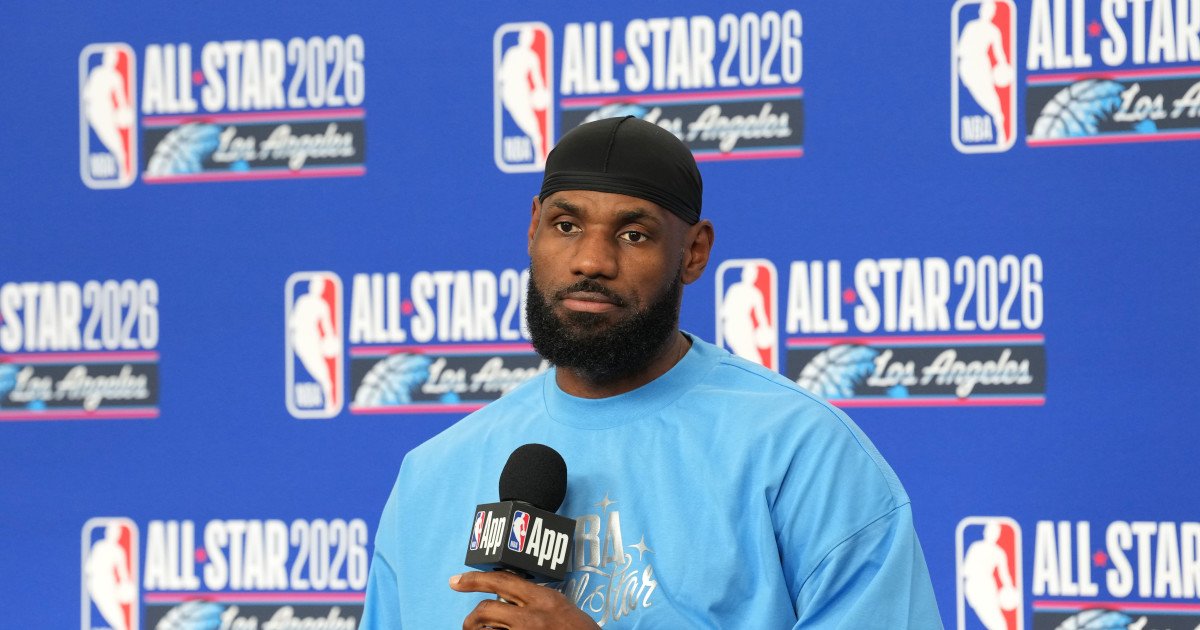
In a stunning about-face, LeBron James has stepped away from the pursuit of a goal he once championed loudly: becoming the owner of an NBA franchise. The Los Angeles Lakers superstar, who has spent over two decades building an empire both on and off the court, now says he's "not at all" interested in the owner's suite, marking a dramatic shift from his previous public campaigning.
The Vegas Vision That Was
For years, the narrative seemed inevitable. Following a 2022 preseason game in Las Vegas, James made his ambitions crystal clear, directly addressing NBA Commissioner Adam Silver through the media. "I want the team here, Adam," he declared, envisioning himself as the face of an expansion franchise in the entertainment capital. It was a perfect next chapter for a player whose business acumen has become as legendary as his basketball prowess.
But the financial landscape of the league has shifted seismically. The price tag for an NBA expansion team, particularly in a coveted market like Las Vegas, is now projected to reach a staggering $10 billion. While James's net worth is estimated at over $1.4 billion—a testament to his success in ventures like media and branding—that figure is dwarfed by the capital required to be a primary owner in today's NBA.
Partnerships and Timelines Collapse
Compounding the financial hurdle is the dissolution of a crucial alliance. LeBron had strategically partnered with Fenway Sports Group, the deep-pocketed conglomerate behind the Boston Red Sox and Liverpool FC. However, reports indicate FSG is no longer pursuing basketball ownership, pulling a major financial pillar from under James's potential bid. As one source told The Athletic, "With Fenway no longer pursuing NBA ownership, it is less likely that LeBron will pursue a team."
The league's own expansion timeline creates another roadblock. The NBA is reportedly eyeing a potential launch for new teams in the fall of 2028. LeBron, who remains undecided about playing in the 2026-27 season, would first need to retire before formally launching an ownership bid. This creates a tight, if not impossible, window to secure new investment partners and assemble a competitive proposal. This kind of complex financial pivot is not unique in sports; similar strategic recalculations happen across leagues, as seen when the Tisch family sought to transfer their Giants stakes to the next generation.
A Dream Deferred, Perhaps Indefinitely
This reversal highlights the immense gap between superstar wealth and the stratospheric economics of modern professional sports ownership. While James's fortune is colossal, the goalposts for franchise acquisition have moved into a new galaxy. It's a financial arena where even the game's greatest earners can be priced out, a reality that puts Michael Jordan's achievement as majority owner of the Charlotte Hornets into even sharper perspective. For context, MJ's net worth is estimated at $4.3 billion, a figure that provides a different level of access to the ownership table.
LeBron's public change of heart is a reminder that even the most carefully laid plans can be undone by market forces. His focus now appears firmly on extending his unparalleled on-court career and growing his business portfolio outside the direct ownership of an NBA team. The dream of bringing a team to Las Vegas, for now, has been benched.
This isn't the first time a high-profile figure has publicly shifted a major sports stance. Such reversals can be surprising, much like Stephen A. Smith's evolution from LeBron critic to vocal supporter. For LeBron, the calculation was purely practical. The combination of astronomical costs, the departure of a key financial ally, and a restrictive timeline has led to a pragmatic, if disappointing, conclusion.
So, while the NBA continues to explore expansion into markets like Las Vegas and Seattle, one of the most anticipated potential owners has officially taken his name out of consideration. The league will march on toward its next era of growth, but for the foreseeable future, LeBron James will be remembered as the king of the court, not the king of a franchise.