The road to the 2028 Los Angeles Olympics just took a definitive turn, as the International Olympic Committee has laid down a major new rule that will reshape the landscape of women's sports at the Games. In a move that settles a heated, years-long debate, the IOC has officially declared that eligibility for any female category event is now exclusively for biological females.
A Policy Forged in Controversy
This isn't a decision made in a vacuum. The conversation around fairness in women's sports has reached a fever pitch globally, with figures from political arenas to athletic commissions weighing in. The new IOC framework, designed to protect the "fairness, safety and integrity" of competition, directly responds to research indicating inherent physical advantages in strength, power, and endurance for athletes born male. It's a clear, if controversial, line drawn in the sand for the world's biggest sporting stage.
"Eligibility for any female category event at the Olympic Games or any other IOC event, including individual and team sports, is now limited to biological females," stated the committee. They were quick to note the policy is not retroactive and won't affect recreational or grassroots programs. Its full force will be felt when the world converges on Los Angeles in July 2028.
Echoes from Paris: The Case of Imane Khelif
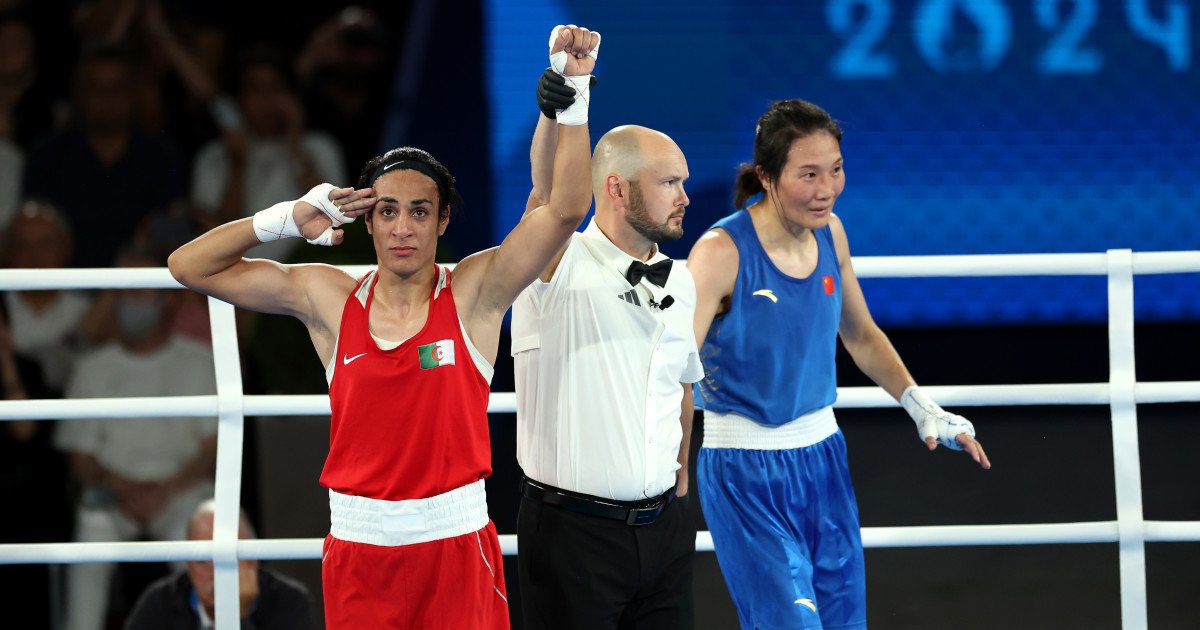
The timing of this ruling is poignant, coming on the heels of the intense scrutiny and controversy that surrounded athletes like Algerian boxer Imane Khelif at the 2024 Paris Games. Khelif, who faced a firestorm of public doubt and was even disqualified from the 2023 World Championships over eligibility questions, powerfully represents the complex intersection of genetics, identity, and sport.
Despite the noise, Khelif triumphed, winning Olympic gold in the welterweight division. She later clarified her situation in an interview, revealing she has the SRY gene—a natural genetic variation. "We all have different genetics, different hormone levels. I'm not transgender. My difference is natural. This is who I am," Khelif told L'Equipe. "I have taken hormone treatments to lower my testosterone levels for competitions." Her story underscores that the debate extends beyond transgender athletes to include those with Differences of Sex Development (DSD).
Looking Ahead to LA 2028
While the immediate impact on athlete participation remains unclear, the policy sets a precedent that will undoubtedly influence international sports federations and national committees as they prepare their teams. The focus now shifts to how this rule will be implemented and policed in the lead-up to the Games. This decision also arrives as other sports are making their own high-profile adjustments; for instance, check out how USA Football is crafting its 2028 Olympic blueprint, blending NFL stars with flag football phenoms in a new era for the sport.
The IOC's ruling is a watershed moment, likely to be debated as vigorously as any photo finish or judging decision. It aims to provide clarity but also highlights the ongoing challenge of balancing inclusion with competitive equity at the highest level. As the sporting world continues to evolve, so too will the conversations around safety, identity, and the very definition of fair play. These discussions aren't limited to the track or the ring; they mirror broader societal shifts, similar to the cultural conversations sparked by dress code dramas in other public spheres.
With Los Angeles on the horizon, all eyes will be on how this policy shapes the narratives, the teams, and the dreams of athletes worldwide. One thing is certain: the journey to the 2028 Games will be as much about the rules of competition as the competition itself.