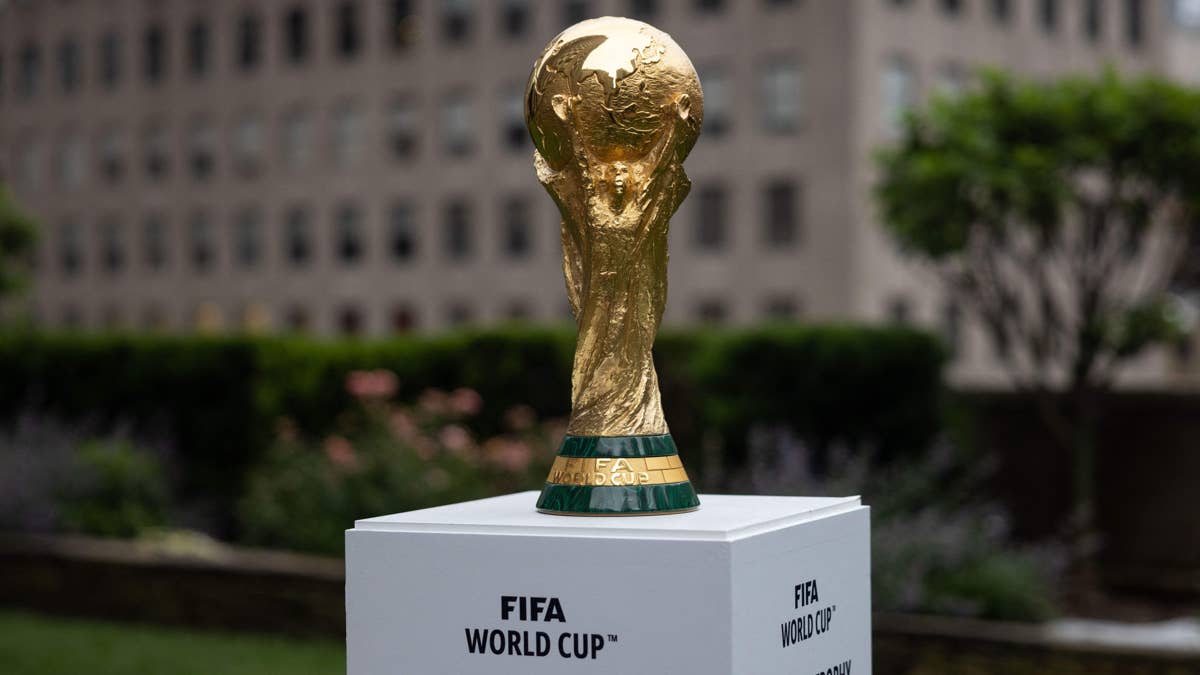
The International Football Association Board (IFAB) has given the green light to two major officiating changes proposed by FIFA, aimed at cleaning up player conduct on the world’s biggest stage. The new guidelines, set to be enforced at the upcoming men’s World Cup, target two specific behaviors that have sparked controversy in recent months: covering the mouth during altercations and walking off the field in protest.
In a special meeting held in Vancouver, Canada, IFAB members unanimously approved the amendments, which FIFA president Gianni Infantino has championed as necessary steps to combat discrimination and maintain the integrity of the game. Under the new rules, referees will have the authority to issue a red card to any player who covers their mouth while confronting an opponent, as well as to any player who leaves the field in protest—or any team official who instructs a player to do so.

Why the Change? A Look at Recent Incidents
The push for these guidelines gained momentum after a high-profile Champions League match in February, when Real Madrid star Vinicius Jr. accused Benfica’s Gianluca Prestianni of making racist remarks. Prestianni, who covered his mouth with his shirt during the heated exchange, denied the racism allegations but later admitted to making homophobic comments, earning a six-match ban.
Infantino didn’t mince words when discussing the incident. “If a player covers his mouth and says something, and this has a racist consequence, then he has to be sent off, obviously,” Infantino told Sky News on March 1. “There must be a presumption that he has said something he shouldn’t have said, otherwise he wouldn’t have had to cover his mouth.”
English Football Association CEO Mark Bullingham, an IFAB member, echoed the sentiment. “You can see when a player is talking to an opponent, there are very few circumstances where they should need when they’re confronting them to cover their mouth,” Bullingham said. “But we need to look at everything and make sure if we were to bring the rules change or penalty for that, that we’re not going to create further problems.”
Preventing World Cup Chaos
The second guideline—penalizing players who leave the field in protest—stems from a chaotic scene during the Africa Cup of Nations final in January. Senegal’s players walked off the pitch after the host nation Morocco was awarded a penalty kick, causing a 17-minute delay. Senegal eventually won the match but was later stripped of the title by the Confederation of African Football (CAF).
FIFA is determined to avoid a repeat of such disruptions at the World Cup, where global attention is at its peak. These new rules are designed to give referees clear authority to act swiftly, ensuring that games proceed without unnecessary delays or controversies that could tarnish the tournament’s reputation.
The timing of these changes is critical as the world gears up for the next World Cup. With the tournament set to feature a diverse array of teams and cultures, FIFA is sending a strong message that respect and sportsmanship will be non-negotiable. As Philly's World Cup transit win shows, preparations are already in full swing to make the event a success, and these officiating guidelines are a key part of that effort.
Infantino’s push for these rules reflects a broader commitment to cleaning up the game, a theme that resonates across sports. Just as the wrestling world honored Brock Lesnar after an emotional WrestleMania exit, soccer is taking steps to ensure its biggest moments are defined by skill, not scandal. And while some might see these rules as heavy-handed, they’re a clear signal that FIFA is serious about protecting the integrity of the beautiful game.
As the World Cup approaches, players and teams will need to adapt quickly. The message is simple: keep your hands away from your mouth during confrontations, and never walk off the field in protest. Failure to comply could mean an early trip to the locker room—and a red card that could haunt a team’s entire tournament.