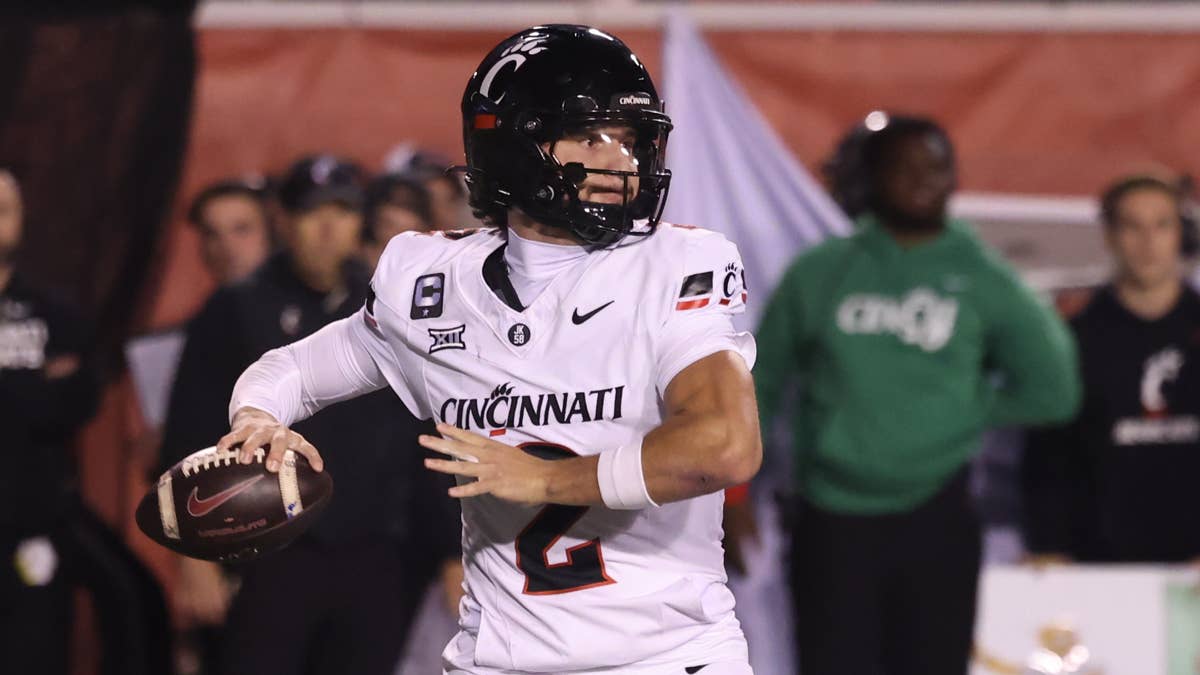
Texas Tech quarterback Brendan Sorsby may have thrown his last pass in college football. The 22-year-old signal-caller, who transferred from Cincinnati with a $5 million NIL deal, has entered a treatment program for gambling addiction—and new details suggest his career could be over.
According to sources, Sorsby placed more than 10,000 wagers since 2022, averaging 20 bets per day across apps like Hard Rock Bet, BetMGM, DraftKings, and PrizePicks. The bombshell report from On3’s Pete Nakos reveals that Sorsby allegedly gambled on Indiana games while he was redshirting, a direct violation of NCAA rules.
A Pattern of Betting
The gambling didn't stop there. A USA Today report from Monday night stated that Cincinnati’s athletic department was alerted in August 2025 that Sorsby was gambling before the season even started. Sources say the school was aware of his betting habits before the summer of 2025, but chose not to act. “The athletic department would not knowingly play an athlete who violated NCAA rules,” Nakos wrote, though the timing of the alert remains murky.
Texas Tech head coach Joey McGuire has publicly supported Sorsby’s decision to seek help. “We love Brendan and support his decision to seek professional help,” McGuire said. “Taking this step requires courage, and our primary focus is on him as a person.” But behind the scenes, the program is bracing for the worst.
NCAA Rules Threaten Eligibility
The NCAA has made its stance clear: student-athletes who wager on their own games could face “permanent loss of collegiate eligibility in all sports.” For those who bet on other schools, the penalty is a loss of 50% of one season. Given the scope of Sorsby’s alleged betting—including on his own team—the hammer could drop hard.
Analyst Ari Wasserman of On3 didn’t mince words: “It feels like he’s not playing college football ever again.” Social media erupted with similar sentiments, with one user writing, “This dude should never be allowed on the field again.” Another commented, “He probably had no idea he would ever get to the point of receiving millions in NIL playing college football, and now instead of getting that money he’s likely never playing football again.”
Broader Implications
Sorsby’s case is just the latest in a growing crisis. As Finebaum warns, the college gambling crisis is just getting started. The ease of access to betting apps has created a perfect storm for young athletes. “Gambling is addictive by design and it’s being pushed on kids whose brains are not even fully formed,” one observer noted. “We should be taking this just as seriously as smoking or drinking.”
The scandal also echoes other recent controversies. Cris Carter blasted a double standard in a separate case, but here the stakes are even higher for Sorsby. Unlike the NFL, where players face suspensions, the NCAA’s eligibility rules can end a career permanently.
What’s Next for Sorsby?
Sorsby’s 2025 season was stellar—61.6% completion rate, 2,800 yards, 27 touchdowns, and just five interceptions. He was viewed as one of the top quarterbacks in the country. Now, his future is uncertain. While the NCAA has yet to make a final ruling, most expect a severe penalty. Texas Tech may have shelled out $5 million to get him, but the school is reportedly at peace with the situation.
For now, Sorsby’s focus is on recovery. But the question remains: Will he ever play college football again? The answer, based on the evidence, looks grim.