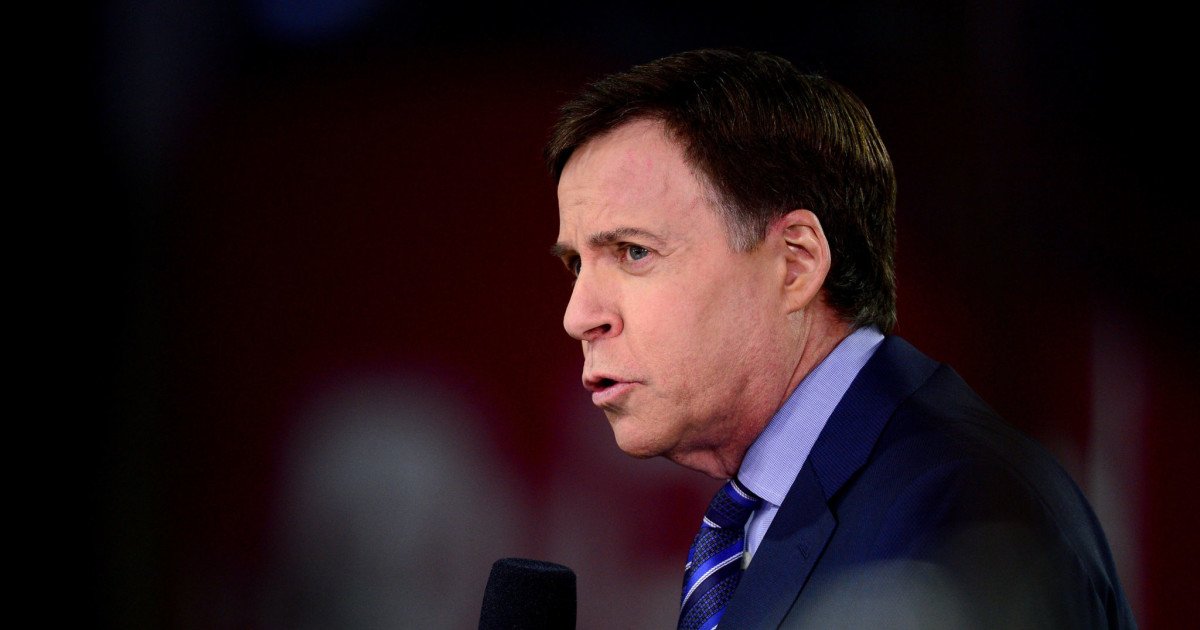
In a refreshingly candid moment, broadcasting legend Bob Costas has taken aim at the very industry that made him famous, delivering a scathing assessment of today's media environment. The Hall of Fame voice, known for his thoughtful commentary across decades of iconic sports moments, argues that a corrosive shift toward cynicism and outrage is eroding the foundation of credible journalism.
The High Cost of Low Blows
Costas, in a recent interview, pinpointed a troubling trend: the celebration of vitriol as a badge of honesty. He observed that the loudest, most abrasive voices often position themselves as the only truth-tellers in a room full of supposed liars. "Cynicism is not the same thing as insight," Costas stated bluntly, drawing a critical line between healthy skepticism and destructive negativity. He warned that this posture, where every institution is presumed corrupt and every motive questioned with malice, ultimately serves the audience poorly.
"The person who says that everybody's a liar and everything's [expletive]," Costas explained, referencing the common media trope, "can claim to be the most honest. But that's a hollow claim. It's a performance, not journalism." He contrasted this with what he sees as a vanishing ideal: commentators and reporters who build trust through accuracy, context, and accountability, rather than through sheer volume of outrage.
Accountability in the Age of the Hot Take
A central pillar of Costas's argument is the evaporation of accountability. He lamented the rise of figures, particularly online, who present themselves as lone wolves speaking hard truths while having "no credibility, no background and no accountability." This model, he suggests, is in some ways more dangerous than overly optimistic reporting. "At least they're not telling you something that's untrue," he said of the perennial optimists, implying that the cynical provocateur often traffics in distortion for effect.
This critique resonates far beyond the broadcast booth. The pressure to generate clicks and engagement often rewards the very behavior Costas condemns. We've seen how a single fake tweet can ignite a wildfire of speculation, demonstrating how the rush for content can outpace fact-checking. Similarly, the frenzy around personalities often overshadows the event itself, as seen when a social media post from a golf influencer dominates the conversation more than the tournament's leaderboard.
The financial realities of modern media are not lost on Costas. He acknowledges that the business model now demands excitement and constant engagement. Simply presenting information clearly and fairly often isn't enough to capture fragmented audiences. This economic engine fuels the very cycle of hype and negativity he decries, creating an environment where, as he notes, "it's hard not to be cynical."
A Veteran's Warning for the Future
Costas's comments serve as a sobering warning from a respected elder statesman. His career, spanning from the Olympics to the World Series, was built in an era with different norms and a slower news cycle. His frustration reflects a deep concern for the integrity of public discourse, especially in sports, a realm that often mirrors broader societal debates.
While he offers no simple solution, his message is clear: the audience must learn to discern between cynical performance and genuine critical thought. In a landscape cluttered with takes, where even severe weather events like the potential disruption of sports schedules by tornado threats can become just another piece of alarmist content, Costas's plea is for a return to substance. It's a call to value the reporter who explains the *why* over the pundit who only shouts the *what*, and to reward depth over decibels. Whether the industry heeds this warning from one of its most iconic figures remains to be seen.