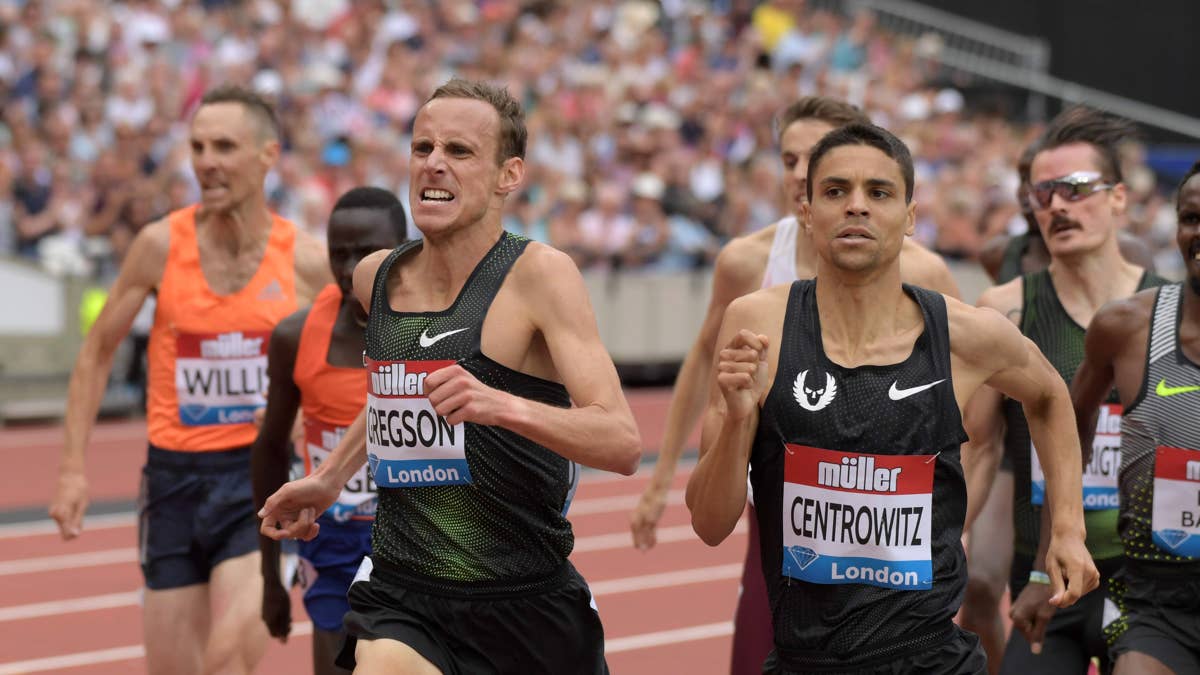
Two-time Australian Olympian Ryan Gregson is eating a hefty slice of humble pie after a controversial comment on a podcast left many fuming. The 36-year-old middle-distance runner, who competed in the 2012 and 2016 Olympics, found himself at the center of a storm for remarks about 10km world record holder Agnes Jebet Ngetich.
During an episode of the “For The Kudos” podcast, Gregson recounted a recent 10k race where male runners found themselves pacing alongside Ngetich. In a moment that quickly went viral for all the wrong reasons, Gregson referred to the elite athlete as just a “girl.”
“Funny one, so they did a 10k recently. Liam ran a 28.20 something and Tim maybe 28.50. But Liam had a girl behind him for the first 5k. I just said, 'Mate, that would be such a weird experience.' You’re on track for a PB, you know you’re going well but there’s a girl right next to you at halfway. You’re just re-evaluating everything,” Gregson said on the podcast, as reported by Fox Sports.
He went on to describe the hypothetical runner’s panic: “You’re like ‘I’m on for a career day today, but am I going to be chicked?’ He’s not the type of guy who should have that in his head. You’d be shook, going through all your life’s choices like how did I end up here, why didn’t I study harder.”
The backlash was swift and unforgiving. Listeners took to social media to express their disappointment, with one calling Gregson’s mindset “tiny, stupid” and another accusing him of undermining women in sports. “Tell me you’re insecure without telling me you’re insecure,” a commenter wrote. The incident echoes other recent controversies in sports where athletes or commentators have faced criticism for outdated views. For instance, Kevin Harvick blasted Stephen A. Smith over similar ignorance in NASCAR, showing the sports world is increasingly intolerant of such remarks.
Gregson, whose wife is also an elite athlete, quickly realized the gravity of his words. In a follow-up episode of the same podcast, he issued a tearful apology. “Firstly I owe an apology for my comments on the episode. This isn’t a representation of how I see women in sport,” Gregson said. “My wife is an elite athlete and some of my proudest moments have been watching her win or beat up on male athletes. Since yesterday, I’ve locked away from social media because I am ashamed. I’ve read the comments and I’ve seen how offending it’s been for women. From the bottom of my heart, I am truly sorry. That isn’t me.”
The apology has done little to quell the debate, though some have praised Gregson for owning up to his mistake. The incident raises questions about how society views female athletes, especially in endurance sports where women like Ngetich often outperform men. In a similar vein, Olivia Pichardo shattered barriers in NCAA baseball, proving that talent knows no gender.
Only time will tell if Gregson can rebuild trust with the running community and the broader public. For now, his apology stands as a reminder that even Olympians can stumble—and that owning up to it is the first step toward making amends.