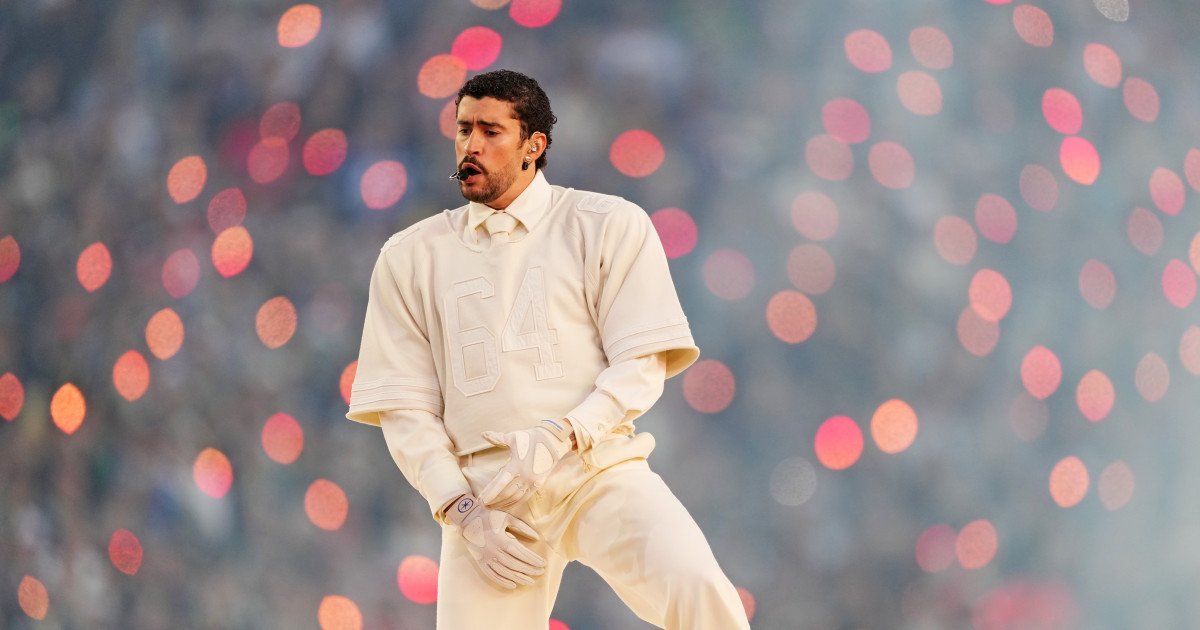
Did more than half the planet really tune in for Bad Bunny's Super Bowl spectacle? That's the billion-dollar question—literally—after the NFL dropped a viewership bomb that's sending shockwaves through the sports world and facing immediate skepticism.
A Historic Announcement Meets Immediate Doubt
On Monday, following Bad Bunny's electrifying performance at Super Bowl 60 in Santa Clara, a joint announcement from Roc Nation and the NFL declared a new, seemingly untouchable record. They claimed the halftime show racked up over 4.1 billion views within the first day, instantly crowning it the most-watched Super Bowl halftime show of all time. The news was trumpeted across official social channels, celebrating a landmark moment for the global superstar and the league.

"Bad Bunny Sets Global Viewership Record for Most-Watched Super Bowl Halftime Show Performance of All-Time," proclaimed the official post. The show capped a night where the Seattle Seahawks defeated the New England Patriots 29-13 to claim the Lombardi Trophy.
The Math Just Doesn't Add Up For Fans
Almost as quickly as the confetti fell, the celebration online turned to scrutiny. The core issue? Basic arithmetic. With roughly 8 billion people on Earth, a claim of 4.1 billion unique viewers implies an impossible scenario where over 50% of the global population—every man, woman, and child—watched the performance.
"Nobody believes 4 billion people watched this. Let's get real, here. 1.5 billion watch the World Cup Final," wrote one skeptical fan, highlighting the scale by comparing it to one of the few truly global sporting events.
The backlash centers on how "views" are counted in the digital age. Critics point out that social media platforms and streaming services often count a "view" after just a few seconds of playback, which can include passive scrolling or multiple watches by the same person. This methodology can massively inflate numbers compared to traditional live television audience measurements.
Dissecting the Digital View
Fans were quick to dissect the potential for metric manipulation. "So a person who watched the halftime show live, but then rewatched it on Youtube after the game, and liked an official NFL halftime post, counts as 3 views even though it's just 1 person," one user astutely pointed out, outlining how a single fan can contribute multiple data points to the final tally.
Others reacted with sheer disbelief. "4 billion? This gotta be a joke," another comment read, while a different fan questioned the timing: "Haha...why did it take almost a month to get these numbers?"
This skepticism isn't just fan chatter; it taps into a broader conversation about transparency in digital metrics. In an era where viral numbers are currency, the methodology behind record-breaking claims is under more scrutiny than ever. The NFL's report likely aggregates data from live broadcasts, official streaming partners, and clips across platforms like YouTube, X, and Instagram—all with different counting rules.
What's Really Behind the Record?
While the 4.1 billion figure is almost certainly not representative of unique individuals, it does underscore Bad Bunny's immense global pull and the NFL's successful push for digital dominance. The league has aggressively moved to capture the fragmented attention of younger audiences who consume content in clips and highlights online. This metric, however contested, is a testament to that strategy's reach.
The controversy leaves us with a pivotal question: In the age of digital consumption, what does a "view" truly mean, and when does a big number become more about marketing than measurement? For now, the NFL and Roc Nation are standing by their historic claim, but a significant portion of the sports world is calling for an audit before the record books are officially rewritten.