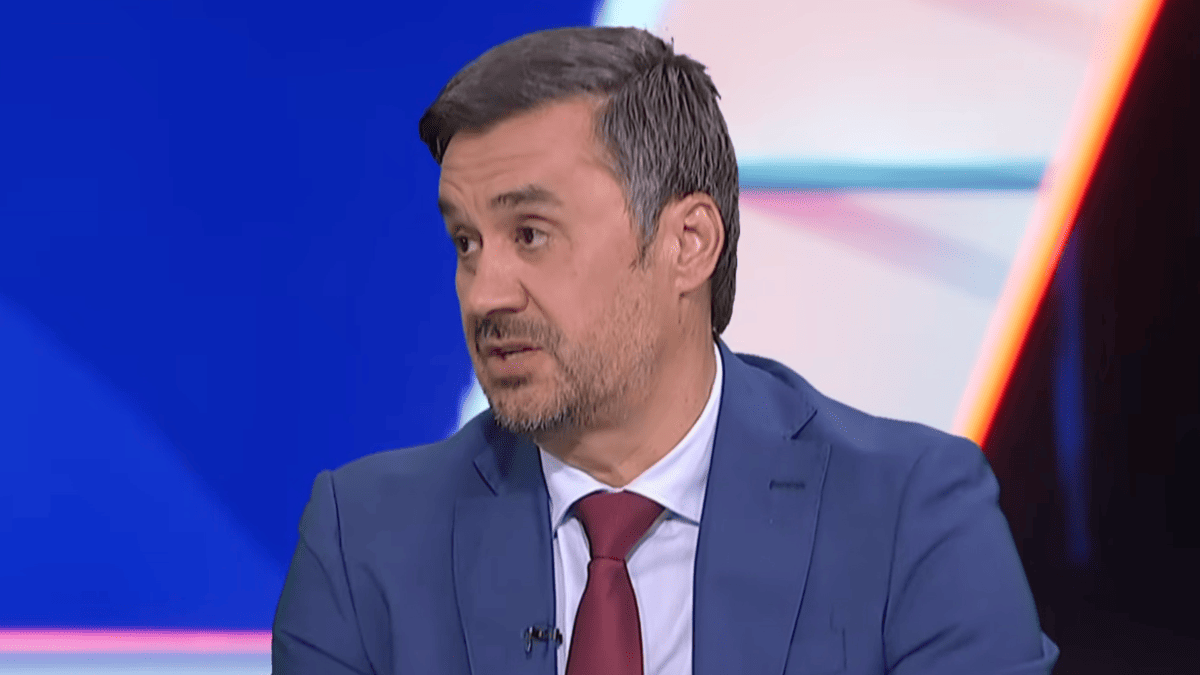
In a stunning turn of events that has rocked the soccer world, former Yugoslavian striker and current television analyst Rade Bogdanovic has issued a public apology after making deeply offensive remarks about Black players during a World Cup broadcast. The incident occurred on Serbian state television RTS while discussing Belgium’s 0-0 draw with Iran, a match that saw Belgian defender Nathan Ngoy—who is of Congolese descent—receive a red card.
Bogdanovic, who once played for Atletico Madrid and Werder Bremen, said during the broadcast: “I have always said those players – and I’m really not racist – but Black players lack the concentration to last more than 60 to 80 minutes. I played with them.” He added that teammates sometimes had to “protect our own players from making mistakes,” claiming that modern football at the World Cup level doesn’t allow such errors.
The comments quickly drew widespread condemnation from fans, fellow analysts, and anti-racism organizations. Social media erupted with outrage, with many calling for Bogdanovic to be removed from his role. The clip was shared widely, amplifying the backlash.
Under mounting pressure, Bogdanovic walked back his statement. “I sincerely apologize for my statement regarding Black football players,” he told Reuters, as reported by All Out Soccer. RTS also issued a formal apology, stating: “We would like to take this opportunity to apologize, as a broadcaster, for the statement made in our programme concerning members of a particular race.”
This controversy comes amid heightened scrutiny of on-air conduct during major tournaments. Earlier this year, another World Cup broadcaster faced suspension for making inflammatory comments about a player’s family. The pattern raises fresh questions about the standards expected from commentators and analysts on global platforms.
Bogdanovic’s career includes a stint as a striker for the Pohang Atoms in South Korea, where he netted 45 goals in 20 league games—a feat that earned him a move to La Liga powerhouse Atletico Madrid. He later represented FR Yugoslavia at the international level, scoring twice against Ghana in the 1997 Korea Cup. After his time in Spain, he played in Germany for Werder Bremen before retiring in 2003.
The soccer community continues to debate how broadcasters and networks should handle such incidents. While apologies have been issued, many argue that stronger measures—such as mandatory diversity training or immediate suspension—are necessary to prevent recurrence. The incident also echoes broader conversations about race and representation in sports media, similar to the recent exchange between Colin Cowherd and USMNT fans that highlighted tensions around national team commentary.
As the World Cup progresses, the focus remains on the pitch, but this episode serves as a stark reminder of the power—and responsibility—that broadcasters hold. The hope among fans and advocates is that apologies will translate into meaningful change, ensuring that future coverage is inclusive and respectful for all players and viewers.