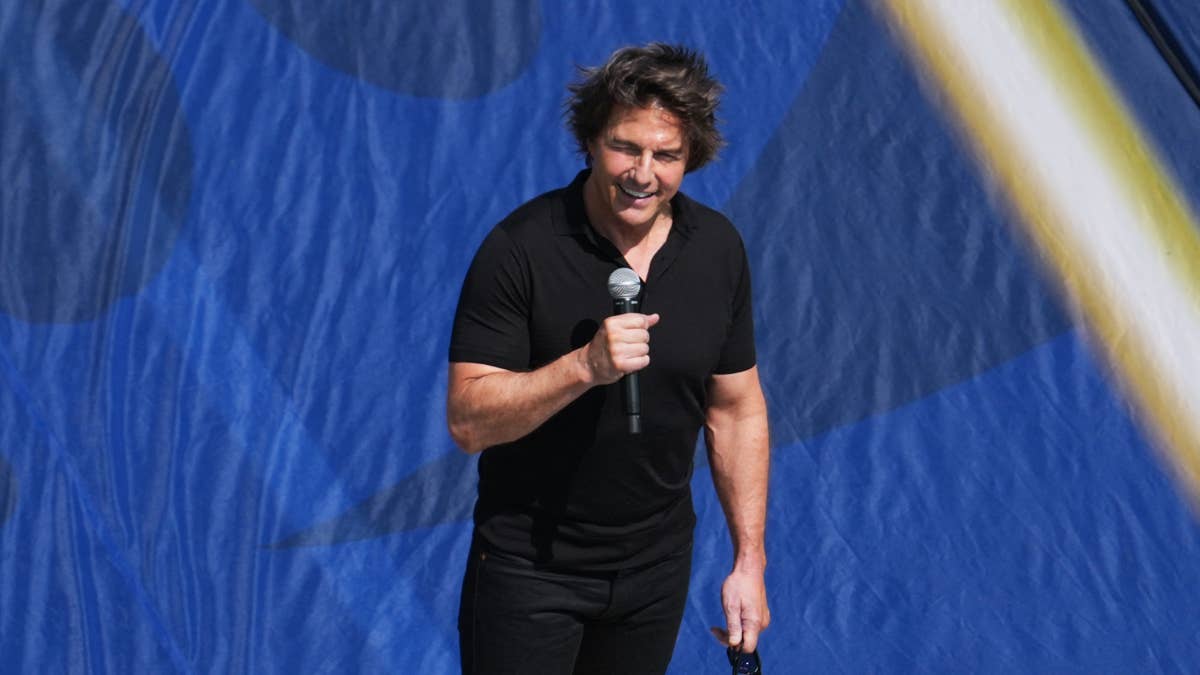
Let's be honest: nobody does celebrity overload quite like the United States. The 2026 FIFA Men's World Cup Final between Argentina and Spain at MetLife Stadium should be about the game itself—two powerhouse teams battling for glory. Instead, we got Tom Cruise delivering a dramatic monologue, Jennifer Hudson singing the U.S. national anthem, and a parade of A-listers with zero connection to either country. It's too much.
The pregame spectacle felt more like a Hollywood awards show than a soccer match. FOX, the broadcast partner, seemed determined to prove that bigger is better, but for many fans, it backfired. As one fan put it on social media, "What the are they doing with the World Cup final? The US ruins everything it touches." Another added, "Nobody ruins big-time sporting events like random celebrities."
Why Are We Doing This?
The question on everyone's mind: why is Jennifer Hudson performing the U.S. national anthem before a match between Argentina and Spain? Neither team is American. And why is Tom Cruise, an actor known for action movies, giving an inspirational speech about unity and greatness? As one fan joked, "My 9 year old has said who is Tom Cruise and why is he there. I can answer one question but not the other."
This isn't an isolated incident. The U.S. has a long history of inserting random celebrities into major sporting events, from packing Madison Square Garden with 102 celebrities for a Knicks finals game to an A-list parade at the Knicks' championship parade. It's a pattern that often feels forced and inauthentic.
Fans Want the Game to Speak for Itself
At its core, the World Cup Final is a monumental event. It doesn't need Hollywood glitz to feel important. Fans tune in for the drama on the pitch, not for a pregame show that feels like a desperate grab for attention. As one fan tweeted, "I can't take any of this pre-match show stuff seriously. Why am I watching Tom Cruise do a monologue 10 minutes before a World Cup Final?"
The backlash was swift. Even journalists covering the match noted the awkwardness. Miguel Delaney tweeted, "Tom Cruise is giving a speech for some reason, that the fans are now mercifully singing over." The crowd's impromptu singing drowned out Cruise's words, a symbolic rejection of the celebrity spectacle.
A Broader Problem
This isn't just about the World Cup. The U.S. sports landscape is increasingly dominated by celebrity cameos, from Tom Brady and Chris Rock leaving a Swift-Kelce wedding early to the constant presence of stars at NBA games. The trend raises questions about whether we're losing sight of the athletes and the competition.
For now, the hope is that the game itself will overshadow the distractions. Argentina vs. Spain promises to be a thrilling encounter, with Argentina coming off a comeback win over England and Spain dominating France. But the pregame show has left a sour taste for many, and it's a reminder that sometimes, less is more.
As one fan succinctly put it, "Hopefully, the game will be able to stand for itself, and FOX won't have to go to celebrity after celebrity in the stands." The message is clear: let the sport do the talking.
This isn't just about one event—it's about a cultural obsession that needs rethinking. The U.S. has a problem with celebrities at sporting events, and it's time to dial it back.