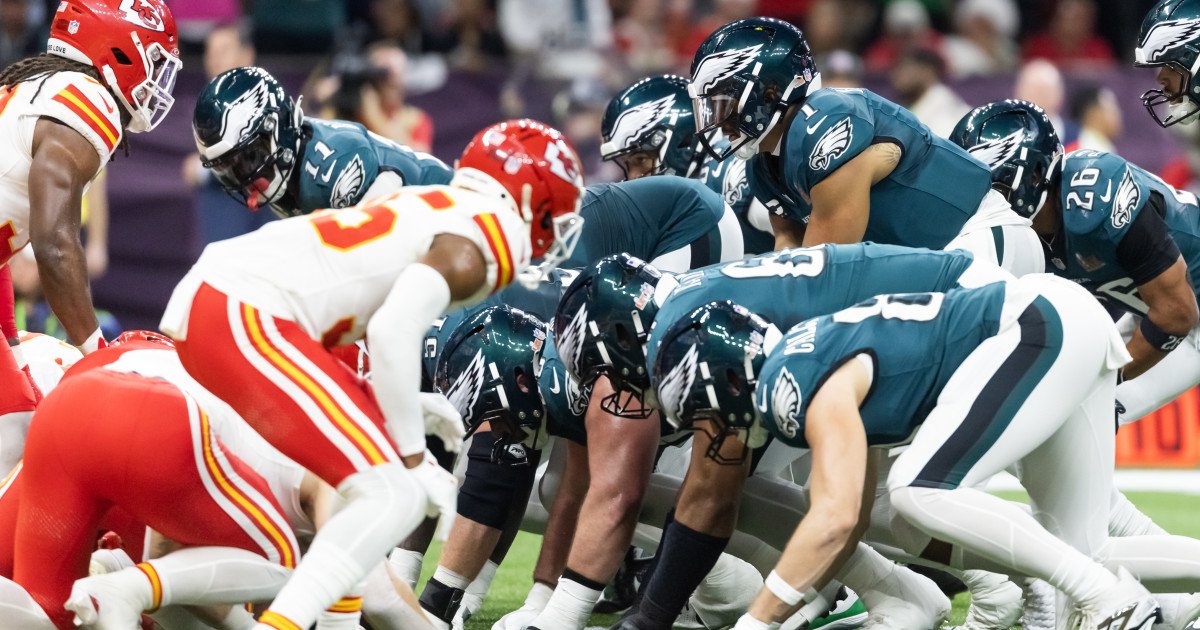
Get ready for more pushing and shoving from behind. The NFL's most debated short-yardage tactic is here to stay for another year. In a decision that will delight Philadelphia and frustrate much of the rest of the league, the NFL Competition Committee has decided against reviewing the Eagles' infamous "Tush Push" play for the 2026 season.
According to ESPN insider Adam Schefter, the committee will not entertain any rule proposals targeting the play at next week's owners' meetings. "There will be no discussion about the Tush Push... the play will be back in 2026," Schefter reported. This marks the second consecutive offseason where the league has opted to leave the polarizing maneuver alone, despite intense scrutiny and calls for its banishment.
A Play That Barely Survived
This news comes after the play narrowly avoided being outlawed just last year. Following the Eagles' dominant Super Bowl LIX victory over the Kansas City Chiefs—a game where the push was deployed multiple times—a coalition of teams launched a fierce campaign to ban it. Their efforts fell short, and the play lived to see another season.
Interestingly, the Eagles' failure to return to the NFC Championship Game in 2025 appears to have cooled the league's urgency to act. With Philadelphia not riding the play to another title, the perceived competitive imbalance seems less pressing to league officials, shifting the debate from the field to fan forums and social media.
Fan Fury and Football Purism
The decision is a bitter pill for countless NFL fans outside of Philadelphia. Across social media, the reaction has been swift and critical, with many labeling the play as an unfair, unstoppable, and aesthetically ugly blight on the game.
"Can’t wait for more eagles slop on prime time," one fan quipped on X. Another expressed frustration with the league's priorities: "So they’ll change the kickoff rules 17 different ways but won’t touch the one play that makes short-yardage situations pointless? Make it make sense." A third argued from a rules perspective, insisting, "Play was outlawed years ago. Not sure how they keep running it. You are not allowed to push your own offensive teammate in the back."
The core complaints remain unchanged: the play is seen as a near-automatic conversion that removes the drama from critical short-yardage situations and potentially increases injury risk for players in the scrum. That the league is taking no action now, after these very arguments nearly led to a ban last year, leaves many observers scratching their heads.
What's Next for the NFL's Rulebook?
While the Tush Push is safe, the NFL's rulebook is never static. The Competition Committee is always evaluating the game's evolution, and major changes can come from unexpected places. For a look at what is being considered for alteration, check out our report on the potential NFL Rulebook Shakeup, which details five significant proposals on the table.
The committee's inaction on this front also stands in stark contrast to the intense scrutiny other sports governing bodies face. Just ask Coach K, who recently unleashed on the NCAA selection committee for its treatment of Big East teams. It seems every committee decision, whether in football or basketball, is guaranteed to create passionate debate.
For the Eagles, the news provides continuity for their offensive identity. The team can continue to build its short-yardage package around the reliable push, a luxury as they navigate other pivotal roster decisions, like the looming future of star receiver A.J. Brown.
So, for at least one more season, the sight of Eagles players piling into the back of Jalen Hurts to move the chains will remain a legal—and hugely contentious—part of the NFL landscape. The debate over football tradition versus tactical innovation is officially tabled until 2027.