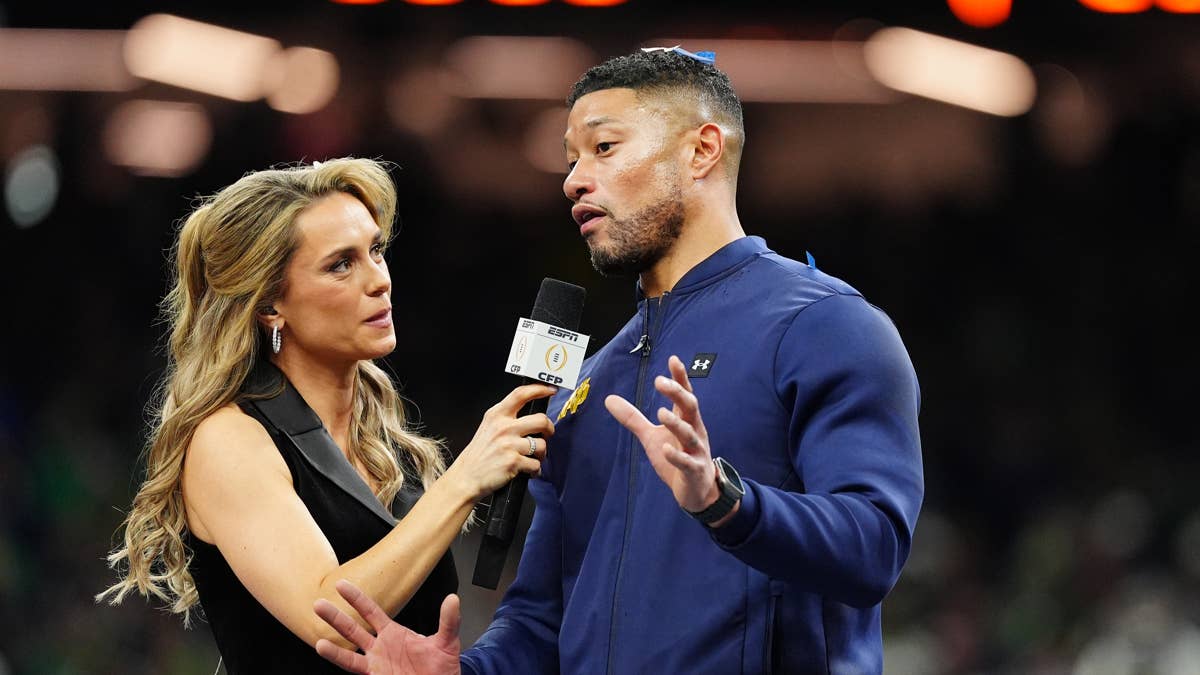
Every Saturday, millions of college football fans tune in expecting drama, big hits, and last-second heroics. What they don't want is another awkward, scripted chat with a coach who'd rather be anywhere else. Yet there they are — the sideline reporter, microphone in hand, asking the same tired questions at halftime and after the final whistle.
Now, one of the most respected voices in sports journalism is saying what many have thought for years: it's time to end them all.
Bob Ryan's blunt message
Bob Ryan, the longtime Boston sports columnist and TV personality, didn't mince words. In a post on social media, he fired off a direct plea to network executives.
“Memo to TV sports execs: get rid of all in-game interviews of players and coach/managers. They are 99 percent useless. Leave them alone.”
Ryan's comment struck a nerve. Fans flooded the replies, and the overwhelming sentiment was clear: they're tired of the filler.
- “You are being generous with 1% being useful,” one fan wrote.
- “Agreed. Everyone hates them. I cringe every time,” added another.
- “No, Bob. They are 100% useless,” chimed in a third.
Even those who see some value think the networks overdo it. “The problem isn't that they do it. It's that they OVER do it. It would be a great feature if only used sparingly when a question about strategy, controversial call etc could be asked and answered. Using it as filler is the epitome of lazy TV,” one commenter noted.
Why do they exist at all?
Let's be honest: these interviews aren't for the fans. They exist because TV networks pay billions for broadcast rights, and conferences demand access as part of the deal. Coaches are contractually obligated to sit down for halftime and postgame chats, even when they'd rather be diagramming plays or consoling a quarterback who just threw a pick-six.
But the result is almost always the same: canned answers, coach-speak, and zero insight. How often does a coach actually reveal something meaningful? Rarely. Instead, we get “We need to execute better” and “They made more plays than us.”
What would we lose?
Ryan isn't calling for the end of sideline reporters altogether. Far from it. He simply wants to eliminate the forced interviews. Reporters could still deliver valuable updates on injuries, key adjustments, and the kind of sideline moments that capture the spirit of the game.
Think about the best sideline reporting you've ever seen. It's usually when a reporter breaks news — like an injury update or a strategic shift — not when they're shoving a microphone in a coach's face during a timeout.
And let's not forget the awkwardness. Coaches are often visibly annoyed, players are exhausted, and the whole exchange feels like a chore for everyone involved. It's no wonder fans cringe.
A wider conversation
Ryan's critique isn't limited to college football. He's talking about all sports. But the college game has its own quirks, like the chaos around eligibility rules that can make interviews even more unpredictable.
Some argue that these interviews humanize the athletes and coaches, giving fans a glimpse of their personalities. But is that worth the cringe? The debate is heating up, especially as broadcast innovations like ESPN's new scorebug show that networks are willing to experiment with the viewing experience.
What's next?
Will networks listen to Ryan and the fans? History suggests they might not. TV executives love their traditions, and the interviews are baked into the broadcast rights agreements. But with the 2026 season just kicking off, there's no better time to rethink how we cover the game.
So, what do you think? Should college football — and sports in general — drop all in-game interviews? Or is there a place for them when done right?
One thing's for sure: Bob Ryan isn't alone in his frustration. And if the networks don't change course, they might find themselves with a lot of unhappy viewers — and a lot of muted microphones.