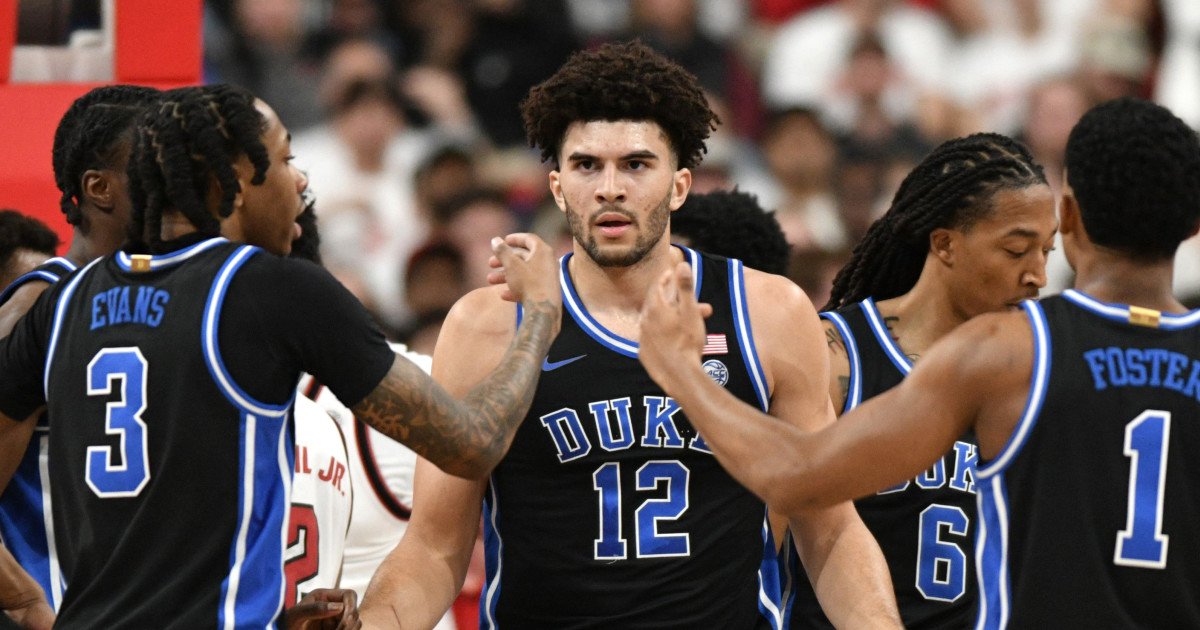
For decades, the mere sight of Duke Blue Devils blue was enough to trigger a visceral reaction from college basketball fans nationwide. They weren't just opponents; they were the villains you loved to loathe, sitting comfortably atop the most-hated pedestal alongside titans like the New York Yankees and Dallas Cowboys. But a strange quiet has fallen over Cameron Indoor Stadium's critics. Is the era of Duke hatred officially over?
A Changing of the Guard
The animosity that once felt like a national pastime has undeniably cooled. Chris Carrawell, a former Duke All-American turned assistant coach, has witnessed the shift firsthand. "It's not as hostile anymore," Carrawell admitted during the recent NCAA Tournament. "We used to walk into arenas where the venom was palpable, where fans would cross lines. That intensity... it's just not the same environment now." This sentiment echoes through sports bars and online forums, suggesting a fundamental change in how the Blue Devils are perceived.
Where Have All the Villains Gone?
The core of the hatred often centered on iconic, long-tenured players who became perfect antagonists. Legends like Christian Laettner, J.J. Redick, and Grayson Allen weren't just talented; they were fixtures. Fans had years to cultivate a deep, personal disdain for their on-court personas. "Grayson Allen, he was the last four-year villain," Carrawell noted, pinpointing a seismic shift in college sports. "You got to watch him grow, and you learned to hate him. He was probably the last one."
The modern game, dominated by the one-and-done rule and the transfer portal, doesn't allow for such lengthy character development. Star players like Cameron Boozer arrive and depart before a true national rivalry can crystallize. As some analysts have argued, the very structure of college basketball is evolving, taking some classic narratives with it.
Beyond the Court: A Shift in Conversation
The change may run deeper than roster turnover. Commentator Bomani Jones points to a significant evolution in how race is discussed within basketball. "How we talk about race in basketball is just not the same," Jones observed. He highlighted current Duke stars Cooper Flagg and Kon Knueppel—both white players dominating NBA Rookie of the Year talks—as a case study. "Nobody's done a thinkpiece. That wouldn't have been the case five years ago, let alone 10 or 20." This suggests the old, often simplistic narratives that fueled part of the Duke dynamic have lost their potency.
A New Era of College Hoops
Does this mean Duke games have lost their edge? Not exactly. The rivalry with North Carolina still burns white-hot, and the program remains a perennial powerhouse. But the blanket, automatic hatred from neutral fans appears to be receding. In its place is a more nuanced landscape where dynasties are shorter and public enemies are harder to crown. It's a shift that reflects broader changes across sports, where player movement and evolving social dialogues reshape fan allegiances. This transformation isn't unique to basketball, as seen when NFL contracts reshape team loyalties or when coaching legends reaffirm their commitment to the game.
What's Next for the Blue Devil Brand?
So, is Duke basketball now... likable? That might be a stretch for many. But the data and testimony point to a clear conclusion: they are less universally despised. The program that once thrived as the heel of college basketball must now navigate an identity where its success doesn't automatically inspire nationwide contempt. In a way, it marks the end of an era—one defined by iconic villains and passionate, unified dislike. The sports world has moved on to new controversies and fresh faces, leaving one of its oldest grudges to fade into a surprising, and for some, unsettling, quiet.