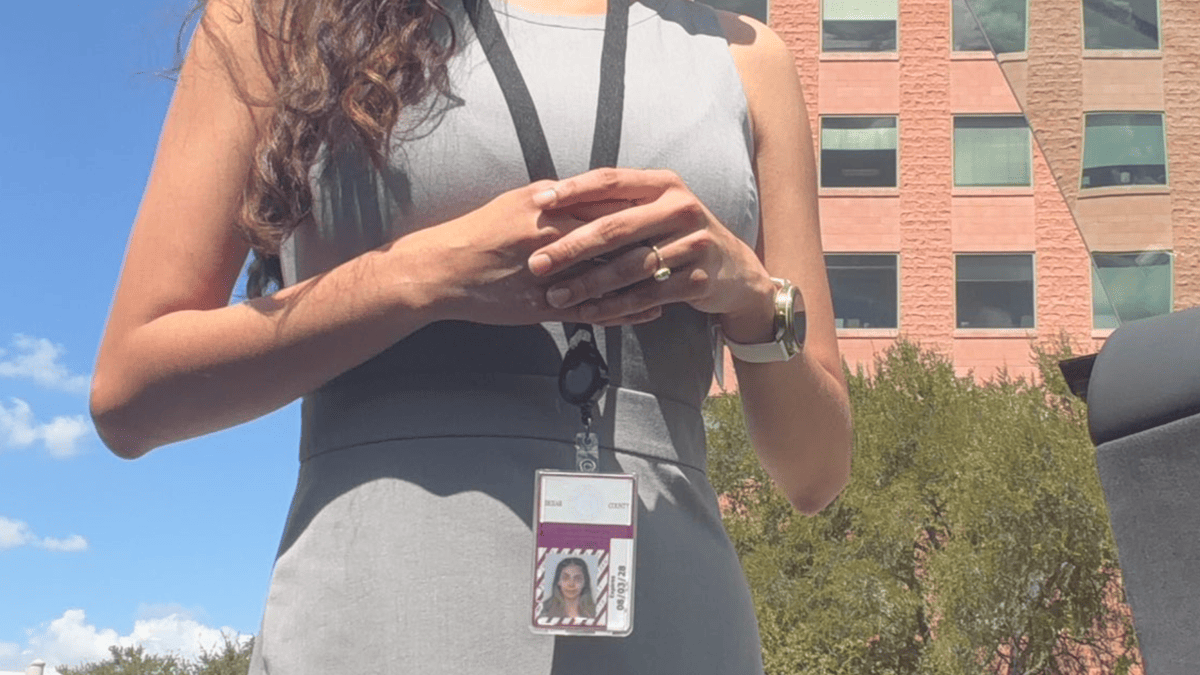
The legal world is buzzing after a Texas defense attorney found herself in the spotlight for all the wrong reasons—her courtroom attire. The lawyer in question has now been identified as Mariah Medina, a former journalist turned defense attorney, who took to social media to share her frustrating experience.
Medina, who practices law in Texas, recounted the incident in a now-viral post. She explained that she was wearing a shift dress—a style she has worn on air countless times during her journalism career and in other courtrooms without issue. But this time, a judge pulled her aside, claiming her outfit was inappropriate for a jury trial.

“This is what I was wearing today when a judge said that I was inappropriately dressed for court. It’s a dress I’ve worn on air countless times and a dress that I have worn to other courts without issue. I was confused, so I explained that it’s a shift dress…” Medina wrote.
The situation escalated when the judge asked Medina to come around the bench so she could inspect the outfit—in front of defendants and other lawyers. Medina described the moment as “disappointing” and noted it was a first since she became licensed to practice law.
“She laughed and asked if I really believed that my dress was appropriate for a jury trial… then asked me if I had a blazer in my car,” Medina recounted. The judge’s main concern? Medina’s shoulders were visible.
The incident has sparked a broader conversation about dress codes in professional settings, especially for women. While some argue that courtroom decorum demands a certain level of formality, others see this as an outdated and unnecessarily harsh critique of a professional woman’s attire. The debate echoes similar controversies in other arenas, like the recent UFC ring girl dress controversy that set social media ablaze.
Medina’s experience also draws parallels to other high-profile dress debates, such as the U.S. Open fan’s revealing white dress that sparked a social media storm, or the tennis star Genie Bouchard’s red dress that stole the show at the US Open. Clearly, what’s considered “appropriate” can be highly subjective and often depends on the context.
For Medina, the ordeal was a stark reminder that even seasoned professionals can face judgment over their appearance. As a former journalist, she’s used to being in front of cameras, but this courtroom confrontation was a different kind of scrutiny. She expressed her disappointment in the interaction, emphasizing that it was a first in her legal career.
The story has resonated with many, sparking debates online about whether the judge overstepped or whether Medina’s attire was indeed inappropriate. Some legal experts have weighed in, noting that while judges have broad discretion over courtroom decorum, singling out a lawyer in front of others may be questionable.
As the conversation continues, one thing is clear: the line between professional and personal style is often blurred, and this case highlights the challenges women face in navigating those expectations. Whether you side with the judge or with Medina, the incident has certainly opened up a dialogue about dress codes in the legal profession and beyond.
What do you make of the outfit? The debate is far from over, and it’s a topic that touches on broader issues of gender, professionalism, and personal expression.